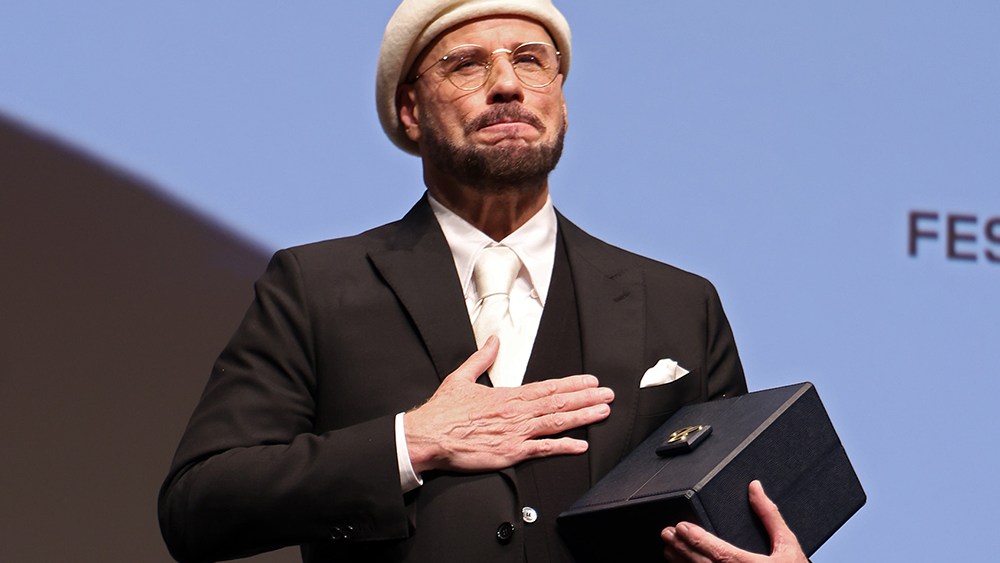
The Strategic Rebranding of a Hollywood Icon
John Travolta’s appearance at the Cannes Film Festival reflects a calculated aesthetic shift, adopting the visual language of mid-century auteurs. By utilizing sartorial signifiers—specifically the beret and round frames—Travolta is curating a public persona that aligns with his transition from legacy performer to creative architect.
This performance of identity serves as a strategic signal, repositioning his brand to command authority in a new operational capacity. By framing himself as a student of classic cinema, he legitimizes his pivot into the director’s chair.
Institutional Recognition as Market Catalyst
The honorary Palme d’Or represents a critical institutional endorsement, providing immediate reputational capital for his directorial debut, Propeller One-Way Night Coach. The festival’s early commitment to the film illustrates a symbiotic relationship where established star power meets high-prestige validation, mitigating the typical risks associated with debut features.
The Economics of Legacy Capital
Travolta’s integration of family into his creative work—notably his daughter, Ella Bleu—reflects a trend of leveraging multi-generational professional continuity. This approach secures the viability of his projects while reinforcing his personal narrative. For an icon of his stature, this move is a fundamental restructuring of his value proposition within the global film economy.
The Role of Institutional Gatekeepers
The dialogue between Travolta and Thierry Fremaux highlights the influence of industry gatekeepers. Institutional signaling, such as the surprise award at Cannes, functions as a market filter, providing critical momentum in a saturated content landscape. This validation establishes Travolta’s directorial credibility before the wider market has engaged with the film’s specific content.
Conclusion: Integrating Art and Industry
Travolta’s evolution demonstrates how long-term industry icons can successfully navigate career transitions. By embracing the persona of the “classic director,” he mitigates the risk of professional decline, transforming his legacy into an asset for future production. The success of this transition remains contingent on his continued ability to secure prestige platforms for his directorial output.