The Intersection of Cybersecurity Hygiene and Public Safety
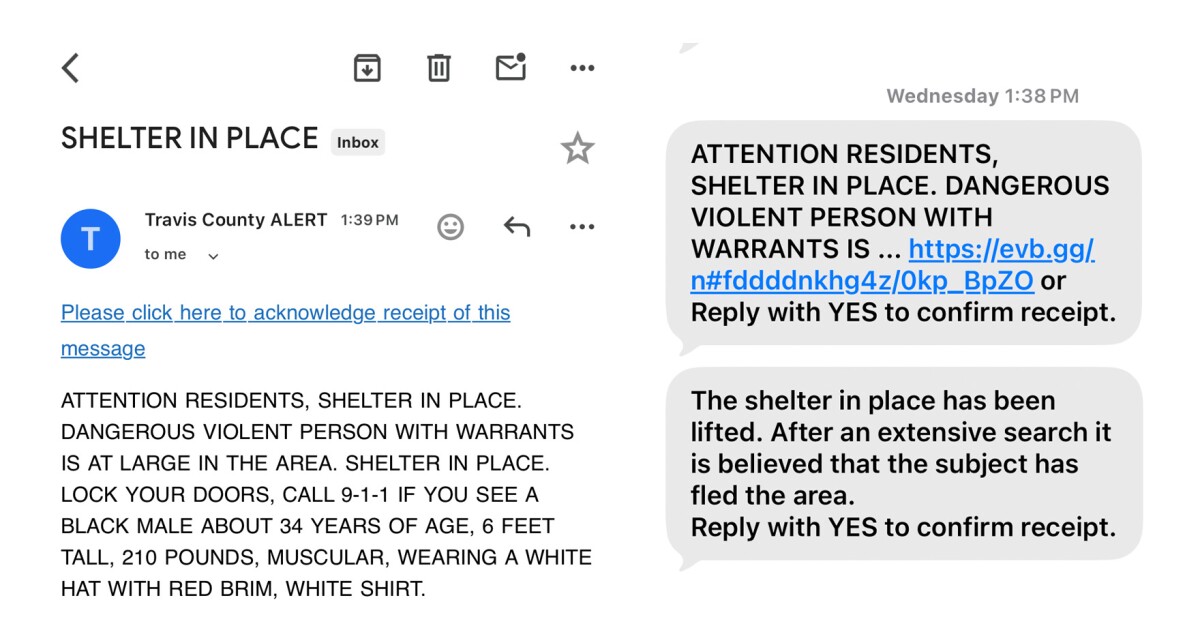
The recent shelter-in-place order issued to 50,000 South Austin residents exposed a critical vulnerability at the intersection of law enforcement operations and digital trust. As the Austin Police Department (APD) pursued a violent 34-year-old suspect, the delivery mechanism of their emergency notification triggered a widespread ‘zero-trust’ response from a tech-literate population. By utilizing all-caps formatting and non-standardized links, the alert mirrored the heuristic markers of credential-harvesting campaigns, forcing residents to prioritize digital security over physical safety.
Tactical Neutralization via Verification Latency
The operational effectiveness of a mass alert depends on immediate compliance. However, the perceived illegitimacy of the APD notification introduced a ‘verification loop,’ where residents sought secondary confirmation via Reddit, local news, or corporate IT departments. This latency—the time between message receipt and actionable response—likely provided a tactical window for the suspect to evade the search perimeter. In an urban environment, a delay of minutes can neutralize the advantage of a 50,000-person observation network.
Technical Debt in Emergency Infrastructure
The reliance on a ‘click-to-acknowledge’ feature reveals an institutional preference for liability tracking over frictionless dissemination. For a demographic conditioned by ‘stop-and-think’ security training, a link from a non-governmental domain is an immediate red flag. This technical debt—using legacy communication standards in a high-threat digital landscape—transforms a public safety asset into a psychological friction point. The failure to utilize the Integrated Public Alert and Warning System (IPAWS) effectively suggests a need for localized infrastructure reform.
Strategic Implications for High-Growth Tech Hubs
As Austin solidifies its status as a global technology center, the expectations for institutional digital competence rise. The search for the suspect—described as a Black male, 6’0″, 210 lbs, with a muscular build—centered on the industrial corridor of Willow Springs and Industrial Blvd. The resulting economic and social disruption, coupled with the suspect’s successful evasion, underscores the high cost of alert skepticism. Future protocols must integrate verified sender IDs and secure domain structures to maintain the authoritative chain of information necessary for urban crisis management.