Metabolic Demands and Temporal Dynamics of Eclosion
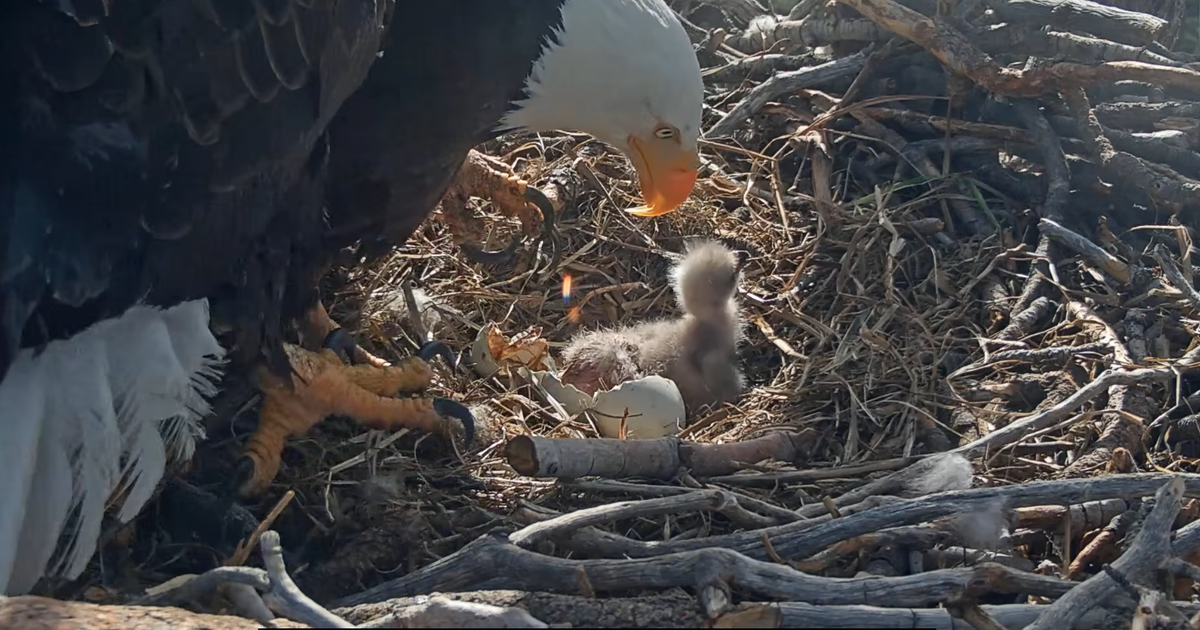
The recent eclosion of two bald eaglets in the Big Bear Lake nest—offspring of the pair Jackie and Shadow—serves as a primary case study in high-altitude avian reproductive success. Documented by the Friends of Big Bear Valley (FOBBV), this event highlights the intense metabolic toll of the ‘pip-to-hatch’ interval. The first chick’s 36-hour struggle from the initial shell breach (pip) to full emergence illustrates the grueling transition from chorioallantoic respiration to pulmonary function.
The second eaglet’s emergence within 12 hours of the first represents a critical biological advantage: hatching synchrony. This narrow temporal gap minimizes the size hierarchy within the brood, optimizing equitable nutrient distribution and reducing the risk of siblicide during the high-growth neonatal phase. This synchrony is essential for survival in competitive alpine ecosystems where prey availability can fluctuate.
Physiological Vulnerabilities and the ‘Bobblehead’ Stage
Following eclosion, neonate bald eagles enter a state of extreme physiological vulnerability. The ‘bobblehead’ phase is characterized by insufficient cervical musculature and incomplete thermoregulation. During this window, parental attendance is not merely protective but vital for homeostatic maintenance. The transfer of parental saliva during initial feedings provides more than hydration; it delivers essential electrolytes and immunoglobulins, bolstering the chicks’ nascent immune systems against environmental pathogens.
The transition to exogenous nutrition requires precise parental coordination. The delivery of micro-portions of high-protein prey—carefully calibrated to the chicks’ undeveloped digestive tracts—is a prerequisite for the aggressive growth trajectory common to the species. Bald eagles must achieve approximately 90% of their adult size within 10 to 12 weeks, necessitating an extraordinarily high metabolic turnover.
The Intersection of Wildlife Biology and Digital Infrastructure
The FOBBV monitoring suite represents a shift in wildlife management, where 24/7 high-definition digital streams serve as both a data collection tool and a public engagement asset. This infrastructure allows for the granular observation of rare behaviors, such as the acoustic signaling (vocalizations from within the shell) that triggers parental shifts in nest humidity and temperature regulation.
Strategically, this transparency fosters a ‘participatory conservation’ model. By converting biological milestones into global digital events, conservationists can generate high-leverage support for habitat preservation. The data extracted from these observations contributes to broader longitudinal studies on how climate shifts and human encroachment affect the reproductive efficacy of raptors in the Pacific Southwest.
Ecological Significance and Future Milestones
The success of the Big Bear brood is a barometer for the health of the local montane ecosystem. As the eaglets progress, the focus shifts to the development of contour feathers and the achievement of thermal independence. The ability of the parent pair to sustain the increasing caloric demands of two rapidly maturing raptors will provide measurable data on the local biodiversity and prey density. This ongoing cycle underscores the resilience of the species and the importance of protected nesting corridors in the 21st century.