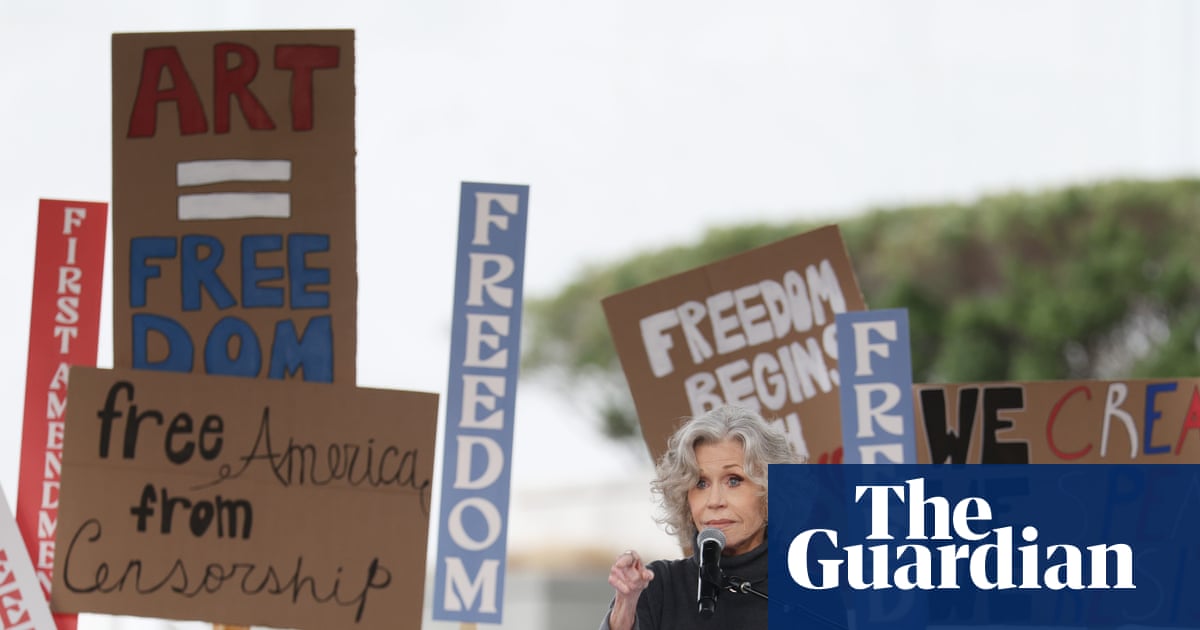
A highly visible demonstration organized by Jane Fonda’s Committee for the First Amendment outside the John F. Kennedy Center for the Performing Arts crystallizes acute institutional anxiety over the operational autonomy of federally supported cultural bodies.
The convergence of artists, journalists, and writers signals a stakeholder belief that political directives are directly conditioning artistic expression and historical documentation, moving the conflict beyond standard budgetary negotiation into explicit content control.
Strategic Reassessment of Cultural Governance
Jane Fonda framed the mobilization as a defense against an “authoritarian takeover,” directly equating administrative actions at the Kennedy Center with systemic threats to First Amendment protections nationwide.
The selection of the Kennedy Center is strategically pivotal; its role as the national arts complex imbues administrative shifts there with amplified symbolic resonance, establishing a potential precedent for the management of all federally affiliated entities.
The reported assertion of executive branch influence over the complex, coupled with targeted programmatic scrutiny—specifically labeling certain content as “woke”—constitutes a direct challenge to the established curatorial independence historically granted to such national institutions.
This political climate necessitates administrators from the National Endowment for the Arts (NEA) down to regional councils to rigorously recalibrate risk assessments concerning programming choices and operational disclosure to preempt potential funding withdrawal or punitive administrative review.
Financial Leverage and Operational Exposure Analysis
The scheduled two-year renovation closure at the Kennedy Center, overlapping with initial workforce reductions, injects operational uncertainty that exceeds typical capital expenditure concerns.
For staff and associated contractors, immediate layoffs signify tangible financial repercussions resulting from the shift in institutional management, portending talent attrition in specialized cultural administration fields.
Fonda’s claim that museums, the NEA, state arts councils, and public broadcasting face coordinated defunding campaigns suggests a systemic financial pressure campaign targeting the entire non-profit cultural ecosystem reliant on public underwriting.
Institutions dependent on federal matching funds must stress-test the long-term viability of programming premised on stable public support, likely accelerating diversification strategies toward private endowments and corporate sponsorships to buffer against political volatility.
Conflict Over the Stewardship of National Narrative
The specific grievance concerning the removal of plaques and monuments referencing historical events the current administration aims to marginalize reveals a structural conflict over the stewardship of national memory infrastructure.
This transcends aesthetic dispute, representing a structural challenge to the interpretation and contextual presentation of history within public-facing cultural repositories, directly impeding their educational mandates.
Museums and historical societies face an immediate triage: maintain established scholarly consensus, risking administrative reprisal or funding collapse, or adjust interpretive frameworks to align with prevailing political preferences, thereby compromising academic integrity.
The alleged defunding of public broadcasting exacerbates this, as these outlets traditionally serve as vital, non-commercial conduits for diverse historical and cultural narratives often excluded from commercially mediated environments.
Stakeholder Mobilization and Rights Utilization
Fonda’s directive to “break your silence” functions as an explicit mobilization appeal to the creative class, urging them to leverage their public platforms—their core professional capital—to exert political pressure.
This action reframes the exercise of First Amendment rights not as a passive entitlement but as an active, defensive imperative against perceived state encroachment, implying that non-action signals tacit acceptance of new restrictions.
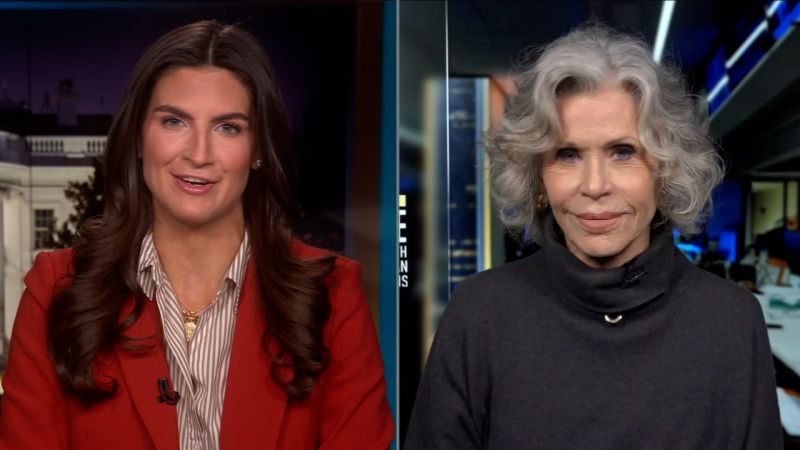
The context, reinforced by CNN interviews where Fonda warned Americans “have to use our rights while we can,” underscores an urgency rooted in the assessment that the window for effective advocacy via protected speech is contracting.
For media organizations, coverage shifts toward analyzing the substance of the censorship claims while navigating the operational realities of reporting on institutions under direct executive scrutiny.
Competitive Dynamics in Cultural Funding Allocation
The strategic targeting of federal arts agencies creates a competitive vacuum in cultural capital distribution, favoring entities aligned ideologically with current governance or those insulated by substantial private wealth.
Entities successfully navigating this landscape will likely demonstrate superior political acumen in framing their missions to resonate with administrative priorities, potentially driving a homogenization of publicly supported artistic output.
Conversely, smaller, regionally specific arts organizations lacking the national lobbying capacity of centers like the Kennedy Center face disproportionate instability, jeopardizing the diversity of the national artistic landscape.
Operational strategy for these smaller bodies must pivot toward proving immediate, quantifiable community impact difficult to frame as politically contentious, shifting focus from avant-garde work toward broadly palatable civic engagement projects.
Institutional Precedent and Future Oversight
The documented intervention establishes a precedent for executive branch assertion into the governance structures of national cultural institutions, transitioning from budgetary oversight to direct administrative command.
This necessitates formal review by Congressional oversight committees and legal bodies to demarcate statutory boundaries defining the independence of federally managed complexes versus executive branch authority.
Future appointments to cultural boards will inevitably prioritize demonstrated loyalty or ideological congruence over purely artistic or administrative qualifications, fundamentally shifting selection criteria for cultural stewardship.
The long-term consequence risks a sector bifurcation: a highly politicized, federally influenced core coexisting with an independent, privately funded periphery, establishing distinct tiers of artistic viability and public access.
Media Ecosystem Stressors and Context
The presence of journalists alongside artists highlights a shared vulnerability within the information and expression industries, positioning restrictions on cultural speech as precursors or correlates to limitations on journalistic freedom.
The concurrent context—references to DHS/TSA pay issues and reporting on Iran-linked hackers breaching FBI Director Kash Patel’s emails—situates the arts protest within a broader nexus of national security, operational disruption, and information warfare concerns.
This linkage suggests stakeholders view cultural dissent suppression as part of a wider administrative effort to consolidate narrative control across public sectors.
The press’s ability to report on these events, including direct interviews with figures like Fonda, serves as a critical metric for assessing the current operational freedom of the press, directly testing the validity of the First Amendment claims being asserted.
Strategic Implications for Philanthropic Investment
Philanthropic entities and major donors must reassess investment strategies, recognizing that public funding streams now carry elevated political risk premiums.
Increased private capital is expected to prioritize cultural entities demonstrating robust internal governance structures capable of insulating programming from external political pressure, effectively rewarding institutional resilience.
Furthermore, the focus on ideological censorship accelerates the demand for digital archiving and decentralized distribution methods for cultural works, as state-controlled venues become perceived points of vulnerability for content suppression.
This environment mandates that cultural organizations build technological redundancies for content accessibility, treating digital infrastructure as a core component of free expression defense, not an ancillary service.
The Kennedy Center as a Governance Bellwether
The specific administrative changes at the Kennedy Center—renovations, layoffs, facade alterations—serve as highly visible operational markers indicating a definitive departure from established institutional norms.
The two-year renovation timeline offers a prolonged period for administrative control to solidify and new operational cultures to embed before external scrutiny shifts focus.
For international cultural partners relying on the stability and perceived neutrality of the Kennedy Center, these internal disruptions complicate long-term planning and reciprocal commitments.
The transformation of this ‘citadel’ into a symbol of political contention fundamentally degrades its diplomatic utility as a non-partisan showcase for American arts globally, potentially diminishing its soft power projection capacity.
Conclusion on Systemic Stress
The documented protest and its core grievances—censorship, defunding, and contested institutional control—confirm that stress on the US cultural apparatus is systemic, simultaneously impacting finance, narrative authority, and operational independence.
Cultural leadership response is evolving from discrete lobbying to public confrontation, recognizing the leverage point now resides in mobilizing public awareness and utilizing existing constitutional protections before perceived constraints become fully enforced.
The immediate imperative for the sector is a forced strategic pivot toward resilience, sophisticated political navigation, and the aggressive defense of established norms against centralized administrative influence.