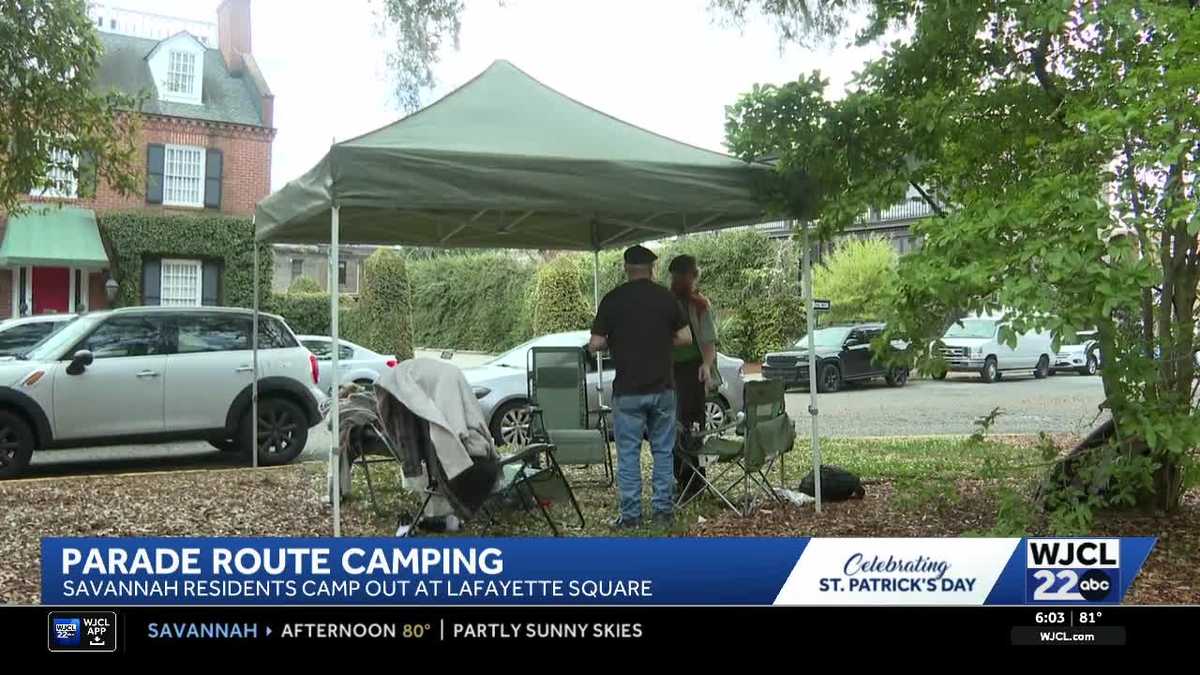
Savannah’s St. Patrick’s Day Parade: A Case Study in Policy vs. Cultural Capital
The annual Savannah St. Patrick’s Day parade serves as a critical case study in municipal event management, highlighting the strategic tension between formal policy implementation and deeply entrenched cultural traditions. The event, which draws significant crowds and economic benefit, necessitates sophisticated resource management and crowd control measures. The city’s operational strategy for this high-demand event centers around managing public space allocation, specifically focusing on a policy known as the “Land Rush” and associated regulations.
The Land Rush Policy and Incentive Dynamics
The city’s “Land Rush” policy is a formal mechanism designed to manage access to prime viewing locations within the historic squares along the parade route. The policy officially opens these squares at 6 a.m. on the day of the parade, attempting to impose order on a process that has historically been competitive and governed by informal social norms. This regulation seeks to establish a structured first-come, first-served system, aiming for equity among attendees.
However, the policy framework creates a conflict between municipal rules and established behavior. The incentive for long-time attendees, such as the Parrish family who maintains a 26-year tradition of camping, to secure high-value viewing spots results in pre-event camping that continues despite the 6 a.m. opening rule. This persistence demonstrates that the perceived value of securing a location outweighs the risk associated with non-compliance. From a behavioral economics perspective, this creates a first-mover advantage for those willing to invest significant time and effort, effectively undermining the policy’s attempt to level access at a single point in time.
Regulatory Compliance and Resource Allocation
Beyond access control, the city implements specific behavioral regulations to mitigate negative externalities associated with large-scale public gatherings. These policies include prohibitions on specific items, such as Styrofoam coolers and glass, alongside the requirement for attendees to bring their own trash bags. These measures serve as strategic cost-shifting mechanisms designed to minimize post-event cleanup costs and reduce safety hazards for sanitation departments.
The effectiveness of these regulations hinges on high compliance rates, which are difficult to enforce uniformly in a high-density, celebratory environment. The high concentration of attendees places significant strain on municipal infrastructure. By prohibiting materials that increase cleanup complexity (Styrofoam) or create safety hazards (glass), the city aims to reduce the operational burden on public services. The requirement for attendees to manage their own waste represents an effort to transfer responsibility from the municipality to the individual, highlighting the city’s focus on operational efficiency and resource conservation.
Economic Implications and Cultural Capital
The St. Patrick’s Day parade is a significant economic driver for Savannah, attracting tourists and generating substantial revenue for local businesses. The event’s unique cultural traditions, including the pre-event camping narrative, contribute significantly to its brand identity and differentiate it from other celebrations. This cultural capital enhances Savannah’s competitive positioning in the tourism market.
The city’s event management strategy directly impacts the long-term economic viability of the event. A poorly managed event, characterized by disorder or excessive friction between new policies and established traditions, could negatively affect future attendance and local economic benefits. The city’s investment in security and logistics for the parade represents a strategic expenditure aimed at preserving this economic asset and maintaining a positive public image.
Conclusion: Policy Evolution and Strategic Dilemmas
The Savannah St. Patrick’s Day parade highlights the complex challenges inherent in managing large-scale public events where cultural traditions intersect with modern regulatory frameworks. The ongoing tension between the formal “Land Rush” policy and the informal camping tradition suggests a regulatory gap and a need for further refinement in municipal event management strategy.
The city faces a strategic decision regarding whether to increase enforcement of the 6 a.m. rule to ensure equity or to formally recognize and regulate pre-event camping to accommodate established cultural practices. The current situation, where both policies appear to coexist, creates operational inefficiencies and potential for conflict. Future policy evolution must navigate this dynamic carefully to preserve the event’s cultural capital, maintain public order, and ensure long-term economic benefits without alienating key stakeholders or undermining the event’s unique character.