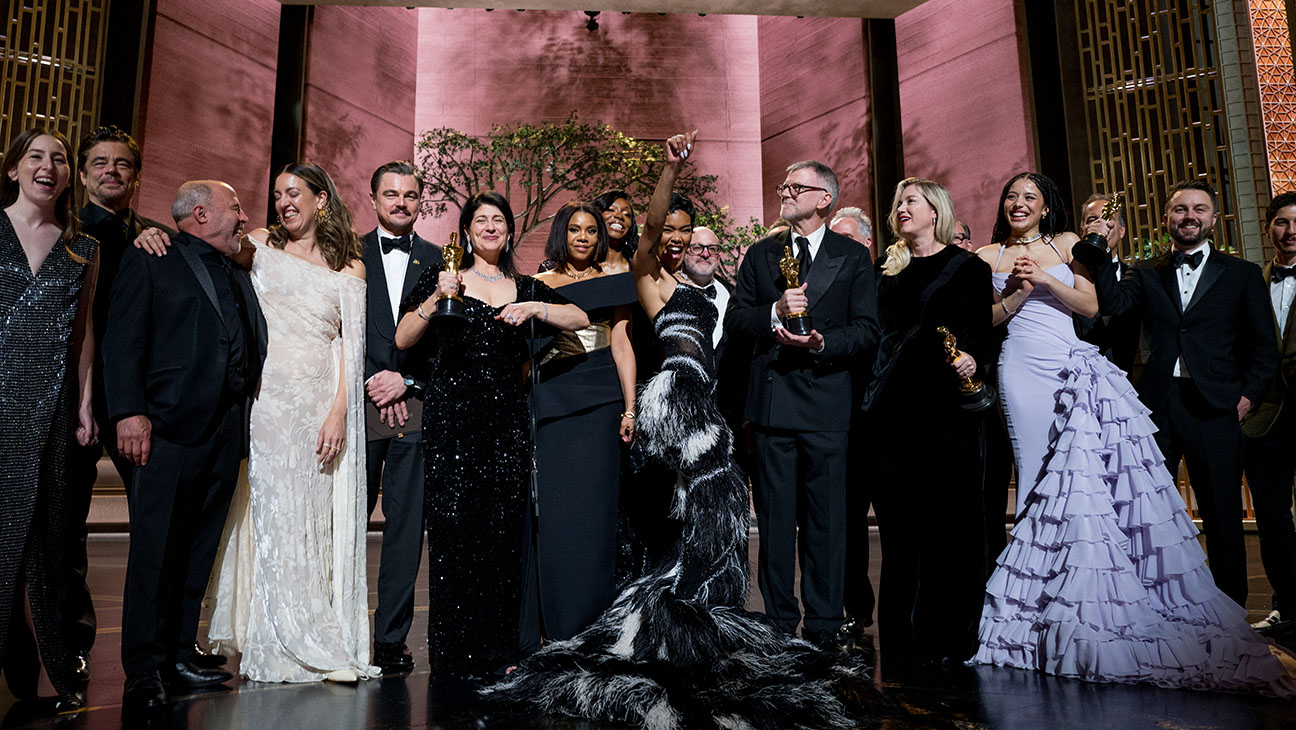
The conclusion of the 98th Academy Awards confirms structural continuity in Hollywood’s highest honors, irrespective of significant, documented demographic shifts within the Academy’s composition over the past decade.
The decisive victory of “One Battle After Another” for Best Picture, aligning with earlier successes across the Gotham, Golden Globe, and guild circuits, validates the persistent leverage of consensus-driven industry validation pathways.
The Persistence of Predictive Correlates
The outcome minimizes the strategic risk for major studios, underscoring that the correlation between aggressive pre-Oscar industry campaigning and the final Academy vote remains robust, even after diversification initiatives targeting the membership base.
This consistency implies that while the electorate is demonstrably more diverse (increased representation across gender, race, and age cohorts), the operational calculus for securing Best Picture has not fundamentally altered its strategic focus.
Divergent Utility of Ancillary Awards
The analysis highlights a critical divergence in predictive signal strength: the Actor Awards’ best cast prize, which championed “Sinners,” proved a poor leading indicator for the Best Picture category.
Source data confirms the Actor Award’s historical underperformance in forecasting the top winner (15/32 success rate), thereby diminishing its strategic weighting for late-stage marketing capital allocation.
Conversely, the sweeping success of “One Battle After Another” across critics’ groups and major guilds confirms that unified validation across established industry arbiters remains the most reliable deployment strategy for the Best Picture trophy.
Performance Leverage and Recognition Segmentation
The distribution of wins reveals concentrated success for specific narratives, illustrating the dynamic between high nomination volume and overall victory count.
“Sinners,” despite a record 16 nominations, secured four Oscars, including key wins for Original Screenplay (Ryan Coogler) and Actor in a Leading Role (Michael B. Jordan). This suggests successful segmentation of recognition rather than total dominance.
This outcome illustrates that high nomination counts can dilute perceived impact if they fail to translate into marquee categories, potentially affecting the future financing leverage for the studio involved.
Authorial Vision vs. Narrative Originality
Paul Thomas Anderson’s dual victories for Directing and Adapted Screenplay for “One Battle After Another” solidify a specific authorial vision, executed via high consensus, as the critical component for the top prize, eclipsing the Original Screenplay win for “Sinners.”
This distinction is crucial: projects leveraging pre-existing material, when executed with high technical and directorial consensus, were favored over purely original concepts for the highest honor.
The Adapted Screenplay success signals the Academy is rewarding the structural refinement and successful translation of complex source material—a metric prioritized for established creative leadership.
Stakeholder Impact and Talent Distribution
The acting categories saw targeted recognition for Jesse Buckley, Sean Penn, and Amy Madigan, indicating successful dispersal of accolades across the performer pool, mitigating risks of perceived branch oversight.
Sean Penn’s win, noted as achieved “without doing anything,” introduces a complex variable regarding the weight of long-term public profile versus recent on-screen performance metrics in the final calculus, possibly signaling reliance on established industry goodwill.
This segmented distribution of performance capital influences future talent acquisition and salary negotiations by broadening the base of recognized industry professionals.
Genre Viability and Cross-Category Success
The victory for “KPop Demon Hunters” in Animated Feature Film, coupled with the Original Song Oscar for “Golden,” confirms the increasing institutional acceptance and financial viability of high-production, culturally specific genre content.
This dual recognition validates investment in animated features that cross cultural boundaries, signaling to financiers that animation is a viable contender for cross-category technical and artistic recognition beyond the traditional children’s market.
The song’s success further reinforces the integration between studio music publishing arms and film production entities, where soundtrack performance directly contributes to award visibility and ancillary revenue streams.
Institutional Inertia vs. Evolving Electorate
The central tension confirmed by the 98th ceremony is the decoupling between stated demographic goals and the output of the highest-level awards.
While membership statistics confirm significant change since the #OscarsSoWhite critique, the predictable outcomes suggest institutional inertia—driven by established voting patterns, branch seniority, or overwhelming pre-show campaign volume—remains the dominant factor.
The strategic challenge for insurgent filmmaking is therefore not merely gaining access to the body, but overcoming the deeply embedded cultural and historical preferences guiding the final tally among the newly diversified electorate.
Mid-Tier Success: The Case of ‘Frankenstein’
The three wins secured by “Frankenstein” position it as a significant, though non-leading, success, likely capturing essential technical or below-the-line creative awards that sustain production infrastructure.
These mid-tier successes are vital for industry operational health, ensuring continued employment and recognition for specialized craftspeople. They validate investment in high-quality technical execution, providing a strong baseline narrative for attracting future talent.
Campaign Expenditure Dynamics
The narrative of “One Battle After Another” prevailing over the late surge for “Sinners” speaks directly to the efficiency of sustained campaign expenditure versus short-term momentum plays.
Studios backing consensus frontrunners benefit from the Academy’s historical tendency to reward sustained, year-long industry consensus cultivated by figures like Ed Guiney, Andrew Lowe, and Brad Pitt.
The failure of the “Sinners” surge to secure Best Picture suggests that capital allocated for last-minute influence is less effective than sustained, broad-based industry goodwill cultivated over months.
The Producer Role in Capital Aggregation
The extensive producer credits for “One Battle After Another” highlight the growing importance of sophisticated production management and capital aggregation in navigating the modern awards ecosystem.
The presence of multiple high-profile producers signals a shared risk structure and coordinated lobbying effort difficult for smaller, less capitalized projects to counter, regardless of critical acclaim.
This structure reinforces the dominance of established production entities capable of funding the logistical and promotional requirements necessary for a year-long competitive posture across international and domestic bodies.
Statistical Predictors and Structural Barriers
The reliance on dependable statistical predictors, despite demographic shifts, points to a core conservatism within the voting mechanism that supersedes surface-level diversity metrics.
The Academy, despite evolution, appears to retain structural habits or institutional memory that privilege historically successful production profiles or narrative types.
This reliance suggests that significant disruption to Oscar outcomes will require more profound shifts in internal governance or the nature of films being produced, rather than incremental membership changes alone. The 98th ceremony results confirm that established levers of industry influence remain highly effective in translating campaign effort into institutional validation.