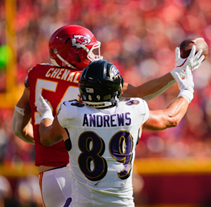
NFL Linebacker Market: Assessing Leo Chenal’s Strategic Value
The impending NFL free agency period is a critical juncture for franchises aiming to strengthen their linebacker units. Teams are meticulously evaluating personnel needs against projected market values, prioritizing players who offer seamless integration into evolving defensive schemes. A key strategic imperative for clubs with substantial salary cap flexibility is to acquire talent that provides immediate impact and long-term value, avoiding overpayment for veterans whose system fit is uncertain.
Buffalo Bills: Scheme Fit and Roster Augmentation
Under new defensive coordinator Jim Leonhard, the Buffalo Bills are shifting towards a four-linebacker base formation. This necessitates significant roster additions, as few linebackers from the previous season remain under contract. The potential free agency of key veterans like Matt Milano and Shaq Thompson amplifies this need, compelling the Bills to seek external options to complement existing young talent such as Dorian Williams and Terrel Bernard.
General Manager Brandon Beane’s emphasis on acquiring players with the requisite intelligence and “DNA fit” for Leonhard’s defense signals a data-driven approach. This philosophy prioritizes attributes aligning with specific schematic requirements over name recognition or past performance in different systems. The evaluation process will weigh draft capital against potential free agent costs and immediate on-field contribution.
Leo Chenal emerges as a compelling free agent target for the Bills. His profile as a former third-round pick who, despite not being an every-down player on his rookie contract, possesses attributes that project favorably for a system-oriented defense. Chenal’s potential to fit Leonhard’s scheme aligns with Beane’s emphasis on system fit, positioning him as a player offering immediate depth and developmental upside.
New York Jets: Cap Flexibility and Value Acquisition
The New York Jets enter free agency with substantial cap space, estimated over $74 million, ranking them fourth in the league. This financial leverage enables a proactive strategy to acquire multiple quality starters, addressing significant depth chart deficiencies. The linebacker position is a priority, particularly given Jamien Sherwood’s performance and concerns over Quincy Williams’ coverage abilities.
The Jets’ approach centers on value acquisition, targeting players who can contribute significantly without disproportionately impacting long-term financial flexibility. This strategy is crucial for filling multiple starting roles. Leo Chenal’s potential to represent an “excellent value add” aligns with the Jets’ objective of maximizing cap resources to address immediate roster needs.
Chenal’s trajectory from a third-round selection in the 2022 NFL Draft to a core defensive player for the Kansas City Chiefs highlights his development. His 2024 season, featuring 14 appearances with 12 starts and recording 58 total tackles, two pass deflections, and two sacks, demonstrates his capacity for consistent performance. This production, achieved without full-time starter status, suggests untapped potential and a high floor for contribution.
Tampa Bay Buccaneers: Complementary Talent and Rotational Impact
The Tampa Bay Buccaneers face different strategic considerations, primarily concerning the potential return of veteran linebacker Lavonte David. David’s expressed desire to continue playing and the timing of free agency suggest a strong possibility of his return. However, his age (36) and potential salary expectations following a “rough season” incentivize the Buccaneers to seek complementary talent.
Should David return in a reduced capacity or at a lower salary, the Buccaneers would likely target a versatile inside linebacker for a rotational role. This scenario opens the door for a player like Leo Chenal, who, at 25, is expected to be available from the Chiefs. Chenal’s reputation as an athletic, physical tackler, adept at running, hitting, and blitzing, aligns with the profile of a versatile linebacker capable of contributing across multiple defensive facets.
Chenal’s Skillset and Market Appeal
Chenal’s physical attributes and demonstrated comfort in various defensive actions—running, hitting, and blitzing—are key differentiators in a league valuing positional versatility. His experience with the Chiefs, a team known for consistent defensive success and strategic adaptability, has likely honed these skills. His career durability further enhances his appeal as a reliable option for teams seeking to solidify their linebacker unit.
The strategic implication for teams like the Bills and Jets is the potential to acquire a player offering a blend of physical tools, scheme adaptability, and developmental upside, even if not yet a proven Pro Bowl talent. Chenal’s contract history suggests he may be available cost-effectively, allowing for resource allocation to other critical positions or maintaining financial flexibility.
For the Buccaneers, Chenal represents an opportunity to inject youth and athleticism, potentially providing a dynamic complement to a veteran like David. His ability to contribute rotationally, aligning with potential team needs, would allow for managed playing time while leveraging his physical capabilities, mitigating risks associated with an aging veteran core.
The competitive free agency landscape often rewards teams identifying undervalued assets. Chenal’s situation, stemming from his draft position and role on a Super Bowl-winning team, positions him as a player whose market value might not fully reflect his potential contributions. Astute scouting departments with a clear understanding of their defensive scheme’s requirements are best positioned to capitalize.
The Chiefs’ decisions regarding Chenal will also be influenced by their internal roster construction and financial considerations. Their approach to retaining or allowing players to depart offers insight into their long-term strategic planning, with Chenal’s availability potentially a byproduct of their talent depth assessment.
Conclusion: Strategic Asset in a Complex Market
Ultimately, free agency decisions surrounding players like Leo Chenal reflect broader trends in NFL roster management: emphasis on scheme fit, positional versatility, and cost-effective acquisitions. Identifying and securing players who align with these principles is key to building and maintaining competitive advantages in the modern NFL.
The strategic decision for any team considering Chenal involves a risk-reward analysis. His performance on a championship-caliber team, even in a rotational capacity, indicates talent and an understanding of winning football. The investment required must be weighed against his potential for immediate contribution or further development.
Chenal’s career narrative—part of a championship culture with flashes of impactful play—forms a strong foundation for his free agency appeal. Teams seeking to inject winning pedigree and developmental upside into their linebacker room will find his profile attractive, especially when balanced against salary cap realities.
Successful acquisitions of Chenal could yield substantial competitive implications. A cost-effective signing of a player with his physical tools and championship experience can free up capital for other roster needs or provide an advantage over teams overspending on less impactful free agents, a hallmark of well-managed franchises.
The underlying economic principle is the market valuation of talent. Chenal’s potential availability at a price point below more established but less system-aligned players presents an arbitrage opportunity. His performance metrics and physical attributes, viewed through the lens of specific defensive schemes, can justify a higher valuation than a simple statistical comparison might suggest.
The NFL’s institutional context, with its emphasis on player development and scheme adaptation, contextualizes Chenal’s potential. Teams excelling in talent development and player integration are likely to see a greater return on investment. His experience with the highly structured Chiefs suggests exposure to high-level coaching and operational standards.
The long-term strategic outlook for teams pursuing Chenal involves not only immediate contributions but also the potential for him to grow into a more prominent role. His age and draft pedigree suggest a player who could develop into a defensive cornerstone, offering significant return on the initial free agency investment.