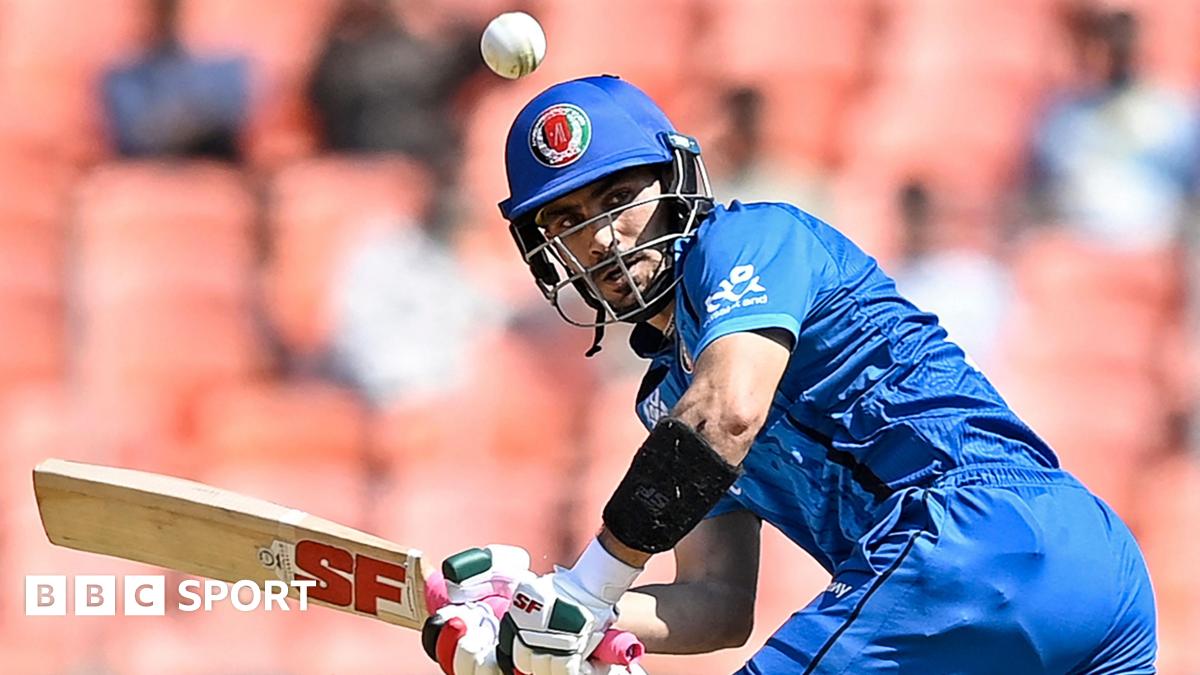
Strategic Analysis: UAE Innings vs. Afghanistan T20WC 2026
The UAE’s documented performance of 96 runs for 2 wickets in 10.5 overs against a winless Afghanistan side establishes a severe strategic baseline. This scoring velocity immediately pressures Afghanistan’s chase requirements and exposes critical vulnerabilities in their bowling strategy.
Batting Efficiency and Partnership Dynamics
The core of the UAE’s leverage stemmed from the unbeaten partnership between Sharafu (40 off 28, SR 142.86) and Sohaib Khan (42 off 28, SR 150.00). This pairing demonstrated successful neutralization of the Afghan attack, characterized by high strike rates that forced early resource expenditure.
- Run Rate Benchmark: The established run rate demands an aggressive chase, directly impacting Afghanistan’s ability to consolidate in the middle overs.
- Discipline Lapses: Afghanistan conceded four extras (1 no-ball, 1 wide, 2 leg byes), indicating minor operational inconsistencies that compounded conventional batting damage.
Bowling Resource Allocation: Efficiency vs. Expenditure
A critical metric emerging from the first 10.5 overs is the inefficient distribution of Afghanistan’s key spin resources, contrasting sharply with pace efficiency.
Key Bowler Metrics:
| Bowler | Overs | Runs Conceded | Wickets | Economy Rate |
|---|---|---|---|---|
| Azmatullah | 2.0 | 9 | 1 | 4.50 (Most Efficient) |
| Noor | 3.0 | 17 | 0 | 5.67 (Containment) |
| Mujeeb | 3.0 | 30 | 1 | 10.00 (High Expenditure) |
| Sharifi | 1.5 | 14 | 0 | 9.33 (High Leakage) |
Azmatullah’s economy rate (4.50) suggests potential strategic misallocation, as his effective overs appear limited. Conversely, Mujeeb’s 10.00 economy rate signifies significant run capital expenditure, eroding confidence in his deployment during high-leverage scenarios.
Vulnerability Assessment: Afghan Fielding & Strategy
The failure to secure early breakthroughs against the UAE top order highlights a systemic flaw in Afghanistan’s opening bowling deployment. While Azmatullah dismissed Sharma early, the subsequent sustained partnership nullified this initial success, indicating a failure in applying sustained pressure.
- Middle-Over Failure: The fact that the UAE pair remained unbeaten confirms a critical breakdown in Afghanistan’s wicket-taking strategy between overs 6 and 11, a phase crucial for momentum control in T20 fixtures.
- Tactical Pivot Required: The data compels an immediate strategic review away from high-conceding spin toward utilizing pace variations or defensive field settings to restrict boundary hitting.
Tournament Context and Competitive Positioning
In the high-stakes T20WC 2026 structure, failure to contain teams like UAE results in immediate Net Run Rate penalties, complicating group stage progression, especially for established nations under pressure.
Implications for Advancement
The UAE’s performance sets a new expectation for associate nations: aggressive, partnership-driven batting is now viable against established bowling attacks. For Afghanistan, loss of points here signals a potential divergence between institutional investment (e.g., participation in Test Championship) and immediate T20 operational efficacy.
- Performance Accountability: Immediate accountability is required; performance gaps between preparation and execution under tournament duress must be closed rapidly.
- Data Interpretation: The analysis confirms that despite attempts at containment (Azmatullah 6 dot balls, Mujeeb 7 dot balls), the high run output ensured UAE dictated the scoring pace.