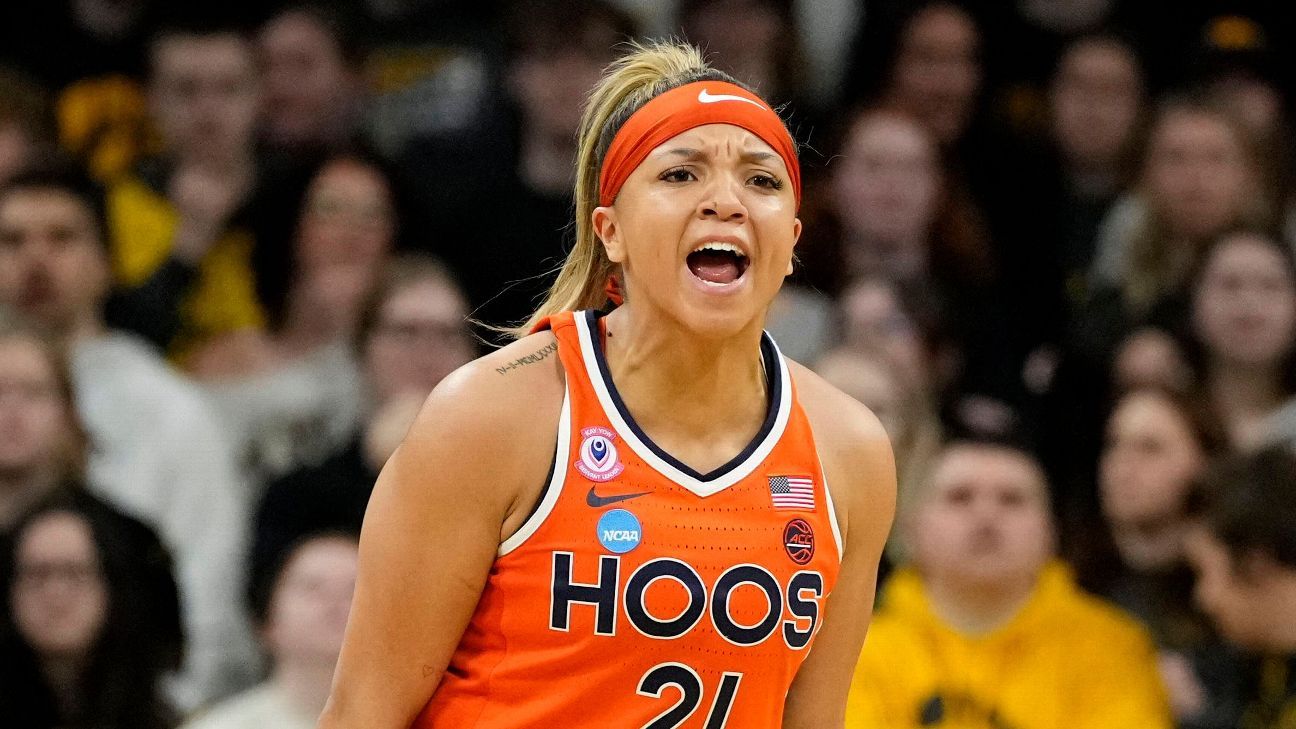
The advancement of the 10th-seeded Virginia Cavaliers into the regional semifinals represents a definitive structural disruption within the NCAA women’s tournament bracket, directly challenging the positional authority of a No. 2 seed.
Kymora Johnson’s 28-point performance in the decisive double-overtime victory over No. 2 Iowa (83-75) establishes a critical precedent: sustained lower-seed resilience can effectively nullify significant seeding advantages and home-court leverage.
Deconstructing Seeding Efficacy: The Resilience Multiplier
Virginia’s trajectory was operationally severe, requiring three high-leverage victories in five days, commencing with a First Four win. This operational density validates their capacity to achieve peak performance across compressed scheduling demands, contrasting sharply with expectations for higher-seeded teams.
This sequence directly refutes the conventional premise that superior seeding—which typically affords rest advantages and perceived softer opening matchups—guarantees superior endurance or adaptability against highly motivated, lower-ranked opposition.
The perceived stability of the women’s tournament narrative is actively being rewritten, escalating the bracket’s volatility index and compelling future seeding committees to weigh demonstrated competitive output more heavily than historical placement metrics.
The Failure of Home-Court Leverage as a Decisive Factor
Iowa’s inability to translate a sellout home environment of 14,332 spectators into a competitive advantage exposes a critical systemic vulnerability for top-seeded programs relying on institutional saturation for momentum.
Coach Jan Jensen’s post-game acknowledgment of having “everything in our favor” confirms that environmental factors were maximized but failed to compensate for deficiencies in high-leverage execution. The Hawkeyes’ offensive stagnation over the final 3:57 of regulation, leading directly to overtime, indicates a breakdown in late-game strategic management under focused defensive pressure.
For Iowa stakeholders, this outcome represents a failed investment in facility utilization and fan engagement capital, demonstrating that external support cannot substitute for effective execution in elimination scenarios.
Performance Benchmarking and Competitive Parallels
Virginia’s achievement—becoming the first 10-seed to reach the Sweet 16 since Creighton in 2022—creates a direct competitive parallel, identifying the 10-seed slot as an unrecognized pivot point in bracket projection models.
Coach Amaka Agugua-Hamilton framed the win as successfully countering Iowa’s pedigree, suggesting a deliberate seizure of psychological leverage early in the contest. This fortitude is starkly juxtaposed against the palpable psychological toll registered by Iowa players like Taylor Stremlow and Kylie Feuerbach, whose lack of excuses underscores the cost of maximal expectation failure.
Macro Effects on Bracket Integrity and Media Valuation
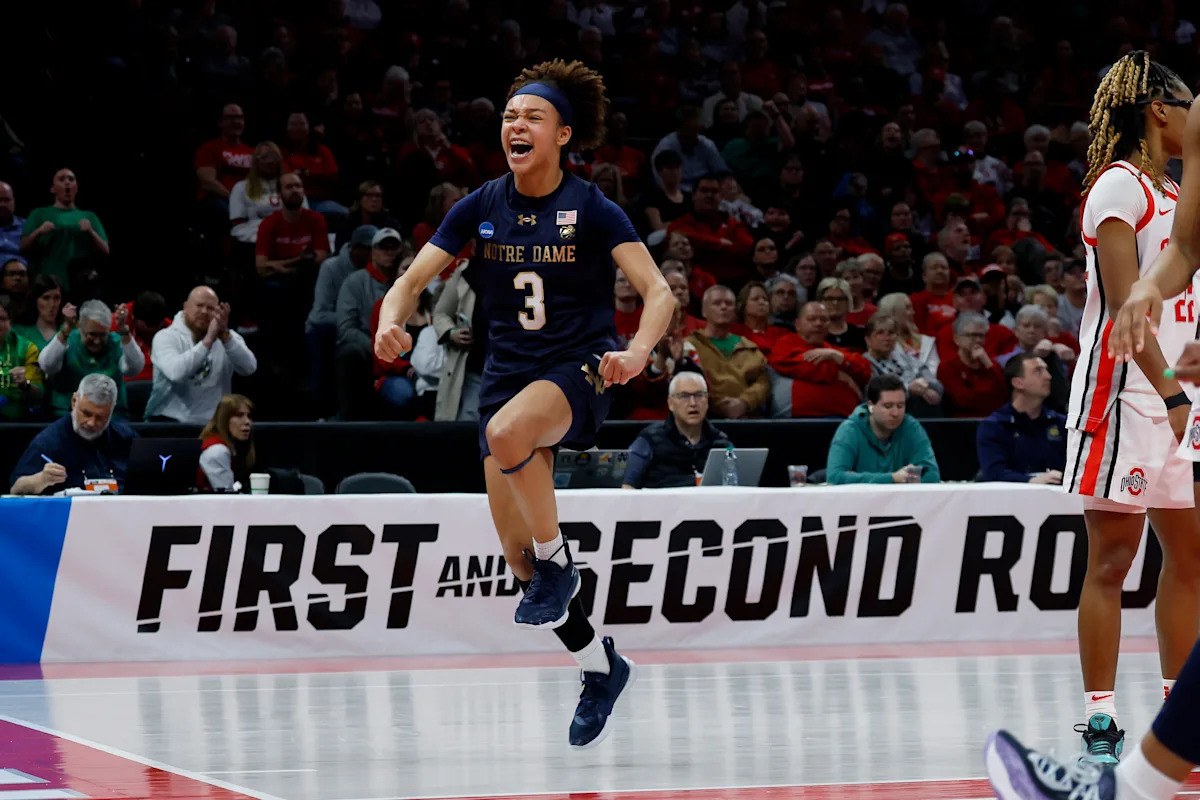
The cluster of upsets, including Notre Dame over Ohio State and Kentucky’s narrow dispatching of West Virginia, destabilizes established financial forecasting tied to anticipated marquee matchups in the tournament’s second weekend.
Early elimination of top seeds fractures expected viewership models and associated advertising revenue streams, shifting market attention toward the high-variance narrative of underdog ascent.
This result fundamentally undermines the structural integrity of bracket pools, forcing a shift in engagement metrics from tracking powerhouse progression to analyzing emergent, high-variance performance profiles.
Operational Velocity and Institutional Reassessment
Virginia’s logistics department merits recognition for efficiently managing the operational strain of three critical games in five days, proving logistical readiness for compressed formats. Conversely, Iowa faces immediate, high-visibility offseason evaluation intensified by the home-court failure.
Contextualizing this is Virginia’s ongoing rebuilding phase under the current staff. This deep run signifies a rapid acceleration of strategic objectives, compressing expected multi-year development timelines into a single, high-impact tournament performance.
Incentive Structures Post-Upset
For Virginia, this success serves as tangible validation for administrative investment in coaching and development, creating powerful incentives for talent retention and improving future recruiting leverage.
This exposure directly enhances the personal brand equity of key players like Kymora Johnson, translating into superior NIL opportunities and favorable professional scouting evaluations—a vital component of modern collegiate economics.
Competitive Landscape Compression
The simultaneous exits of No. 2 Iowa and No. 3 Ohio State effectively flatten the competitive hierarchy entering the subsequent rounds. This compression magnifies the strategic value of remaining higher seeds who successfully navigated the volatility.
Remaining contenders must recalibrate scouting and game planning, as the margin for error against any remaining opponent, irrespective of initial seeding, has been demonstrably reduced based on current results.
The 5-seed Kentucky Wildcats securing a one-point win over 4-seed West Virginia further reinforces systemic parity issues, suggesting regular-season metrics possess diminishing predictive utility in single-elimination formats.
Long-Term Program Perception Shift
For Iowa, the narrative evolves from perennial contender to one that failed to execute on a prime opportunity, placing immediate administrative pressure on addressing quantifiable deficiencies in clutch performance, specifically noting consecutive struggles with shooting consistency.
Virginia leverages this run to re-establish national relevance, compressing expected incremental progress. The structural implication is that seeding diminishes as a predictive factor beyond the first weekend when confronted by teams demonstrating superior psychological fortitude.
The double-overtime contest, featuring Flagrant-1 fouls in the first extra session, highlights the emotional and physical intensity that seeding models consistently fail to quantify, proving to be the ultimate differentiator.
This event sequence demands analysts prioritize demonstrated clutch performance metrics over standard season records when assessing NCAA evaluation model efficacy. The recurrence of Iowa’s second-round exit to a 10-seed (following Creighton in 2022) suggests a cyclical issue regarding managing expectation versus execution under home-court pressure.
Collectively, the advancement of Virginia, Kentucky, and Notre Dame signals a market correction where demonstrated competitive grit currently overrides structural seeding advantages. This maintains March Madness’s high-engagement environment by rewarding execution resilience over preseason rankings.