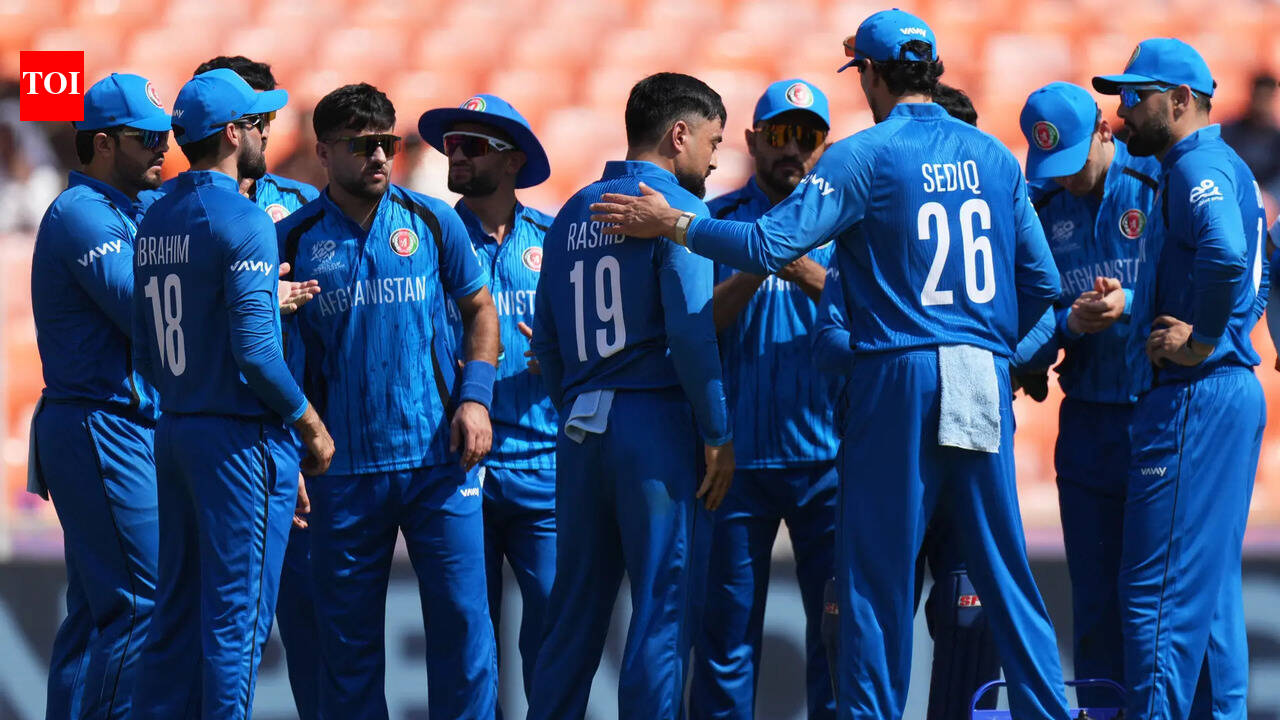
I. The Competitive Imperative and Structural Vulnerability in Group D
Afghanistan enters its final Group D fixtures against the UAE and Canada facing acute competitive duress. Following two consecutive, high-leverage defeats, the immediate tactical objective—securing maximum points—is necessary but potentially insufficient for T20 World Cup qualification. This predicament introduces a critical strategic abstraction: Afghanistan’s progression hinges on external results, specifically the outcome of the New Zealand versus Canada fixture.
This dependency on rival group dynamics shifts control away from internal operational performance, underscoring the narrow margins of error governing success for emerging nations. For a side that achieved significant milestones in 2023 and 2024, this structural vulnerability risks transforming a narrative of rapid ascent into one of competitive volatility, potentially leading to a sharp deceleration in institutional momentum should they face a group stage exit in 2026.
The Strategic Complexity of Net Run Rate (NRR) Management
Given the external qualification requirements, Net Run Rate (NRR) maximization becomes a paramount, secondary strategic objective. While victory against both the UAE and Canada is non-negotiable, the margin of victory must be optimized to ensure a competitive advantage should tie-breaking criteria be required. This demands aggressive, high-risk strategies in both batting and bowling, even once a match-winning position is established, contrasting sharply with the conservative approach typical of high-pressure scenarios.
The integration of complex mathematical scenarios into on-field tactical decision-making places sophisticated requirements on the coaching staff and leadership (Rashid Khan). Failure to prioritize NRR management, or over-aggressive execution resulting in unnecessary dismissals, could nullify the advantage gained from securing the primary victories.
II. Operational Crisis Management and Elite Asset Deployment
The immediate operational challenge is psychological stabilization, necessitated by the ‘heartbreaking defeat’ against South Africa, decided by a double Super Over. This result serves as an extreme stress test of decision-making under pressure, where marginal errors are magnified into existential consequences. Coach Jonathan Trott’s central role involves transitioning the squad from processing this acute psychological friction to executing a flawless, low-error strategy against the UAE.
Leveraging Performance Assets Under Duress
The team’s competitive ceiling remains intrinsically linked to the performance leverage delivered by its few elite, globally marketable assets. Rashid Khan, as the premier T20 spinner and captain, carries the dual burden of tactical execution and emotional regulation. His ability to control the middle overs is non-negotiable for restricting competitive totals and securing quick wickets necessary for NRR optimization.
This dependency is structurally significant. The reliability of Ibrahim Zadran at the top of the order is essential for mitigating early batting risk, functioning as an anchor to absorb pressure and facilitate the high-impact approach of the middle order. Complementing this is Azmatullah Omarzai, whose development as a genuine all-round force is crucial for bridging batting and bowling deficiencies. The systemic failure of any one of these high-value players under high pressure risks triggering a broader competitive collapse, a common fragility among developing cricket boards.
III. Institutional Stability and Market Ramifications
An early exit from the T20 World Cup carries severe financial and institutional consequences for the Afghanistan Cricket Board (ACB). Progression unlocks crucial higher tiers of prize money and dramatically increases visibility for national sponsors. Failure to advance diminishes the team’s global media footprint during peak viewing weeks, eroding the commercial value derived from their recent successes in 2023 and 2024.
This erosion of visibility directly impacts the ACB’s ability to attract foreign investment and secure favorable bilateral series agreements, which are vital for maintaining competitive infrastructure and talent development pathways. The institutional pressure is further compounded by the need to justify investments in high-profile coaching staff and infrastructure improvements made during the period of competitive rise. A swift regression could trigger internal reviews regarding strategic resource allocation, forcing a reassessment of the long-term roadmap and competitive sustainability.
Impact on Global Player Valuation
The performance of key Afghan players in this high-stakes environment directly influences their market valuation within the global T20 franchise ecosystem. Players like Omarzai rely on consistent, high-leverage international performances to justify premium contracts. A strong showing, even in defeat, secures their financial future and contractual leverage, whereas underperformance in a must-win crisis scenario can temporarily depress market value. The ACB must rely on these globally experienced players to deliver the performance demanded by their market status to salvage the national campaign and reinforce the narrative of a consistent cricketing power.
Conclusion: Test of Institutional Resilience
The Group D finale is a defining test of Afghanistan’s institutional resilience and strategic recovery. The immediate significance lies in the non-negotiable requirement for operational excellence coupled with the abstraction of managing external dependencies. Failure to secure decisive victories, combined with an unfavorable result in the New Zealand versus Canada fixture, would seal Afghanistan’s exit, initiating a period of strategic overhaul and forcing the ACB to confront the competitive and financial ramifications of volatility at the highest echelon of international cricket.