The 2026 California gubernatorial primary has transitioned into a period of acute strategic realignment. As the electorate confronts a perceived decoupling of the state’s GDP from household purchasing power, the race is defined by a fractured plurality rather than a clear mandate. Current data suggests an institutional uncertainty regarding the state’s fiscal trajectory, with voters increasingly prioritizing immediate economic stabilization over legacy social projects.
Statistical Congestion and the Liquidity of Public Sentiment
Recent polling from CBS News underscores a high-beta environment at the apex of the field: Steve Hilton (16%), Tom Steyer (15%), and Xavier Becerra (13%) are locked in a statistical dead heat. This narrow distribution signifies that the primary remains a wide-open contest where marginal shifts in voter preference—particularly among the massive reservoir of undecided voters—could disrupt the current hierarchy. The high degree of voter consideration for multiple candidates suggests latent fluidity; the victor will be the candidate who successfully converts general interest into a committed primary turnout.
The Becerra Ascent: Institutionalism as Risk Mitigation
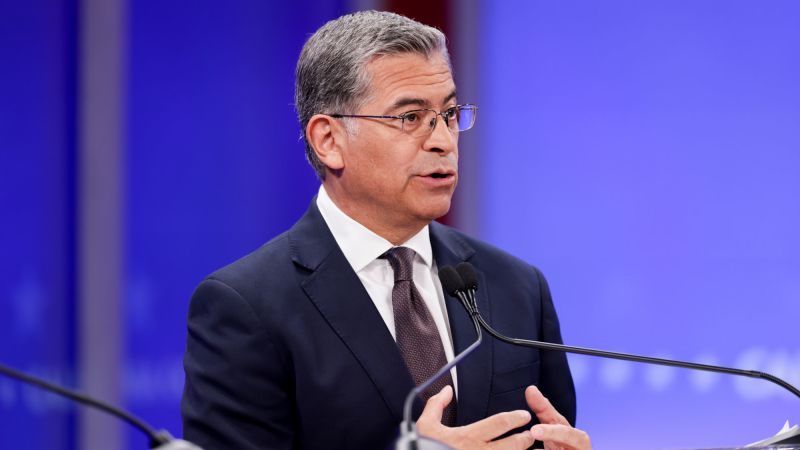
Xavier Becerra’s recent polling momentum marks his emergence as the ‘safe harbor’ for the Democratic establishment. His campaign leverages extensive administrative tenure as a hedge against the perceived volatility of less tested or more radical alternatives. By positioning himself as an archetype of stability, Becerra has effectively insulated his campaign from the immediate fallout of external scandals. However, his reliance on executive experience invites technocratic critiques. Opponents argue that his record lacks the granular fiscal blueprints and revenue frameworks necessary to solve California’s structural housing deficit and cost-of-living crisis.
Ideological Divergence and the Newsom Legacy
The race serves as a referendum on the Newsom administration’s legacy, creating a bifurcated campaign environment. Democratic voters generally seek a continuity candidate who can withstand federal friction, while Republican voters frame the state’s current status as a systemic governance failure. This polarization necessitates a dual-track strategy: candidates must balance institutional continuity with the aggressive structural reforms demanded by an increasingly pessimistic electorate.
Technocratic Specificity: The Porter-Becerra Friction
The debate clash between former Representative Katie Porter and Becerra highlights a growing demand for policy precision. Porter’s emphasis on ‘numbers’ and revenue plans targets a segment of the party disillusioned with broad rhetoric. In contrast, Becerra’s defense of executive management over legislative activism underscores a fundamental party tension: the choice between disruptive policy frameworks and the operational stability of existing state bureaucracies. In an environment where the status quo is increasingly seen as a liability, this tension will likely dictate the race’s final trajectory.
Strategic Implications of Top-Two Primary Mechanics
California’s nonpartisan primary system fundamentally alters the strategic calculus. The statistical split suggests a high probability of a traditional Democrat-versus-Republican general election, yet a dual-Democrat runoff remains viable if the Republican vote remains fragmented. For candidates like Steve Hilton, success hinges on consolidating the minority vote while positioning as the sole alternative to a divided Democratic field. Conversely, Democrats must differentiate their fiscal styles without alienating the broader coalition required for a November victory.
Conclusion: Economic Pragmatism as the Ultimate Leverage
As the primary cycle matures, the ‘California Dream’ has shifted from a policy goal to a point of fiscal contention. The candidate who can bridge the gap between administrative feasibility and visionary economic relief will likely secure the necessary donor support and voter commitment. With the primary landscape still undefined, the coming months will test whether institutional experience or disruptive technocracy is the preferred remedy for the state’s mounting economic pressures.