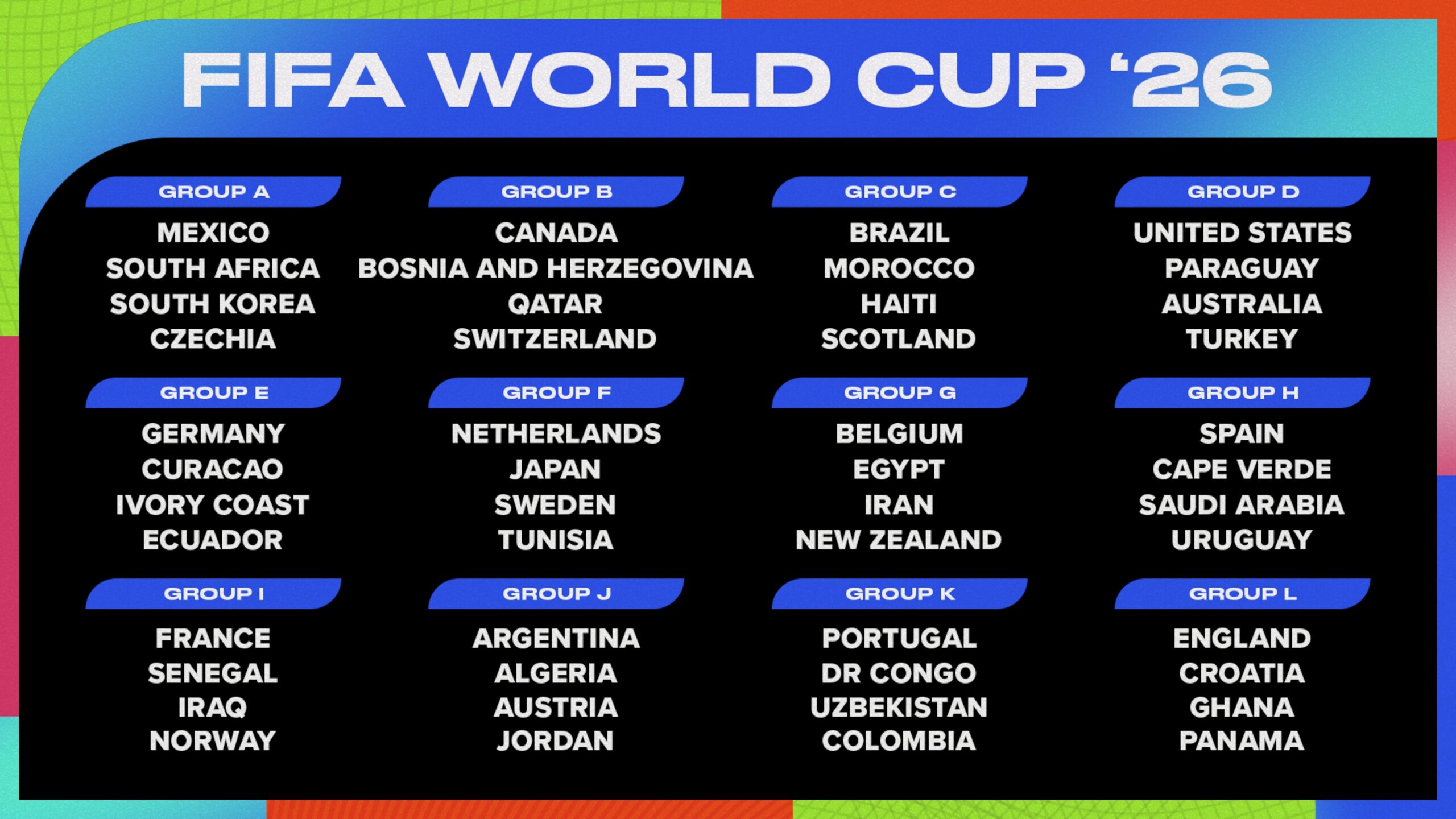
The 2026 FIFA World Cup has transitioned from logistical preparation to a phase of high-stakes competitive execution. Mexico’s early mathematical certainty regarding knockout qualification provides a critical anchor for the tournament’s commercial stability within the host region, ensuring sustained domestic viewership and stadium occupancy.
Tactical Efficiency and Mexico’s Group A Dominance
Securing six points from two fixtures allows Mexico’s technical staff to implement load management and tactical preservation ahead of the final group match. Their 1-0 victory over South Korea in Guadalajara underscores a disciplined defensive architecture, prioritizing points-per-goal efficiency over offensive volatility. This result forces South Korea into a precarious must-result scenario to avoid the uncertainty of third-place ranking comparisons.
Group B: Statistical Outliers and Goal Differential Leverage
Canada’s 6-0 victory over Qatar has fundamentally disrupted Group B’s competitive equilibrium. In an expanded 48-team format where the four best third-placed teams progress, a +6 goal differential serves as a secondary point, granting Canada an asymmetric advantage in tie-breaking scenarios. Concurrently, Switzerland’s 3-0 defeat of Bosnia and Herzegovina establishes a clinical precedent, setting up a decisive fixture against Canada for group seeding.
Evaluating the 48-Team Expansion Mechanics
The inaugural 48-team implementation has challenged concerns regarding competitive dilution. High-scoring outcomes in Group B suggest that the new qualification mechanics—specifically the viability of third-place progression—incentivize offensive aggression late in matches. However, the 1-1 draw between Czechia and South Africa in Atlanta highlights the narrow margins of error; South Africa’s prospects are now severely compromised by the disciplinary fallout of red cards issued to Yaya Sithole and Themba Zwane.
Commercial Drivers and Operational Logistics
Argentina’s 3-0 victory, punctuated by a Lionel Messi hat-trick, reinforces the tournament’s global commercial narrative. Such performances act as valuation drivers for broadcast partners and sponsors within the North American market. Logistically, the geographic dispersion between venues like Vancouver and Guadalajara tests the sports science capabilities of participating nations, where recovery protocols in diverse climates become a primary competitive differentiator.
Conclusion: The Premium on Strategic Adaptation
The 2026 cycle is proving that success in an expanded field requires more than technical talent; it demands sophisticated goal-differential management and institutional discipline. As the group stage concludes, the focus shifts to the efficiency of knockout bracket transitions and the operational resilience of host cities in managing the expanded 32-team knockout phase.