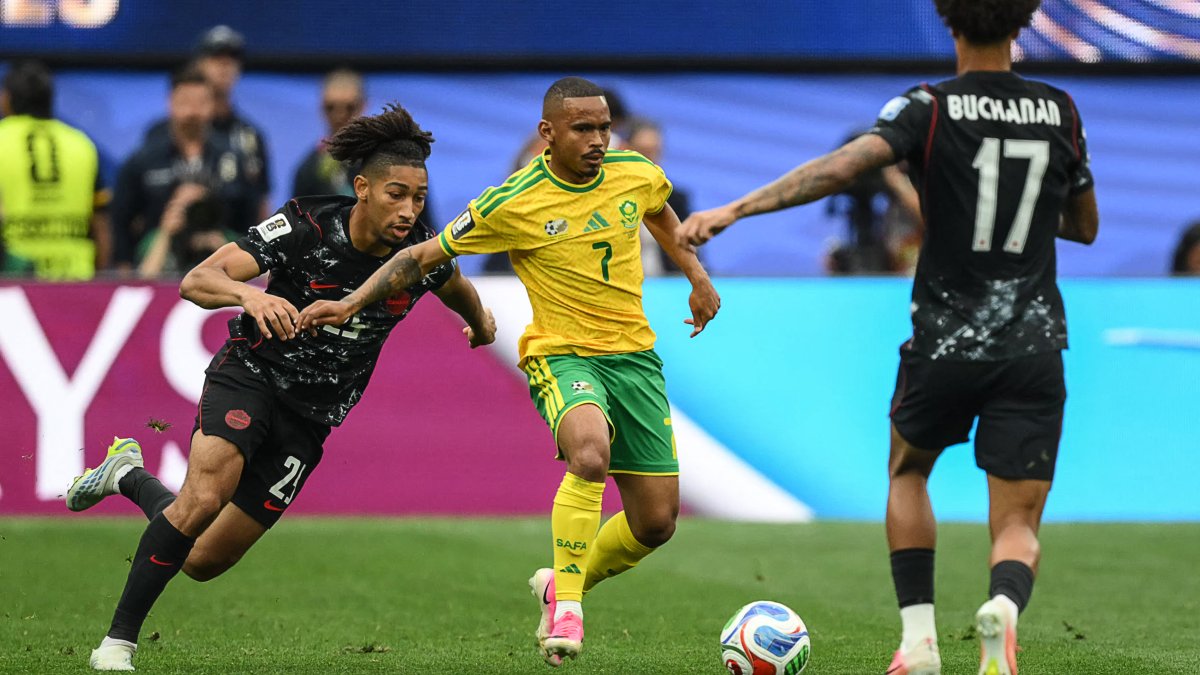
The FIFA World Cup 2026 advances into its critical 32-team knockout phase, often dubbed the “real World Cup,” commencing with the South Africa vs. Canada fixture in Los Angeles. This transition marks a decisive shift from group-stage unpredictability to winner-take-all matches where every game dictates progression or elimination.
Knockout Phase Dynamics
The commencement of the Round of 16 signifies the tournament’s pivot to direct elimination. With 32 national teams remaining, each match intensifies strategically, impacting national prestige, future funding, and player legacies.
The opening match between South Africa and Canada at the Los Angeles Stadium sets the tone. Kick-off is scheduled for 12 p.m. local time, reflecting the global broadcast complexities and diverse audience reach.
Broadcast and Accessibility in the US
In the United States, the match airs on Telemundo and streams via Peacock, utilizing a dual-channel strategy to maximize audience engagement and advertising revenue in the evolving media landscape.
The expansion to a 32-team knockout bracket increases the overall number of decisive matches, presenting new logistical and revenue opportunities for host nations and FIFA through extended broadcast rights and sponsorship deals.
Group Stage Culmination and Transition
Following 72 group stage matches, 32 teams have advanced to the knockout rounds, having demonstrated the resilience and tactical acumen required for direct elimination play. The group stage, marked by high scoring and suspense, has effectively filtered the contenders.
The competitive intensity seen in matches like Algeria vs. Austria, ending in a dramatic 3-3 draw, underscores the persistent drive for victory even when a draw might suffice, highlighting the psychological pressure and strategic decision-making inherent in the tournament.
Dramatic late goals, such as Riyad Mahrez’s equalizer for Algeria and Sasa Kalajdzic’s equalizer for Austria, exemplify the group stage’s unpredictability and its impact on team morale and subsequent tactical adjustments.
Strategic Imperatives of Knockout Football
Knockout football necessitates a fundamental strategic shift, demanding both aggressive play and meticulous risk management. Teams can no longer rely on aggregate scores or draws; each fixture is a singular battle where tactical discipline, individual brilliance, and mental fortitude are paramount.
The pressure on players and coaches intensifies, as a single error can result in immediate elimination. This can foster more conservative tactics or inspire bold, attacking approaches to secure decisive victories.
Financial implications are substantial. Advancing further directly correlates with increased prize money, enhanced commercial opportunities, and greater leverage in sponsorship negotiations for teams and federations. Conversely, early elimination carries significant financial setbacks.
Global Tournament Operations
The 2026 World Cup’s expanded format and multi-host nation structure present significant logistical and operational challenges. Coordinated management of travel, security, and broadcasting across various venues and time zones is crucial for FIFA and local organizing committees.
The competitive landscape is influenced by team performance and historical trajectories. Established teams leverage experience, while emerging nations can capitalize on momentum and tactical innovation.
Media narratives are critical in shaping fan engagement. The knockout phase amplifies coverage, focusing on tactical matchups, player form, and potential upsets, thereby driving viewership and commercial interest.
Stakeholder Value and Capital Flows
National football federations, sponsors, broadcasters, and fans all have vested interests tied to team progression. Financial capital invested in player development and infrastructure is directly linked to on-field success, especially in high-visibility knockout stages.
Successful tournament progression boosts player market values, attracts lucrative transfer deals, and enhances brand exposure for sponsors. Broadcasters benefit from peak viewership, and betting markets experience heightened activity.
Operational decisions by national teams during the knockout phase, from training to substitutions, directly influence performance and, consequently, the financial and reputational returns for all stakeholders.
Future Tournament Planning
The 2026 knockout stage’s structure and outcomes will inform future tournament planning, influencing decisions on format expansion, host selection, and broadcast rights based on operational successes and challenges.
Competitive balance and match intensity provide data for FIFA’s global development evaluations, potentially leading to adjustments in qualification pathways or development programs to foster greater international parity.
The World Cup 2026 knockout phase is a critical period for forging sporting narratives, testing national pride, and mobilizing significant economic and cultural capital globally.
South Africa vs. Canada: Tactical Preview
The opening Round of 16 match between South Africa and Canada offers a compelling tactical contrast. South Africa is likely to rely on physicality and resilience to disrupt Canada’s rhythm and exploit defensive gaps.
Canada may aim to utilize pace and ball possession to create scoring opportunities through quick transitions. Their success will depend on adapting to the pressure of elimination football and overcoming potential historical disadvantages.
Coaching staff decisions and in-game adjustments will be crucial. Effective tactical execution, player management, and set-piece strategies could prove decisive in a phase with minimal room for error.
Performance Leverage and Incentives
Both South Africa and Canada have immense incentives to perform. Beyond national pride, successful progression offers significant leverage for future funding, player development, and the standing of their football federations.
Players are driven by the chance to achieve career-defining moments. The intense spotlight of knockout football can elevate performance or lead to critical errors, creating a dynamic environment for athletic achievement.
Financial incentives, including increased prize money, can be reinvested into national football programs, fostering a cycle of growth and performance.
Broader Tournament Context
The expanded 2026 World Cup, with its unprecedented number of host nations, highlights the growing global appeal and economic power of international football. Managing such a large-scale event requires seamless multi-jurisdictional coordination.
The group stage’s unpredictability has set the stage for a knockout phase promising heightened drama, featuring underdog stories, challenges to established powers, and moments of individual brilliance.
Extensive media coverage transforms matches into global spectacles, amplifying the World Cup’s cultural significance and influencing fan engagement and commercial partnerships.
Capital Deployment and Risk Distribution
Substantial capital from sponsors, broadcasters, and host nations is deployed, with significant financial returns contingent on the tournament’s success. The knockout stage represents the peak of this investment, typically drawing the highest viewership and engagement.
Risk is distributed among stakeholders: teams face performance risks, broadcasters and sponsors face viewership risks, and host nations manage operational and security challenges. The knockout phase’s success is therefore crucial for validating these investments and risk assessments.
Institutional and Strategic Significance
As the premier international football competition, the World Cup holds significant institutional importance for FIFA and its member federations. The operational execution of the knockout stage reflects directly on FIFA’s governance and administrative capabilities.
Strategically, the tournament allows nations to showcase sporting prowess and cultural identity globally. Team performance can influence government investment in sports, inspire athletes, and foster national unity.
Competitive outcomes in the knockout matches significantly impact the global transfer market and player valuations. Players excelling in these high-pressure environments often see their market value increase, affecting club finances and player movement.
Downstream Effects and Market Impact
The downstream effects of the World Cup knockout stage extend beyond sports, boosting consumer spending on merchandise, food, and beverages. Retail and hospitality sectors benefit from increased activity.
The media market sees a surge in advertising revenue as brands compete for attention during peak viewership, influencing broader marketing strategies and demonstrating the economic power of major sporting events.
Global conversations and cultural exchanges sparked by the World Cup can influence international relations and perceptions, highlighting the tournament’s broader societal and diplomatic impact.
Conclusion: The True Test Commences
The FIFA World Cup 2026 transitions into its decisive 16-team knockout phase, shifting the narrative from potential to certainty and aspiration to immediate consequence. The South Africa vs. Canada match in Los Angeles symbolizes the start of this high-stakes period, where every action carries the weight of elimination.
Strategic decisions, capital movements, and performance leverage culminate in winner-take-all contests. The coming weeks will not only determine the champion but also shape the legacies of teams, players, and the tournament itself.
This phase is where tactical acumen meets unwavering resolve, revealing a team’s true mettle on the grandest stage of international football.