Tactical Dominance and the Efficiency Gap
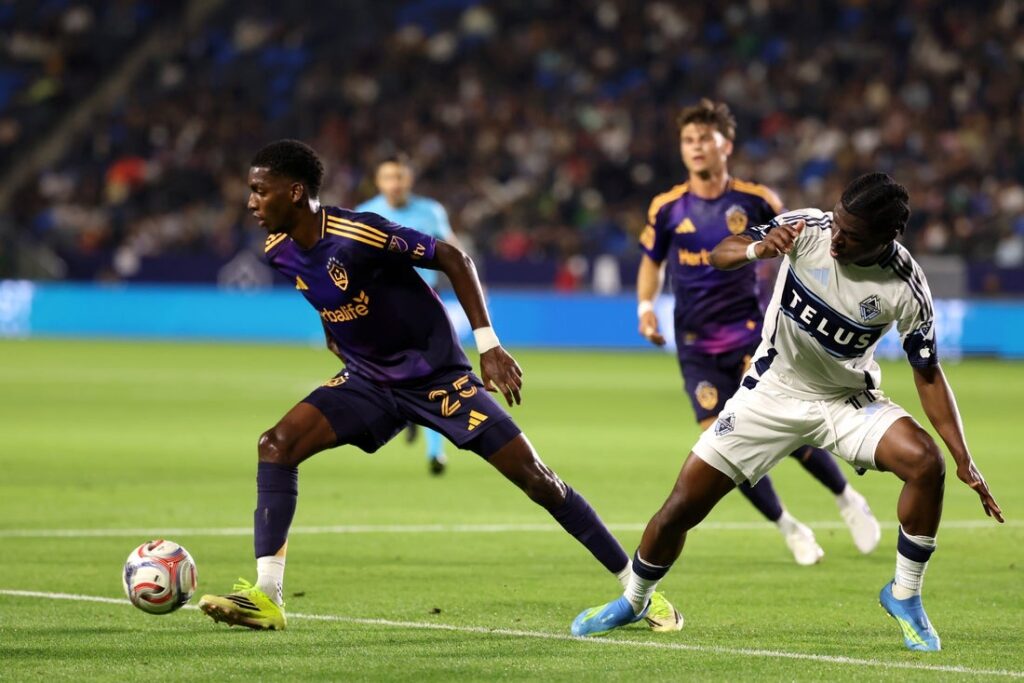
The 1-1 draw between the Vancouver Whitecaps and the LA Galaxy serves as a definitive case study in the tension between statistical control and match outcomes. Despite maintaining 58% possession and a 19-7 shot advantage, the Whitecaps struggled to break down a resilient Galaxy low-block until the 82nd minute. This discrepancy highlights the volatility of modern tactical setups: high-volume offensive output often yields diminishing returns against disciplined, counter-attacking structures.
Operational Risks in Goalkeeping Transitions
The match turned in the 46th minute due to a distribution error by Vancouver goalkeeper Yohei Takaoka. This incident exposes the systemic risk of playing out from the back; in a league defined by parity, such lapses are frequently amplified by opponents optimized for transition. The Galaxy’s ability to exploit this turnover demonstrates a high-press tactical awareness, proving that individual errors—rather than aggregate performance—often dictate the outcome of tight matches.
The Economics of Set-Piece Execution
Mathias Laborda’s 82nd-minute equalizer, assisted by Sebastian Berhalter, illustrates the strategic imperative of set-piece specialization. When open-play creativity is stifled by defensive density, dead-ball scenarios provide a necessary alternative channel for goal production. This reliance on specialized phases of play is a cornerstone of MLS competitiveness, forcing teams to diversify their scoring threats beyond primary tactical patterns.
Competitive Context and League Structure
The result marks a transition for the Vancouver Whitecaps, ending a four-game winning streak and highlighting the difficulty of maintaining early-season form as scouting reports evolve across the league. Conversely, the Galaxy (3-4-4) reinforced the viability of a low-block defensive strategy. By limiting a high-possession opponent to just five shots on target, the Galaxy proved that structural discipline remains a functional counter-measure to superior ball retention.
Institutional Parity and Strategic Evolution
MLS roster constraints and salary caps inherently encourage the parity observed in this matchup. Because total resource accumulation is impossible, teams must prioritize marginal gains—transition defense, set-piece delivery, and individual impact—over total system dominance. The performance of Joseph Paintsil, who secured his fifth goal contribution in seven matches, underscores the league-wide reliance on high-efficiency transition attackers. As the season progresses, long-term success will belong to those capable of managing variance through tactical versatility rather than static game models.