
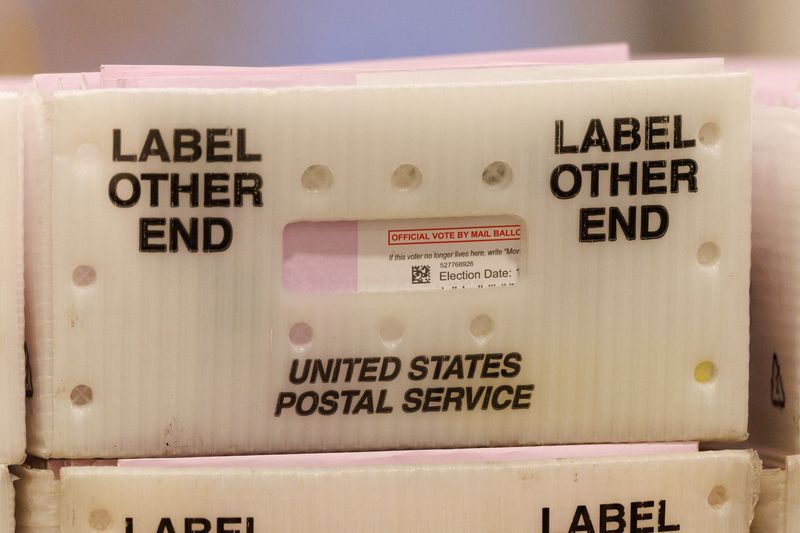
The United States Postal Service (USPS) has unveiled a regulatory framework that seeks to fundamentally redefine the nexus between federal logistics and state-level election administration. Championed by Postmaster General David Steiner, the proposal requires states to submit comprehensive voter lists—specifically those issued absentee ballots—to the USPS as a prerequisite for mail delivery. This strategic pivot marks a transition for the agency from a neutral service provider to a centralized clearinghouse for election-data verification.
The Operational Calculus of Data Synchronization
Postmaster General Steiner frames this mandate as an essential evolution in logistical efficiency. By integrating state voter rolls with postal sorting systems, the agency aims to implement a ‘matching’ protocol. This process verifies that the volume of outgoing mail aligns with authorized distribution lists, theoretically mitigating the risk of undeliverable ballots and streamlining high-volume processing. However, this synchronization necessitates rigorous technical alignment; states would be compelled to adopt standardized barcode formats and data-sharing protocols compatible with the Postal Service’s internal tracking architecture.
Institutional Friction and Jurisdictional Overreach
The proposal has encountered significant resistance, notably from Senator Gary Peters and other legislative oversight leaders. Critics characterize the rule as a coercive mechanism that leverages the USPS’s logistical monopoly to compel states into surrendering sensitive voter information under threat of service suspension. This creates a critical friction point between federal agency authority and the 10th Amendment, which reserves election administration primarily to the states. By making ballot delivery contingent on data disclosure, the USPS is effectively asserting a new tier of regulatory oversight over state-managed absentee voting processes.
Administrative Burdens and Technical Fragility
For many jurisdictions, compliance would require a systemic overhaul of existing ballot-tracking infrastructure. The financial and administrative costs of upgrading software and training staff to meet USPS data standards would fall heavily on state budgets, particularly in decentralized systems where counties manage independent voter rolls. Furthermore, the technical requirements introduce new points of failure: any discrepancy in barcode formatting or data incompleteness could lead to the systemic rejection of valid ballots, potentially resulting in large-scale disenfranchisement in non-compliant or technically lagging regions.
Long-Term Structural and Political Implications
The involvement of executive influence—specifically reports that the plan aligns with directives from President Donald Trump—has intensified concerns regarding the agency’s non-partisan status. If the USPS successfully transitions into a data-driven regulatory body, it sets a precedent for similar mandates across other government-related mail sectors. The resolution of this conflict will likely be decided in the courts, focusing on whether the USPS possesses the statutory authority to impose administrative conditions on the fundamental right to vote. The outcome will ultimately define the future of federal-state cooperation in the American democratic process.

Photo by ArtisticOperations on Pixabay.