
Strategic Interdiction Campaign Targets Crimean Supply Arteries
Ukrainian forces have significantly intensified their campaign to interdict critical ground lines of communication (GLOCs) linking occupied Kherson Oblast to Crimea. This sustained targeting of vital infrastructure aims to systematically disrupt the logistical flow indispensable for Russian military operations and the sustenance of the civilian population within the occupied peninsula.
On June 11, Vladimir Saldo, the occupation head of Kherson Oblast, confirmed a series of Ukrainian strikes on multiple strategically vital bridges. These included infrastructure over the North Crimean Canal near Preobrazhenka and Myrne, the Perekop-Armyansk Road Bridge, and the Stavky Road Bridge, all integral components of the M-17 Armyansk-Oleshky highway.
The precision targeting of these bridges directly impacts Russia’s capacity for military resupply, serving as primary conduits for troop movements, equipment, fuel, and ammunition. Disrupting these key arteries immediately degrades the ability of Russian forces to sustain forward operating positions and maintain combat readiness across southern Ukrainian territories.
Further corroborating these reports, a Ukrainian regiment commander in the Kherson direction detailed a successful strike on a Russian logistics route via Armyansk. This operation reportedly damaged or destroyed approximately 50 Russian military cargo vehicles, laden with critical fuel and ammunition. Such an interdiction represents a direct operational blow, severely degrading the material support available to frontline units. The loss of this significant volume of ordnance and fuel directly translates into reduced operational tempo and heightened logistical vulnerability for Russian forces dependent on these supply chains.
Escalating Logistical Strain and Diversionary Tactics
These recent strikes on the M-17 highway system build upon earlier successful attacks on the Chonhar bridge (June 7-8 and June 9), which had already forced Russian forces to divert their primary logistics. The subsequent targeting of the Armyansk route underscores the immediate, adaptive operational pressure exerted by Ukraine’s interdiction campaign, demonstrating Moscow’s diminishing viable supply options.
Such forced diversions are inherently inefficient, imposing significant operational costs. Alternative routes are typically longer, less direct, and often less secure, subjecting supply convoys to prolonged transit times and increased exposure to further interdiction. This necessitates a greater allocation of resources to route security and alternative transportation methods, effectively diverting valuable assets from other critical operational priorities and increasing the overall logistical footprint.
The cumulative effect of these infrastructure attacks and subsequent logistical re-routing creates a cascading strain across Russia’s entire supply network. Both the M-17 Armyansk-Oleshky highway and the broader R-280, often termed “Novorossiya,” are primary arteries for supplying Russian forces on southern battlefields and sustaining civilian provisions in occupied territories. Their sustained disruption directly threatens the operational viability and long-term sustainability of Russia’s military presence in the region.
This strategic vulnerability extends beyond immediate military logistics, profoundly impacting the civilian economy of the occupied peninsula. Crimea’s heavy reliance on a limited number of land routes for essential goods renders the region acutely susceptible to comprehensive supply chain disruptions, affecting everything from food to construction materials.
Economic Fallout and Public Relations Challenges
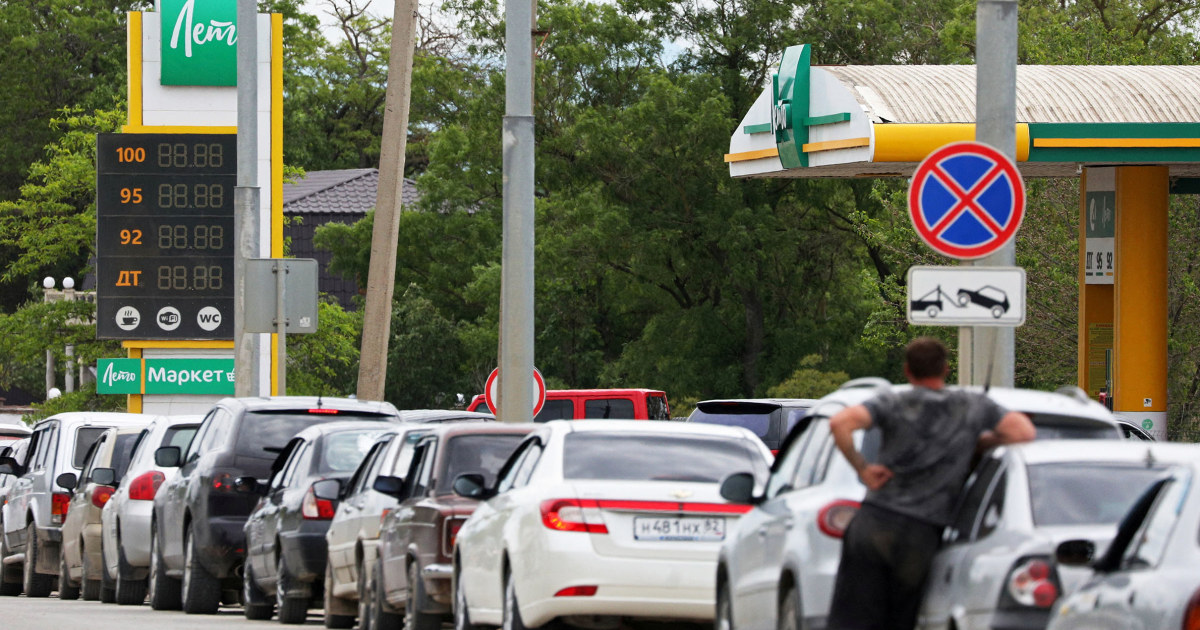
The Ukrainian interdiction campaign has rapidly triggered significant economic repercussions across Crimea, most notably concerning fuel supplies. Reports from residents and tourists graphically illustrate a deepening crisis, marked by “interminable lines at gas stations” and a pervasive “fuel lottery,” signaling widespread scarcity and uncertainty.
For Crimea, an economy heavily reliant on tourism, this presents a critical dual challenge: not only the direct operational impact on military logistics but also severe economic disruption affecting its civilian population and key industries. Fuel shortages directly impede daily life, commerce, and critically, the tourism sector, which depends entirely on consistent access to transportation and amenities.
The highly visible signs of scarcity and escalating public frustration have swiftly escalated into a significant “public relations nightmare” for the Kremlin. Images and videos of long queues and empty pumps circulating widely on social media directly contradict and undermine Moscow’s narrative of stability and effective governance in the occupied territories.
This growing domestic discontent creates a profound strategic challenge, potentially eroding public support for the occupation and increasing pressure on both local authorities and the central administration. The demonstrable inability of the occupying power to ensure basic services and commodities directly impacts its legitimacy and control over the annexed region.
Indeed, local occupation authorities, including Vladimir Saldo, have been compelled to react to the escalating crisis, taking measures such as temporarily closing traffic via the Chonhar bridge. Their public responses and scrambling for solutions reflect a profound struggle to manage the crisis and mitigate growing public anger, highlighting their administrative fragility under duress.
Thus, the operational success of interdicting supply lines extends powerfully into the informational domain. The tangible, visible consequences of the campaign amplify pre-existing grievances and directly challenge official Russian narratives, creating a potent feedback loop where operational realities fuel public discontent, which in turn significantly exacerbates the Kremlin’s strategic challenges.
Strategic Objectives and Systemic Vulnerabilities
Kyiv’s explicit objective of achieving a “logistical lockdown” of Russian operations across occupied Ukrainian territory represents a high-leverage strategic aim. While the ultimate impact on the broader conflict dynamics requires ongoing assessment, the campaign demonstrably generates significant operational and strategic leverage by directly targeting the adversary’s circulatory system.
A sustained logistical lockdown would systematically degrade the combat effectiveness of Russian forces. This extends beyond merely limiting access to essential supplies, reinforcements, and maintenance capabilities; it forces Moscow into difficult strategic choices regarding resource allocation, operational priorities, and troop disposition. Units deprived of consistent resupply become less mobile, less lethal, and more vulnerable to Ukrainian counter-offensives.
Crucially, this campaign exposes inherent systemic vulnerabilities within Russia’s logistical architecture supporting its occupation of Crimea and southern Ukraine. The over-reliance on a limited number of key land bridges and highways creates predictable choke points. Once these are identified and precisely targeted, they yield disproportionate operational effects, maximizing the impact of Ukrainian strikes.
The sophisticated use of drone technology in these interdiction strikes highlights a critical evolving aspect of modern warfare. Precision targeting of critical infrastructure allows Ukraine to achieve significant strategic objectives without direct engagement of large ground forces, representing a cost-effective and asymmetric advantage. This method minimizes direct risk to Ukrainian personnel while maximizing disruptive impact on Russian operations.
The necessity for Russia to repair damaged infrastructure and continuously secure alternative supply routes diverts substantial capital and engineering resources. These resources represent a significant opportunity cost; they could otherwise be allocated to offensive operations, defensive fortifications, or other strategic investments. This indirect but substantial cost compounds the immediate operational challenges.
Moreover, the long-term implications for Crimea’s economic and infrastructural integration into Russia are significant. Persistent threats to supply lines necessitate costly and complex long-term solutions, such as enhanced security measures, construction of redundant infrastructure (like additional bridges or rail lines), or the reliance on more expensive and less efficient alternative transportation modes, all imposing substantial and enduring financial burdens on the Russian state.
Institutional Responses and Broader Implications
The reactive measures taken by local occupation authorities, such as the temporary closure of the Chonhar bridge, vividly illustrate the immediate and severe administrative challenges posed by this interdiction campaign. These actions, designed to mitigate immediate risks and manage public safety, simultaneously confirm the profound severity and widespread impact of the disruptions.
The sustained struggle to maintain essential services and manage public expectations under duress places immense strain on the administrative capacity and credibility of the occupying power. This directly contributes to a further erosion of trust and cooperation from the local population, fundamentally complicating Russia’s governance efforts and control over the occupied territories.
From an institutional perspective, the continuous targeting of GLOCs necessitates a fundamental re-evaluation of Russia’s logistical resilience and contingency planning. Both military and civilian supply chains must rapidly adapt to a high-threat environment, requiring significant, unplanned investment in protective measures, development of robust alternative routes, and rapid repair capabilities – tasks that are inherently complex and resource-intensive under wartime conditions.
The “Novorossiya” route, originally promoted as a symbol of a new, stable territorial reality for Russian-occupied southern Ukraine, is instead transforming into a potent symbol of vulnerability and logistical strain. This narrative shift, amplified by widespread public discontent and media coverage, presents a profound strategic messaging challenge for the Kremlin, undermining its claims of effective consolidation and control.
The operational facts detailed herein collectively reveal a concerted Ukrainian effort to leverage specific geographical and infrastructural vulnerabilities to achieve overarching strategic objectives. This approach systematically aims to create a cumulative effect, where individual tactical successes in disrupting supply lines contribute directly to broader operational and strategic degradation of Russian forces and administrative control.
Ultimately, the ongoing interdiction campaign against Crimean supply lines profoundly underscores the critical and multifaceted role of logistics in modern conflict. Beyond immediate military impacts, its success generates significant and interconnected economic, social, and political challenges for the occupying power, fundamentally shaping the broader strategic landscape and highlighting the costs of occupation.

Photo by ZT_OSCAR on Pixabay.