UFC Freedom 250, staged on the White House South Lawn, transcends traditional sports promotion to function as a calculated synthesis of professional athletics, national heritage, and executive-level branding. By scheduling this event for June 14, the UFC intersects its commercial trajectory with the 250th anniversary of American independence and the 80th birthday of Donald Trump. This institutional alignment signals a transformation in the organization’s identity, evolving from a global entertainment entity into a central participant in domestic cultural and geopolitical milestones.
Lightweight Unification: Topuria’s Layoff vs. Gaethje’s Momentum
The main event features Ilia Topuria defending his lightweight title against interim champion Justin Gaethje, a bout that addresses critical divisional stasis. Topuria’s return follows a twelve-month hiatus since his knockout of Charles Oliveira in June 2025, introducing variables of competitive rust and the preservation of a 17-0 undefeated record. For the promotion, Topuria is a high-yield asset in European and Hispanic demographics, making his technical execution a prerequisite for continued international market penetration.
Justin Gaethje enters the Octagon with the momentum of four victories in his last five appearances, serving as the primary threat to Topuria’s reign. As interim titleholder, Gaethje’s role is to reconcile the champion’s absence with the active competitive landscape of the 155-pound division. The belt unification at a venue of this historical magnitude ensures the victor attains unprecedented promotional leverage and a definitive claim to the pound-for-pound summit.
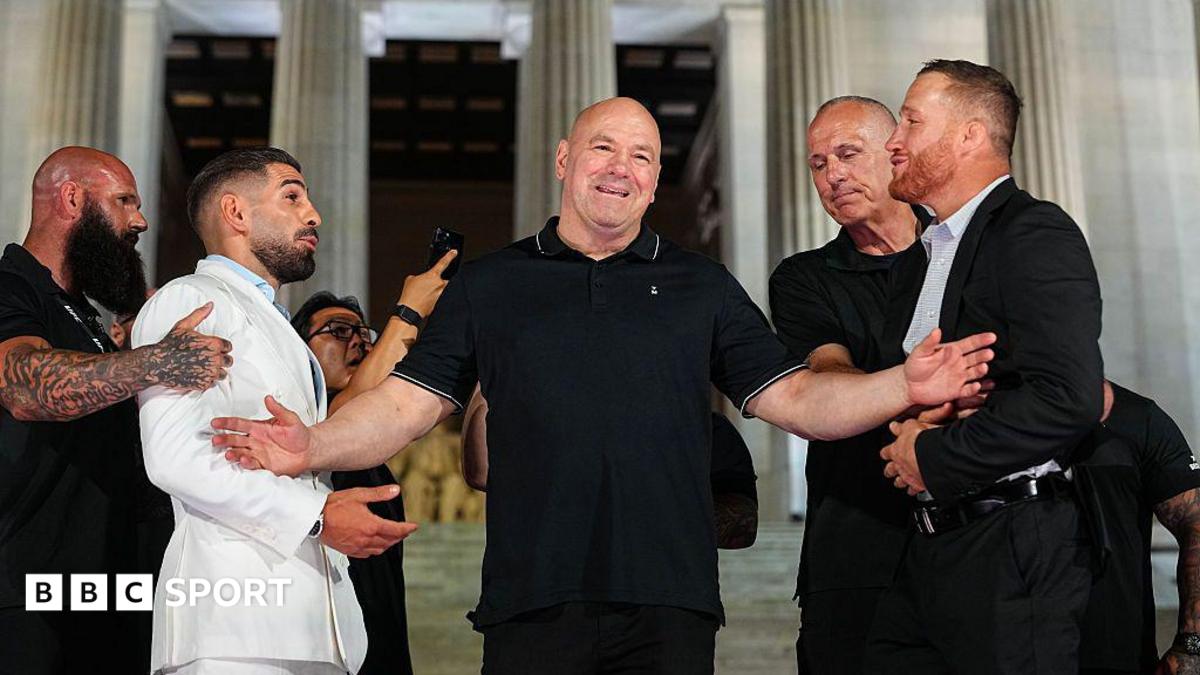
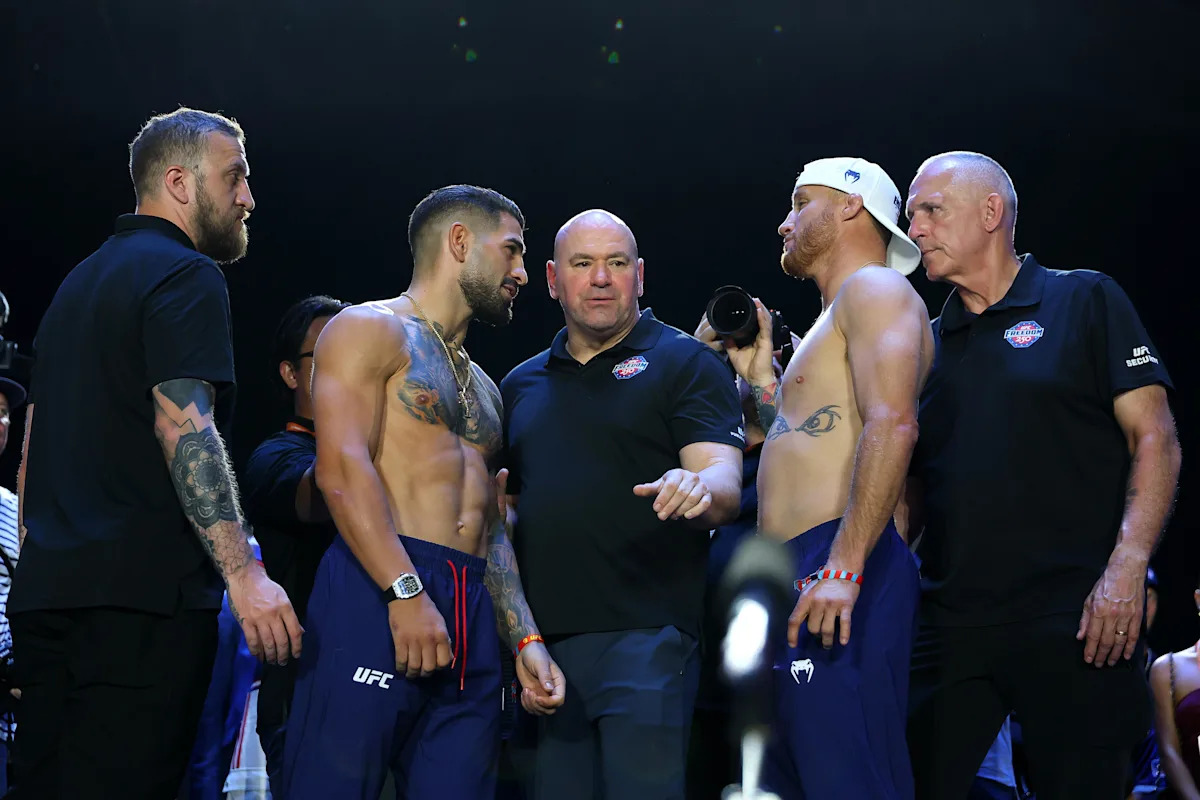
Psychological tensions peaked during the pre-fight assembly at the Lincoln Memorial, where Topuria initiated a physical altercation. This event, occurring at a primary national monument, underscores the aggressive marketing stratagems utilized to sustain Topuria’s persona. Conversely, Gaethje’s composed response—questioning the champion’s conduct in a historic setting—highlights a fundamental clash between the undefeated disruptor and the veteran pragmatist.
Pereira’s Heavyweight Pivot and Historical Legacy
In the co-main event, Alex Pereira seeks an unprecedented third-division title. Moving up to challenge Ciryl Gane for the interim heavyweight gold, Pereira leverages his status as a multi-class champion to bypass standard divisional hierarchies. This maneuver reflects the UFC’s strategic prioritization of legacy-defining ‘superfights’ over rigid ranking progressions when the potential for historical prestige is maximized.
Ciryl Gane’s involvement serves as a stabilizer for a heavyweight division frequently impacted by champion unavailability. Facing a striker of Pereira’s technical caliber allows Gane to re-establish dominance and secure a trajectory toward the undisputed title. The outcome will dictate heavyweight matchmaking and capital allocation through the 2026 fiscal year, testing the organization’s ability to accommodate multi-class titleholders within its traditional structure.
Media Rights Evolution and Operational Complexity
The migration of the UFC’s primary streaming distribution to Paramount+ for this event marks a significant diversification of its digital footprint. This shift is designed to capture the subscriber base of a major general-interest platform, serving as a benchmark for future domestic and international media rights negotiations. The success of UFC Freedom 250 will likely influence the valuation of combat sports content in the evolving streaming landscape.
Strategic partnerships with Crypto.com and RAM reinforce the event’s commercial profile, demonstrating the UFC’s capacity to maintain corporate backing within politically sensitive environments. The logistical execution on the South Lawn requires a specialized operational framework, balancing high-definition broadcast requirements with the stringent security protocols of the executive mansion. This complexity elevates the event from a standard production to a unique geopolitical spectacle.
Prospect Evaluation: Lopes, Garcia, and Nickal
The main card commences with a featherweight clash between Diego Lopes and Steve Garcia, designed to capitalize on high-action styles. Lopes, ranked No. 2, aims to reclaim title contention, while Garcia enters with a seven-fight win streak. This bout serves as a critical gatekeeper assessment, determining Garcia’s elite-tier viability. Simultaneously, the inclusion of Bo Nickal against Kyle Daukaus emphasizes the UFC’s strategy of fast-tracking high-pedigree wrestling prospects to sustain long-term growth in the American market.
Institutional Significance and Future Outlook
Integrating UFC Freedom 250 into the 250th anniversary of American independence elevates mixed martial arts into a recognized component of national culture. The event’s focus on individual meritocracy aligns with the UFC’s internal branding, expanding its reach to a broader demographic. Furthermore, the success of this production will set a precedent for staging major sporting events on federal grounds, influencing the intersection of sports, government, and commercial interest for the foreseeable future.