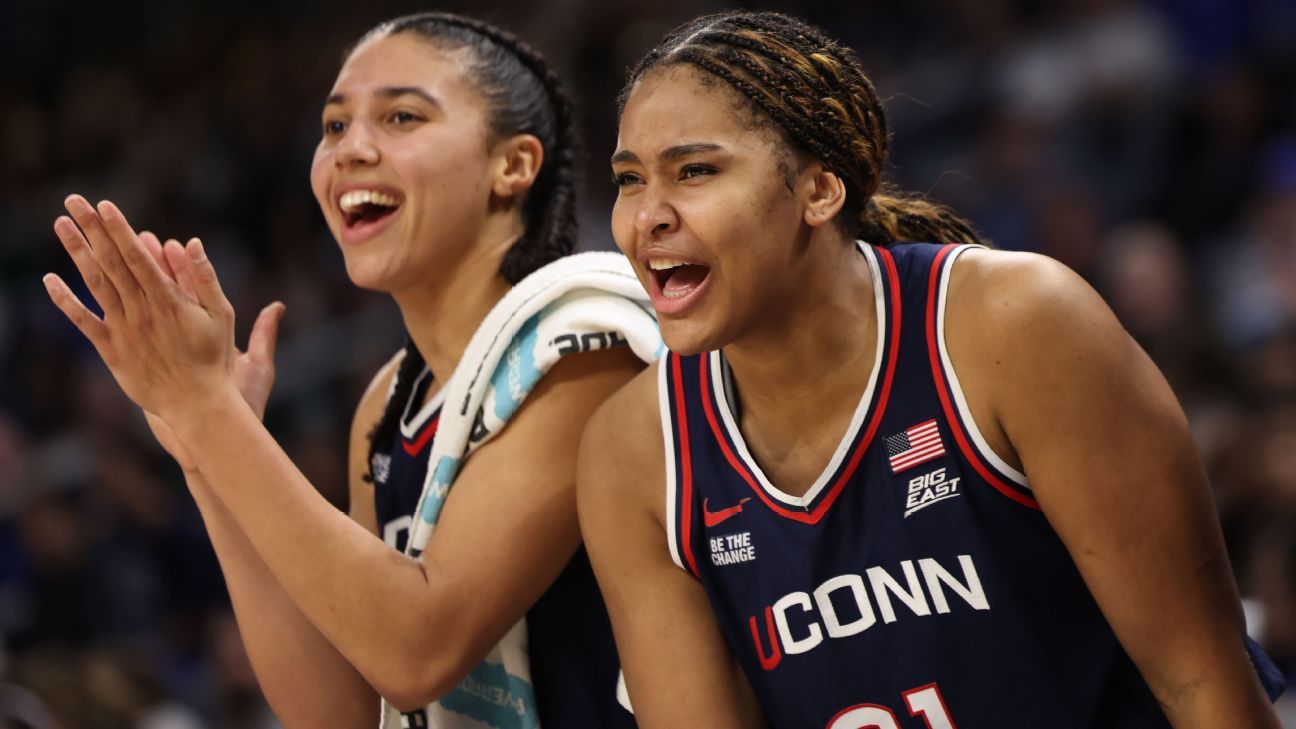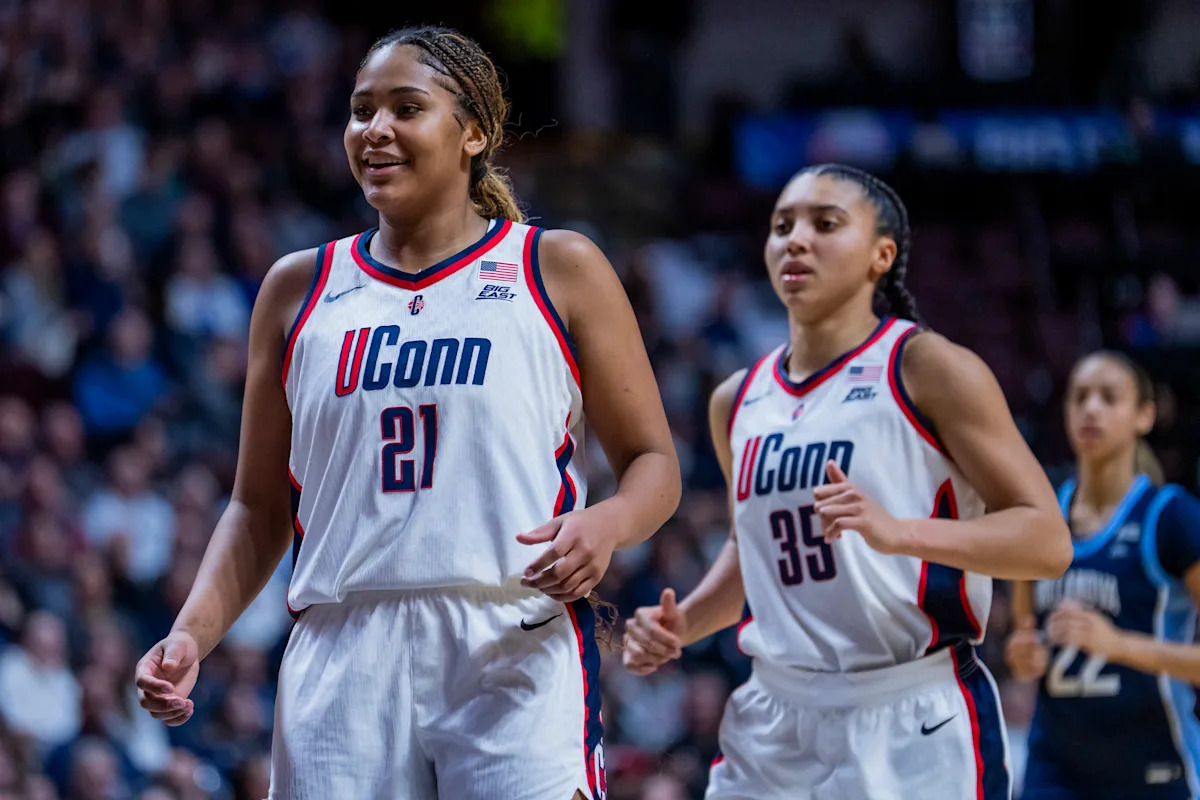
The simultaneous selection of UConn teammates Sarah Strong and Azzi Fudd to the 2025-26 Associated Press All-America First Team marks a powerful institutional convergence, achieved only nine times previously in AP history and establishing a key metric for talent density.
Strategic Implications of Dual First-Team Recognition
Sarah Strong’s unanimous selection, securing all 31 first-place votes, cements her status as the consensus dominant force. Her sophomore statistics—18.5 PPG, 7.6 RPG, and an elite 60.1% FG efficiency—demonstrate an immediate, high-leverage impact that bypasses typical developmental trajectories, indicative of a superior talent acquisition and refinement infrastructure at UConn.
Azzi Fudd’s concurrent First Team inclusion, capturing 14 first-place votes, validates the strategic retention of high-impact upperclass talent. This dual presence grants UConn unparalleled operational advantage, allowing for complex, high-trust offensive and defensive schemes optimized around established synergistic primary playmakers.
Historically, pairing two First Team members correlates strongly with deep NCAA Tournament runs, as evidenced by the 2020 Oregon team. For UConn, this recognition directly amplifies brand equity, serving as a proven validation point for future elite prospects considering the program.
Competitive Threshold Analysis: First Team Composition
The First Team includes significant individual production from outside the dominant program, notably Mikayla Blakes (Vanderbilt) and Lauren Betts (UCLA). Blakes’ scoring volume (27.0 PPG) and Betts’ two-way contribution (16.4 PPG, 8.6 RPG) confirm that high-volume performance receives significant recognition, though Strong’s efficiency and team record provided the necessary differentiator for the top spot.
Madison Booker (Texas), securing 17 first-place votes, reinforces the viability of high-usage junior integration in top-tier programs. The voting hierarchy—Strong leading, followed by Blakes/Betts, then Booker—suggests the AP panel weighted comprehensive statistical impact and undefeated team success slightly above pure scoring volume.
Rival programs must recalibrate strategy: countering this level of established synergy demands either acquiring immediate, efficient transfer production or cultivating roster depth capable of withstanding the concentrated offensive firepower during high-stakes tournament matchups.
Efficiency Metrics and Offensive Synergy
Strong’s remarkable 60.1% FG efficiency is particularly noteworthy for a player operating with perimeter volume, signifying exceptional shot selection and interior finishing prowess. This efficiency forces defensive schemes to allocate disproportionate resources towards neutralizing her interior threat, creating exploitable spacing for complementary players.
Fudd’s role as a high-volume, high-efficiency perimeter threat (44.6% 3PT) functions as a critical gravity generator. Her presence pulls perimeter defenders away from the paint, directly maximizing Strong’s operating space. This complementary structure minimizes offensive stagnation and increases success rates in structured late-game execution, as confirmed by coaching staff observations regarding team dynamics.
The dichotomy of their production—Strong dominating efficiency across multiple facets (scoring, rebounding, defense) versus Fudd providing elite spacing—creates an offensive rigidity that single-star dependent teams often lack, offering systemic resilience against opponent defensive adjustments.
Impact on Player Valuation and Professional Readiness
The dual recognition simultaneously elevates the perceived value of UConn as a sophisticated development incubator. For Fudd, this validation solidifies sustained elite performance, positively impacting professional valuation by demonstrating consistency across seasons despite previous hurdles.
For Strong, unanimous sophomore recognition establishes an exceptionally high benchmark, likely accelerating institutional focus on roster construction tailored to maximize her remaining eligibility. Her statistical profile suggests a compressed timeline between collegiate dominance and professional readiness, influencing early entry calculations.
Ecosystem Response and Narrative Control
AP All-America recognition serves as an essential input for media framing, seeding projections, and subsequent NCAA Tournament exposure opportunities. UConn’s substantial representation solidifies their narrative as the undisputed benchmark, placing pressure on selection committees to maintain favorable seeding alignments.
The inclusion of players from emerging programs like Vanderbilt validates successful strategic investments in talent outside traditional power structures. Blakes’ high scoring, despite Vanderbilt’s implied lower team ranking, shows media recognition rewards individual statistical dominance when paired with conference success.
The voting mechanism, relying on a 31-member national panel, prioritizes quantifiable, observable regular-season performance over speculative pre-season rankings, rewarding consistency within the competitive window.
Stakeholder Value: Continuity and Prestige
For the universities, these selections generate tangible institutional prestige, aiding donor cultivation and recruitment pipelines. The visibility acts as a powerful non-monetary incentive within the competitive collegiate athletics environment.
The juxtaposition of a senior (Fudd) and a sophomore (Strong) highlights superior roster management and cultural stability—a crucial advantage in the modern landscape marked by high transfer volatility. This continuity reduces onboarding friction for successive recruiting classes.
Benchmarking Against the Second Team
The Second Team composition, featuring high-usage talents like Hannah Hidalgo (Notre Dame) and Joyce Edwards (South Carolina), provides context regarding the margins separating primary and secondary recognition. Hidalgo’s 25.2 PPG suggests that while elite, her efficiency or team success metrics fell just shy of the First Team cut-off.
Edwards’ placement underscores the depth across the elite tier, even among direct national competitors. The scoring differential between the highest Second Team scorer (Hidalgo, ~121 points relative to Strong’s tally) and the lowest First Team member demonstrates the tight clustering of talent at the recognition threshold, implying minor late-season swings could reorder the final five.
Operationalizing Synergy for Postseason Success
The Strong-Fudd synergy—interior efficiency paired with perimeter gravity—is operationally key. This demands superior ball movement and high-IQ decision-making, translating into lower turnover rates and higher successful execution in pressurized tournament moments where structured plays frequently devolve.
Strong’s multi-faceted contribution (scoring, rebounding, defense) complicates game planning significantly more than a singular offensive threat, building systemic resilience against targeted opponent adjustments.
Strategic Outlook: Defining the Next Benchmark
Strong’s unanimous selection sets an elevated precedent for sophomore impact, directing rival recruiting efforts toward prospects demonstrating both high ceiling potential and proven immediate floor efficiency. The sustained challenge for UConn is managing internal cohesion as star eligibility windows close.
The competitive ecosystem is now explicitly indexed against the efficiency threshold established by the UConn duo. Ascending programs must demonstrate matched efficiency metrics (e.g., 60% FG) coupled with equivalent team success, necessitating deeper investment in specialized coaching and advanced analytics for roster optimization.