
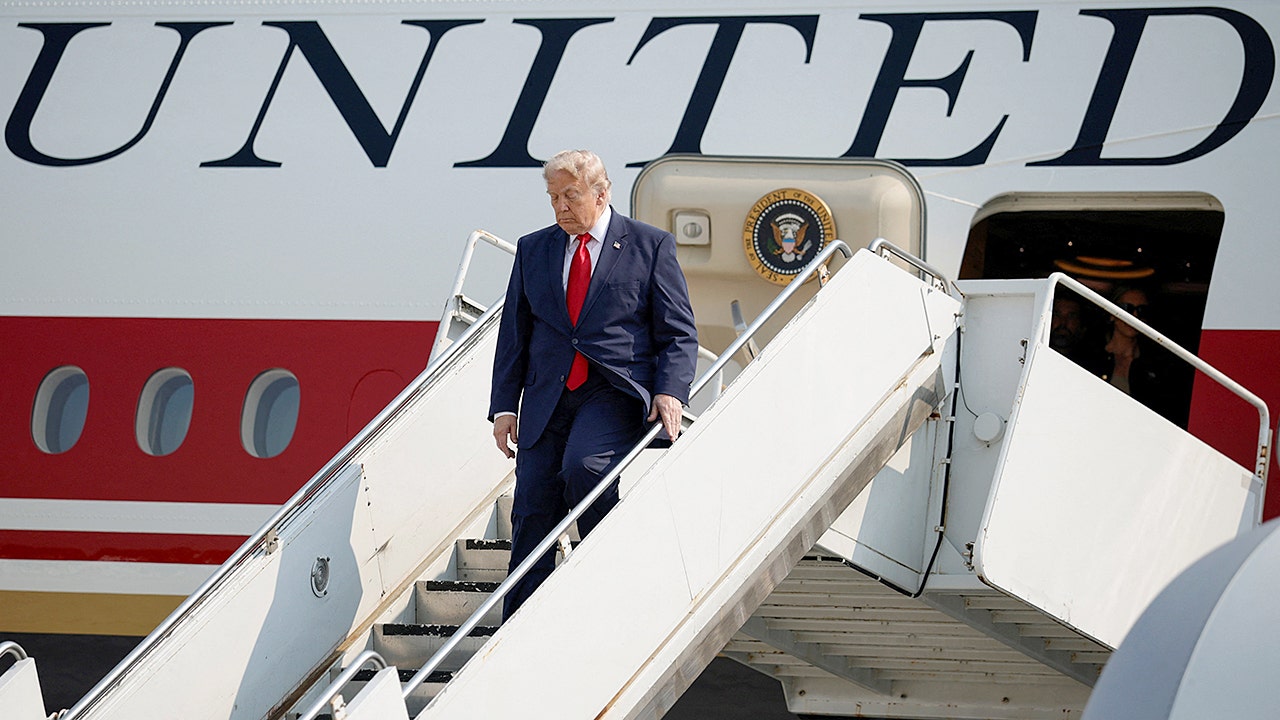
Trump’s Air Force One Decision: A Multi-Layered Strategic Maneuver
President Donald Trump’s choice to return from a NATO summit in Turkey aboard the ‘former Air Force One’ (VC-25A) rather than the newly introduced presidential aircraft (VC-25B), particularly amidst heightened Iranian threats, was far more than a simple logistical swap. This decision, subsequently clarified by the President, revealed a calculated blend of geopolitical risk management, advanced operational planning, and targeted strategic communication, leveraging the dual utility and potent symbolism of the presidential fleet.
The immediate context of elevated Iranian threats inherently complicated presidential movements from sensitive regions. While the President’s explanation focused on the new aircraft’s concurrent deployment to Mildenhall Air Force Base, UK, for troop morale, the underlying decision calculus likely integrated sophisticated threat assessments. Deploying separate high-value assets for distinct missions—one for presidential transport, the other for symbolic engagement—demonstrated an adaptable security posture and the U.S. military’s capacity to manage complex, simultaneous operations under duress. This reflects a strategic imperative to maintain operational flexibility while mitigating perceived vulnerabilities during periods of geopolitical instability.
Operational Complexity and Presidential Fleet Management
The intricate management of the presidential air fleet, encompassing multiple high-value aircraft, demands continuous operational readiness, stringent security protocols, and extensive logistical coordination. The simultaneous deployment of two distinct presidential aircraft—one facilitating the Commander-in-Chief’s return from a critical diplomatic engagement, the other showcasing national capability to overseas troops—underscores the profound institutional undertaking by the U.S. Air Force and its interagency partners. This ‘dual-track’ approach necessitates meticulous scheduling, precise crew allocation, and comprehensive ground support across disparate international locations, from Turkey to European transit hubs like Mildenhall. Such a maneuver is indicative of a sophisticated asset management framework, essential for ensuring seamless operations across different aircraft generations and maintaining the continuity of presidential functions.
This incident also highlights an ongoing institutional transition within the presidential fleet. The phasing in of new VC-25B aircraft and the continued utility of the VC-25A models require substantial procurement, testing, and operational integration efforts. Beyond hardware acquisition, this transition involves extensive training for flight crews, maintenance personnel, and security details. The strategic deployment of the newer asset for public engagement, while the established asset handles high-stakes presidential travel, reflects a deliberate strategy to maximize both operational utility and public relations value during a period of modernization, absorbing significant financial commitments in fuel, maintenance, and personnel deployment within the broader defense budget.
Strategic Communication and the Symbolic Resonance of Air Force One
President Trump’s explicit framing of the new aircraft’s deployment to Mildenhall as an act to ‘honor our brave men and women of the Military’ served as a potent example of strategic communication. This initiative leveraged the unparalleled symbolic power of Air Force One, transforming a logistical movement into a powerful morale-boosting gesture. By allowing troops to ‘tour the Aircraft,’ the administration cultivated a tangible connection between the Commander-in-Chief, a high-profile national asset, and service members stationed abroad. This engagement not only fosters pride and appreciation within military communities but also projects national strength and commitment to allies, demonstrating the U.S. capacity for global presence and support.
Air Force One transcends its primary function as a mere mode of transport; it is a quintessential icon of American power, prestige, and technological advancement. The decision to display the newer aircraft, while also acknowledging the ‘former’ aircraft’s legacy for ‘old time’s sake,’ underscored a nuanced understanding of its dual symbolic weight—representing both forward-looking capability and historical continuity. This strategic utilization of presidential assets for public diplomacy and troop engagement reinforces alliances, demonstrates cooperative defense postures, and shapes both domestic and international perceptions of American leadership and military prowess.
Presidential Messaging and Narrative Control
The President’s decision to proactively communicate the rationale for the aircraft swap, initially via a Truth Social post and subsequent direct statements, exemplifies a deliberate communication strategy aimed at narrative control. In an era of immediate information dissemination and intense media scrutiny, directly addressing potential ‘speculation about the dangers of flying home’ allowed the administration to pre-empt alternative interpretations and frame the logistical decision within its preferred context of military appreciation and prudent security measures. This approach highlights the contemporary shift towards direct-to-audience communication by leaders, influencing how complex operational choices are perceived by both domestic constituencies and international observers.
Conclusion: A Deliberate Confluence of Strategy, Operations, and Symbolism
President Trump’s Air Force One decision, at its core, represents a deliberate confluence of strategic imperatives, complex operational execution, and sophisticated symbolic communication. Far from a mere logistical footnote, the simultaneous deployment of the ‘former’ and ‘new’ presidential aircraft amidst geopolitical tensions and for troop engagement encapsulates the multifaceted nature of presidential operations. It underscores how seemingly routine travel decisions are, in fact, intricate maneuvers embedded with layers of meaning, influencing national security, military morale, international relations, and public perception. This event serves as a compelling case study into the strategic depth inherent in managing the most visible and powerful assets of the U.S. presidency.
Photo by geralt on Pixabay.