The Structural Impact of Tropical Storm Lala on Hawaii’s Civil Infrastructure
The passage of Tropical Storm Lala across Hawaii’s Big Island has transitioned from a meteorological event into a profound systemic infrastructure crisis. While downgraded from hurricane status prior to landfall, the storm delivered 3.5 feet of rainfall within 48 hours, generating hydraulic pressures that exceeded the design tolerances of local civil engineering. This precipitation resulted in the destruction or structural compromise of six bridges, specifically within the Kaʻū District, effectively severing critical transit arteries and isolating southern communities from essential supply chains and emergency medical services.
Grid Vulnerability and Utility Restoration Logistics
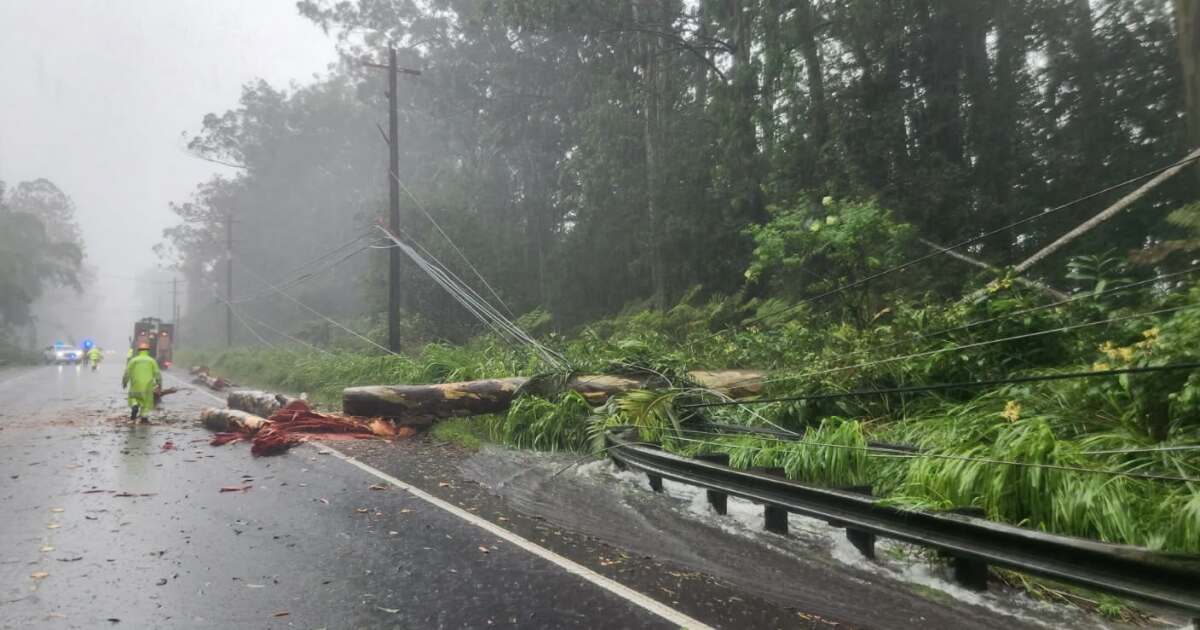
At the peak of the crisis, Hawaiian Electric reported 117,000 customers without power—a figure representing a significant portion of the state’s total residential and commercial load. The utility’s response is currently impeded by topographical constraints, where rural geography complicates the deployment of heavy repair equipment. Strategic restoration is currently bifurcated: load density dictates the prioritization of urban centers, while remote, mountainous regions face a recovery timeline measured in weeks. This disparity highlights the inherent trade-offs in utility management when balancing aggregate grid stability against the high-cost maintenance of rural electrification.
The Collapse of Centralized Emergency Communication
Perhaps the most significant institutional failure was the collapse of the 911 emergency telephone system. Triggered by widespread damage to primary telecommunications nodes, this failure forced the Hawaii Police Department to pivot to decentralized communication methods. The disruption underscores a single-point-of-failure vulnerability within the island’s emergency management framework. This operational gap was further exacerbated by the loss of cellular service across large swaths of the island, rendering alternative emergency numbers inaccessible for those in the highest-risk districts.
Operational Intelligence: Aerial Surveillance and Damage Quantification
To circumvent physical barriers created by washed-out infrastructure, Hawaii County officials have deployed aerial assets, including helicopters and drones, for damage assessment. Mayor Kimo Alameda’s characterization of the Kaʻū District as “devastated” is supported by these surveys, which documented the total loss of at least 100 homes. These high-resolution data sets allow civil defense agencies to prioritize resource allocation across a rugged landscape that remains inaccessible to ground-based survey crews.
Socio-Economic Hazards and Public Health Implications
Prolonged de-energization has catalyzed a secondary health crisis for medically vulnerable populations. Caregivers report a precarious reliance on limited generator capacity for life-sustaining equipment, such as oxygen concentrators and oscillating beds. In rural sectors, the lack of electricity is inextricably linked to the failure of water pump systems, compromising hygiene standards and complicating long-term survival in isolated conditions. The fatality reported in Naalehu serves as a grim metric of the limitations of current early-warning and evacuation protocols during rapid-onset flooding.
Institutional Shift Toward Long-Term Resilience
Emergency Management Director Randy Collins has indicated that infrastructure threats persist even as the storm departs. This ongoing risk profile suggests a mandatory re-evaluation of state capital expenditure, shifting focus toward the hardening of bridges and the decentralization of the power grid through microgrid integration. As the state seeks federal disaster assistance to bridge the funding gap for reconstruction, the recovery phase must prioritize strategic resilience over mere replacement, ensuring that future climate-driven disruptions do not result in total systemic paralysis.