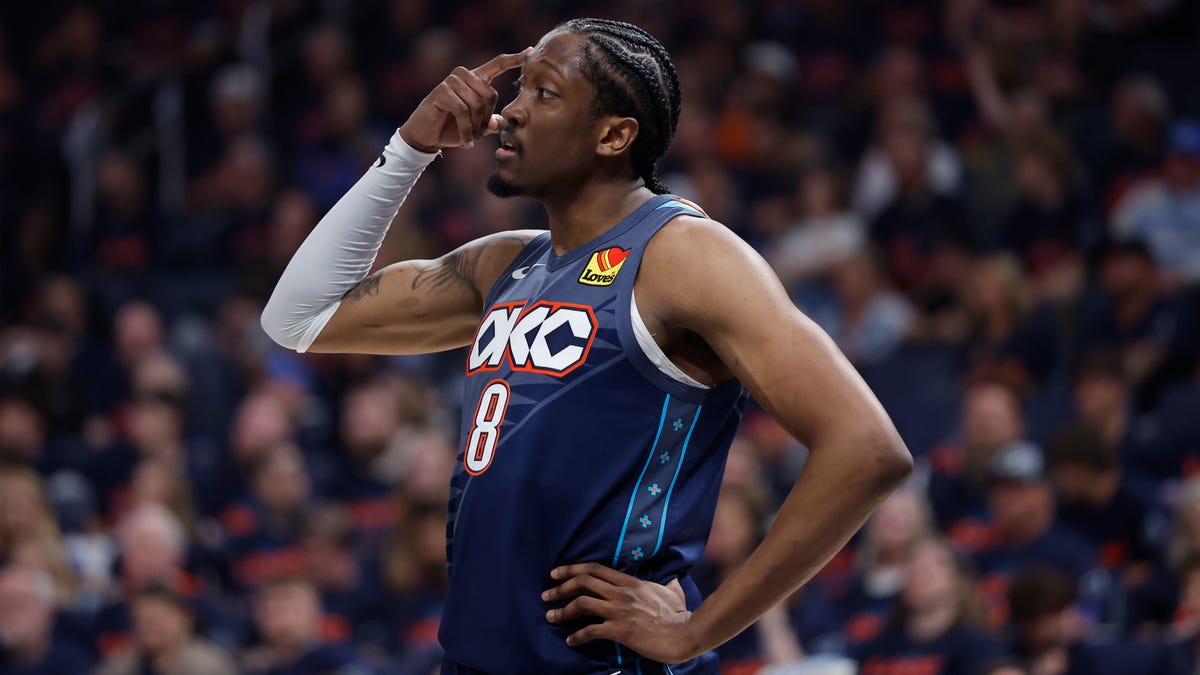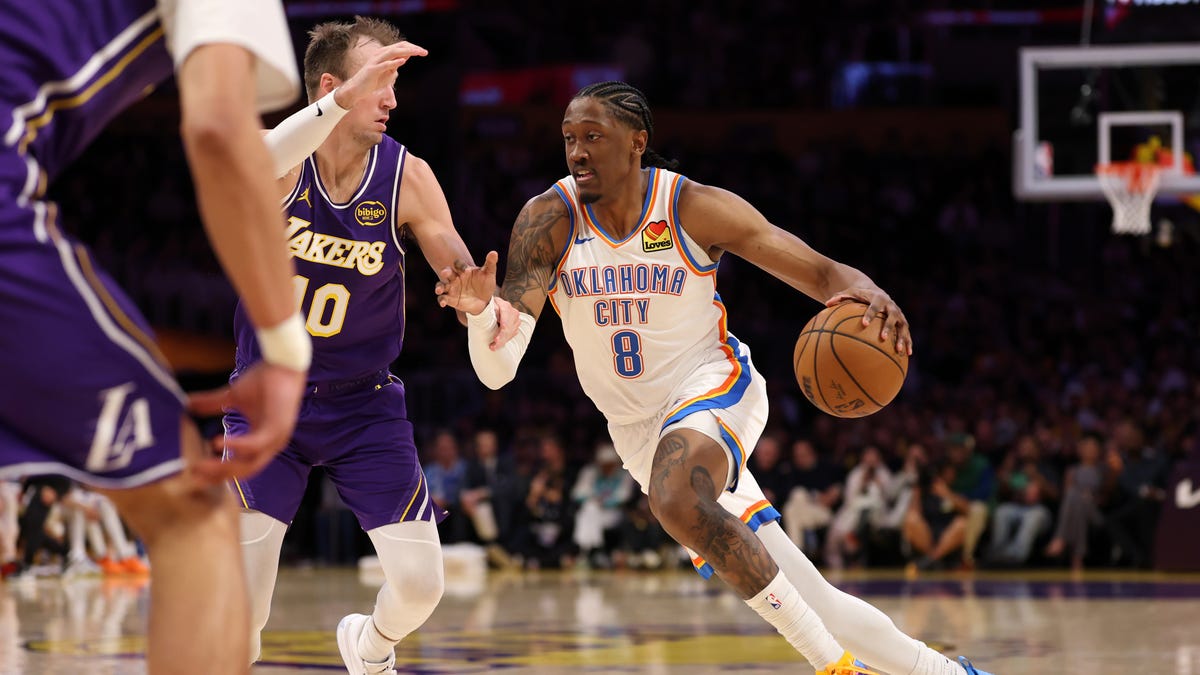
Strategic Attrition: Williams Sidelined for Series Opener
The Oklahoma City Thunder’s pursuit of championship continuity faces a critical inflection point following the confirmation that Jalen Williams will miss Game 1 of the Western Conference semifinals against the Los Angeles Lakers. Diagnosed with a Grade 1 left hamstring strain sustained during the initial round, Williams’ absence removes an All-NBA offensive engine and defensive anchor from the rotation at a moment where tactical precision is paramount.
Head coach Mark Daigneault now faces a significant rotational deficit. Williams serves as a primary facilitator, and his removal necessitates a recalibration of the Thunder’s spacing and transition dynamics. While the roster demonstrated elite efficiency in their previous sweep, the absence of Williams’ two-way versatility forces a reliance on bench depth to absorb high-leverage minutes against an opportunistic Lakers squad.
Medical Protocol and Asset Management
The Thunder organization is prioritizing clinical conservatism, designating Williams’ recovery as a week-to-week process. This decision reflects a data-driven approach to load management, designed to mitigate the risk of a minor Grade 1 strain evolving into a chronic or more severe tear. Despite the player’s limited participation in recent non-contact drills, the medical staff is leveraging the hiatus between rounds to maximize tissue healing and biomechanical integrity.
This injury history remains a focal point of the Thunder’s campaign. Limited to 33 regular-season appearances due to previous wrist and hamstring issues, Williams’ durability has become a central variable in OKC’s performance metrics. For the Lakers, this absence creates a defensive relief valve, though it is countered by their own roster constraints, notably the continued absence of Luka Doncic due to a Grade 2 strain.
Tactical Opacity and Rotational Elasticity
Daigneault’s refusal to provide a definitive return timeline functions as a form of information asymmetry. By maintaining ambiguity, the Thunder force the Lakers’ coaching staff to prepare for multiple contingencies, preventing them from narrowing their scouting focus. This institutional opacity is a standard maneuver in high-stakes postseason environments, where psychological leverage often matches physical execution.
The Lakers, entering as the No. 4 seed, must now navigate a parallel pressure. Without Doncic’s high-usage playmaking, the series shifts into a test of organizational depth. The outcome of Game 1 at Paycom Center will largely depend on which franchise more effectively optimizes its secondary rotations and which coaching staff can better exploit the defensive gaps created by missing cornerstone stars.
Market Volatility and Broadcast Narratives
The absence of marquee talent like Williams and Doncic carries significant commercial weight. As a featured matchup on NBC and Peacock, the reduction in available star power potentially alters the broadcast narrative and viewership engagement. However, the Thunder’s status as defending champions sustains the series’ institutional prestige, even as betting markets adjust to the shift in individual player availability.
Ultimately, the Thunder’s organizational philosophy—predicated on a sustainable, system-driven winning culture—is under scrutiny. To maintain home-court advantage and secure a second consecutive Western Conference Finals appearance, the available roster must replicate Williams’ high-efficiency output through collective effort and tactical discipline.