
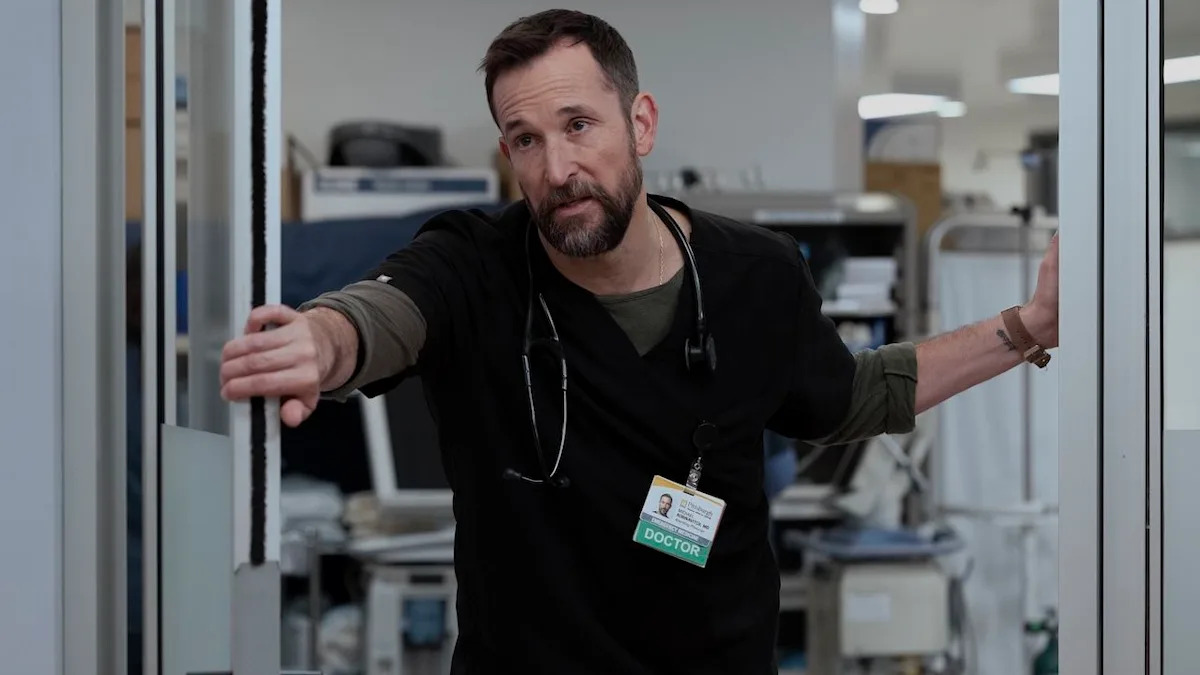
The Structural Evolution of Character Stakes
The Pitt’s second season leverages a calculated shift in narrative focus, moving from episodic clinical proceduralism to an intensive examination of Dr. Robby’s (Noah Wyle) psychological stability. This recalibration functions as a high-stakes mechanism, where the protagonist’s internal volatility mirrors the fragility of the hospital environment itself.
The Strategic Implications of the Sabbatical Pivot
Dr. Robby’s decision to pursue a sabbatical serves as the season’s primary structural inflection point. By removing the character from the clinical environment, the narrative forces a reconciliation between his professional persona and his personal recovery. His fixation on the relapses of peers like Langdon acts as a defensive displacement, highlighting his own precarious position within the hierarchy of the ward.
Conflict as a Diagnostic Tool
The escalation of interpersonal conflict between Robby and Dana is not merely dramatic filler; it is an externalization of internal anxiety. Analytically, this serves as a narrative release valve, testing the durability of Robby’s professional reputation against his personal vulnerabilities. The intensity of these encounters forces the audience to weigh the character’s institutional value against his diminishing capacity for leadership.
Institutional Instability and Narrative Momentum
The prospect of Robby’s permanent absence introduces systemic uncertainty. In serialized drama, the institution—the hospital—is only as robust as its central pillars. By framing the protagonist as fundamentally unstable, the series challenges the viewer to question whether the medical ecosystem can survive without its primary catalyst. This uncertainty ensures continued investment as the season finale approaches.
Evaluating the Threshold of Professional Return
The narrative ambiguity surrounding Robby’s capacity to return post-sabbatical marks a critical departure from traditional character arcs. Rather than signaling a resolution, the sabbatical represents a complication that threatens the show’s status quo. This suggests that the production is shifting toward a more cynical exploration of the limits of resilience in high-pressure environments, prioritizing long-term psychological tension over convenient narrative closure.
Conclusion: The Resilience Limit
Ultimately, the arc of Dr. Robby in The Pitt Season 2 functions as a barometer for the show’s overall narrative strategy. By centering the story on the potential collapse of a key organizational figure, the writers sustain momentum, ensuring that the final episodes are defined not just by plot resolutions, but by the fundamental question of whether the protagonist can reconcile his duty with his survival.

Photo by jameswheeler on Pixabay.