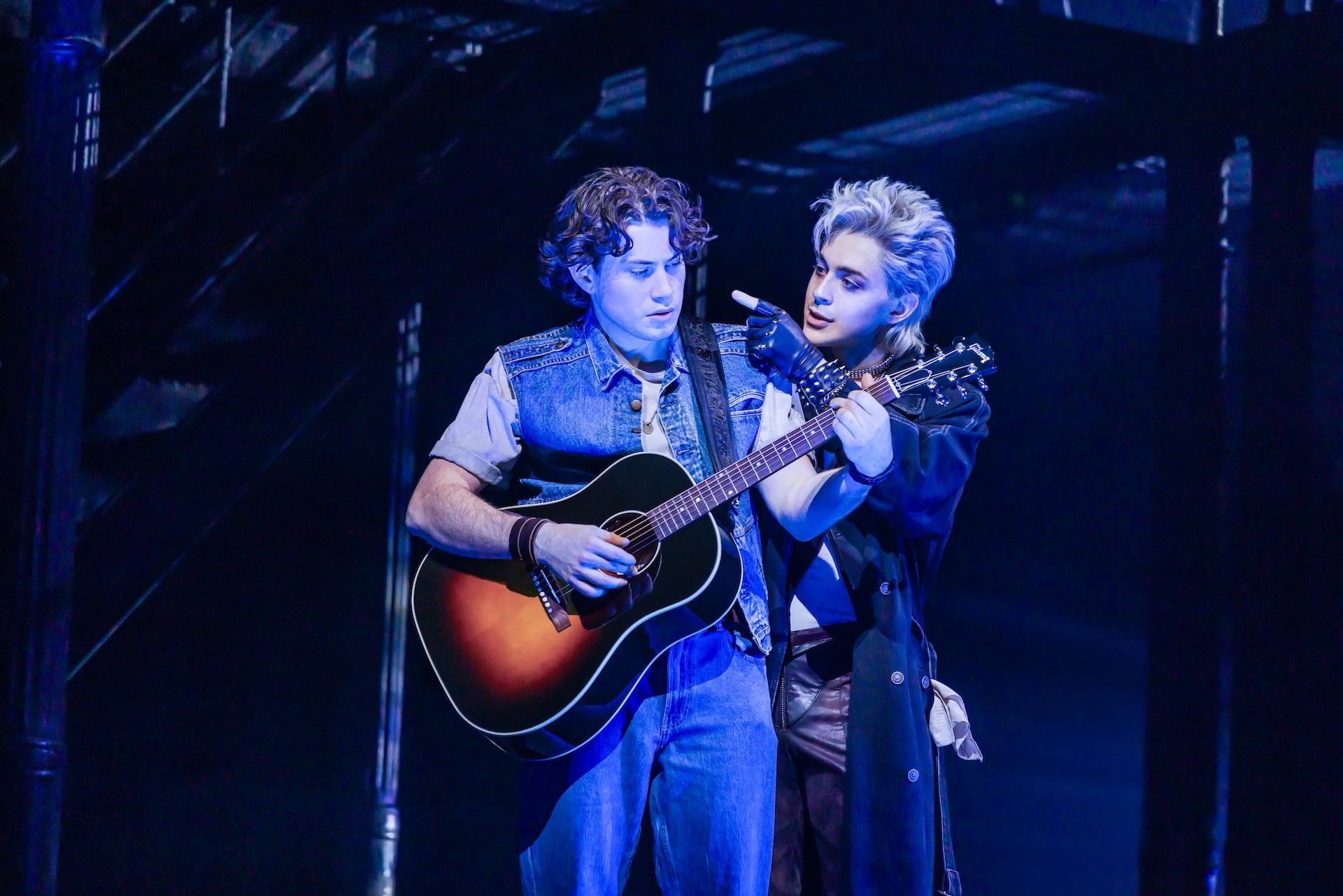
The arrival of The Lost Boys at the newly renovated Palace Theatre is a strategic maneuver designed to counteract the institutional inertia currently afflicting the Broadway market. By leveraging the established brand equity of the 1987 Joel Schumacher film, the production attempts to secure a foothold in a landscape dominated by intellectual property (IP) adaptations, while simultaneously confronting the historical insolvency of the vampire-themed musical sub-genre.
The Palace Theatre: A Litmus Test for Genre Viability
The selection of the Palace Theatre is semiotically significant. Having hosted the high-profile commercial failure of Lestat exactly two decades ago, the venue serves as a focal point for assessing the ‘vampire curse’—a recurring industry phenomenon defined by the successive collapses of Dance of the Vampires and Dracula. For stakeholders, this opening serves as an audit of whether modern stagecraft can remediate the structural narrative deficiencies that have historically plagued gothic properties.
The production’s timing—emerging within a season characterized by a deficit of high-octane spectacle—allows for maximum market capture. It positions itself as a destination event, utilizing the vacuum left by outgoing blockbusters to attract a demographic fueled by Gen X and Millennial nostalgia.
Technical Spectacle as a Capital-Intensive Hedge
Director Michael Arden and scenic designer Dane Laffrey have prioritized technical immersion as the primary value proposition. The deployment of motorcycles, complex aerial rigging, and visceral atmospheric effects represents a capital-intensive hedge against the risk of critical dismissiveness. This strategy aims to elevate the material beyond the kitsch of the original film, transforming a lean 90-minute cinematic narrative into a robust, large-scale theatrical event.
However, this emphasis on spectacle introduces a systemic tension: the expansion of ‘thin’ source material into a two-act structure often leads to narrative decompression. The operational success of the show depends on whether this visual density can successfully mask the inherent difficulty of translating a cult-classic atmosphere into a coherent musical book.
Celebrity Synergy and Demographic Targeting
The high-profile presence of global icons like Pink at the opening night serves as a crucial component of the production’s synergistic marketing. This aesthetic alignment between pop-rock royalty and the show’s punk-gothic theme provides a branding bridge to audiences outside the traditional theater-going circle. These appearances function as organic social proof, driving early-stage ticket sales and establishing the production’s cultural relevance in a saturated media environment.
Conclusion: Establishing a Data Point for Future IP Adaptation
The longevity of The Lost Boys will provide a definitive data point on the viability of genre-specific IP in a post-pandemic economy. If the production achieves commercial stability, it will validate the Arden-Laffrey model of prioritizing technical complexity over traditional narrative structure. Conversely, a failure to sustain momentum would reinforce the institutional wariness toward gothic adaptations, potentially cooling investor interest in similar horror-themed properties for the foreseeable future.