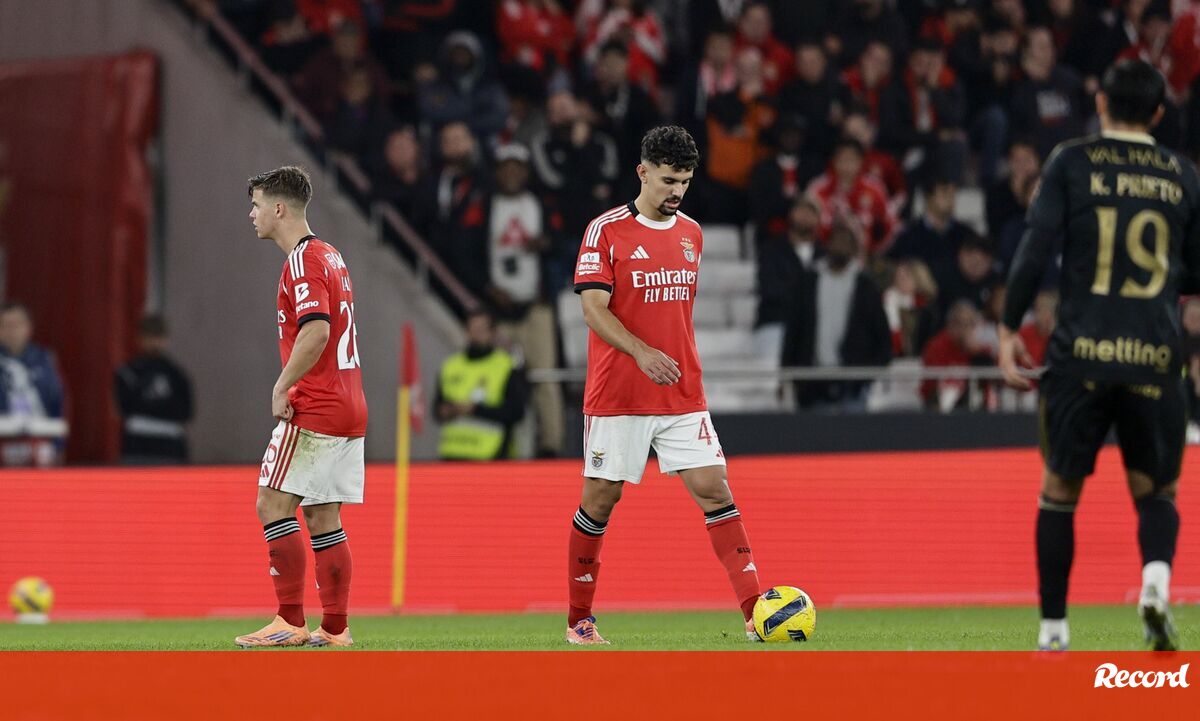
The sudden unavailability of Tomás Araújo for Benfica’s Matchday 28 fixture against Casa Pia introduces acute structural volatility at a decisive juncture of the Liga Portugal season. Araújo’s injury, sustained during Sunday’s training session, necessitates an immediate personnel recalibration hours before the squad’s deployment to Rio Maior. This disruption extends beyond a mere substitution; it represents a comprehensive stress test for Benfica’s defensive depth and José Mourinho’s ability to manage high-stakes attrition.
Defensive Synergy and Tactical Recalibration
The forced reintegration of António Silva to partner Nico Otamendi disrupts the specific defensive mechanics honed during the weekly tactical cycle. While Silva offers high-level experience, the late-hour transition threatens the synchronization required for an effective offside trap and transitional containment. Against a disciplined Casa Pia side, any lapse in the central defensive partnership’s non-verbal communication could be exploited by rapid counter-attacking maneuvers.
Furthermore, the profile shift from Araújo to Silva alters the team’s build-up play. Araújo’s specific role in vertical distribution provided a tempo that may now be compromised, potentially slowing Benfica’s progression from the first phase of play. Otamendi must now balance his aggressive defensive posture with increased responsibility for organizational stability, covering for a younger partner in a historically hostile environment.
The Rio Maior Precedent and Psychological Friction
The choice of venue at Rio Maior introduces significant psychological pressure, recalling Benfica’s previous 1-3 defeat at the site. Historical data suggests Casa Pia functions as a tactical bottleneck for the Encarnados, often inducing a loss of emotional discipline. The institutional memory of “garage conversations” and previous post-match controversies underscores a friction-heavy relationship that often manifests as increased on-pitch aggression and disciplinary volatility.
Mourinho’s primary objective involves insulating the squad from these external provocations. Maintaining strategic focus amid a low-block defensive structure requires patience; however, Benfica’s historical tendency to “lose their heads” in this fixture remains a vulnerability. The absence of Araújo—a stabilizing presence—provides Casa Pia with a psychological leverage point to test the temperament of the reshuffled backline.
The April Gauntlet: Attrition and High-Value Assets
The medical status of Araújo will dictate Benfica’s risk management strategy throughout a high-density April schedule. With Nacional on the horizon and a pivotal derby against Sporting on April 19, the risk of injury accumulation is maximized. If Araújo’s absence is prolonged, Mourinho faces a dilemma: over-rely on a fixed pairing, risking physical degradation, or integrate unproven youth prospects during the season’s most demanding stretch.
Beyond the pitch, the fitness of players like Araújo and Silva carries significant financial weight. As high-value assets on the club’s balance sheet, their health directly impacts market valuation and long-term transfer strategy. Consequently, the recovery process is not merely a competitive necessity but a safeguard for the club’s institutional ROI. The outcome at Rio Maior will serve as the initial metric for how effectively Benfica can navigate this period of heightened personnel vulnerability.