Analytical Overview: The Strategic Architecture of Quail Hollow
The 2026 Truist Championship at Quail Hollow Club has transitioned into a high-leverage phase, characterized by Sungjae Im’s disciplined 36-hole lead at nine-under-par. As a designated PGA Tour Signature Event, the tournament’s no-cut structure functions as a commercial and competitive stabilizer, ensuring maximum exposure for title sponsor Truist and sustained engagement for the global broadcast audience. This format incentivizes aggressive tactical risks, as players optimize for FedExCup point accumulation without the immediate penalty of weekend exclusion.
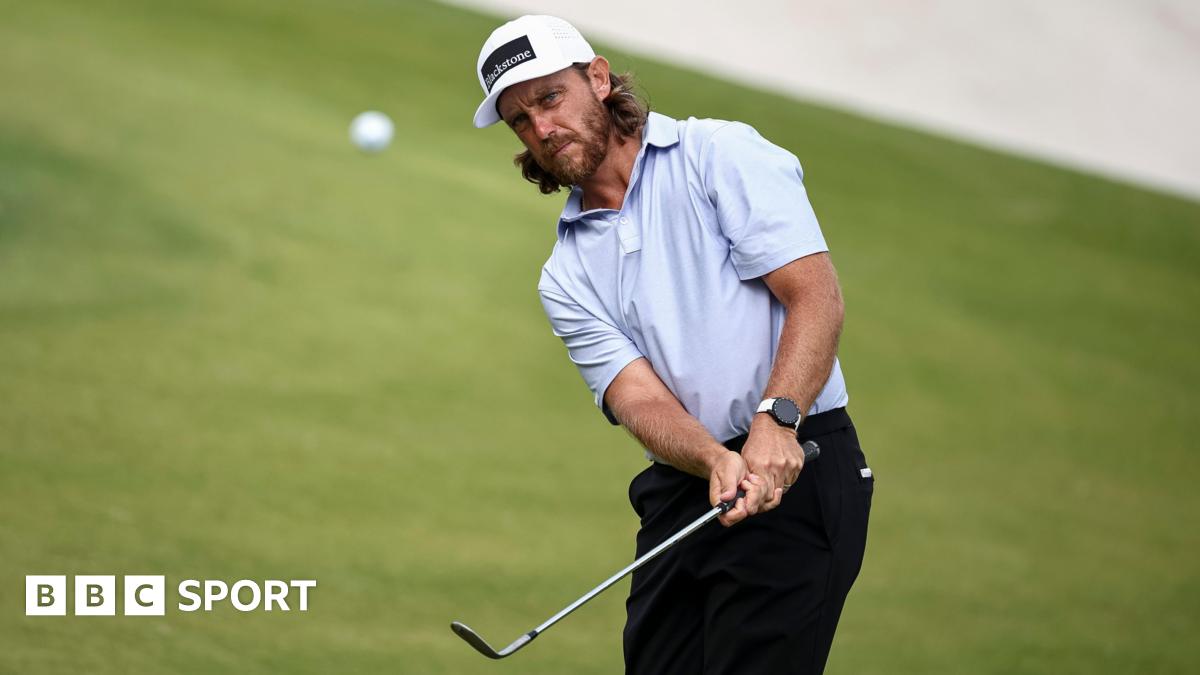
Sungjae Im’s performance reflects a mastery of error-mitigation, contrasting with the volatility seen elsewhere in the field. After an explosive opening, his second-round 69 demonstrated a shift toward defensive positioning on Quail Hollow’s penalizing closing stretch. Trailing by a single stroke, Tommy Fleetwood’s back-to-back 67s underscore his elite ball-striking efficiency. The one-shot margin between Im and Fleetwood establishes a narrative of international rivalry that anchors the tournament’s competitive integrity.
McIlroy’s Post-Masters Momentum and Course Familiarity
Rory McIlroy’s trajectory remains the primary catalyst for tournament viewership and betting-market fluctuations. Following his second Masters victory on April 12, McIlroy entered Charlotte with significant psychological momentum but faced early friction, opening with 17 consecutive pars. His second-round resurgence—fueled by five birdies on the back nine—reduced an eight-shot deficit to four. This rally leverages his historical dominance at Quail Hollow, a venue where he has secured four career titles.
McIlroy’s strategic decision to attack pins on the inward half illustrates the impact of course familiarity on risk-reward calculus. Despite a late bogey at the 18th, his five-under-par total positions him as a central threat to the leaders. As the world number two, his presence in the final-round conversation is essential for the Tour’s brand alignment, providing a high-profile counterpoint to the consistency of Im and Fleetwood.
Field Dynamics and Stochastic Variables
The leaderboard exhibits significant density, with Justin Thomas and Alex Fitzpatrick positioned at seven-under-par. Thomas’s resurgence signals a stabilization of form, while Alex Fitzpatrick’s performance introduces a notable sibling disparity; his brother, world number three Matt Fitzpatrick, currently sits nine strokes behind at two-over-par. This divergence highlights the unpredictable nature of elite performance within limited-field, high-purse environments.
Operational challenges emerged on Saturday as adverse weather in Charlotte triggered a start-of-play delay. These stochastic variables test athlete adaptability, as moisture levels alter green speeds and favor high-launch trajectories. Bud Cauley’s early movement on “Moving Day” suggests a fluid leaderboard, where the softens course conditions may yield aggressive scoring opportunities for the chasing pack, including David Lipsky and Nicolai Hojgaard.
Institutional and Commercial Implications
The Truist Championship represents a critical node in the PGA Tour’s revamped ecosystem. The concentration of talent ensures that sponsors and media partners capitalize on the presence of marquee assets like Xander Schauffele and Justin Rose through Sunday. For the competitors, the event is a high-stakes pursuit of FedExCup points, where success directly influences season-long seeding and eligibility for future premium purses. As play concludes, the synthesis of technical execution and mental resilience will determine who masters Quail Hollow’s formidable layout.