The geopolitical and commercial architecture of elite international football is undergoing a structural paradigm shift. While mainstream media narratives remain anchored to established superstars like Lionel Messi, Kylian Mbappé, and Erling Haaland, a more systemic evolution is occurring within national team rosters. This transition is characterized by the emergence of second-generation athletes who inherit not only heritable athletic capital but also the compounding institutional pressures of their predecessors’ historical legacies.
Socio-Athletic Inheritance: Managing Football Lineages
The integration of multi-generational talent presents complex operational and psychological challenges for national federations. These players navigate an intricate matrix of public scrutiny, commercial expectation, and immediate historical comparison. For sports governing bodies, the objective is to strategically capitalize on the marketing equity of these legacy names while isolating the athletes’ development from disruptive media narratives.
Consequently, legacy players employ divergent branding strategies to construct their professional identities. Some directly leverage their family names, absorbing the immediate pressure of ancestral comparisons. Others actively decouple their career trajectories from their parents’ achievements by seeking distinct sporting environments or representing alternative nations, altering the traditional pathway of international career progression.
Diasporic Repatriation: Luca Zidane’s Strategic Shift to Algeria
Goalkeeper Luca Zidane’s decision to represent Algeria at the international level highlights the complex intersection of dual nationality, eligibility, and brand management. As the son of Zinédine Zidane—who led France to its 1998 World Cup title and concluded his international tenure in the iconic 2006 final—Luca carries a surname synonymous with French football history. By exercising his eligibility for Algeria, his ancestral homeland, Luca strategically recalibrates his international career away from his father’s French legacy.
This decision optimizes his competitive opportunities while structurally reinforcing Algeria’s defensive apparatus with elite, European-academy-trained talent. Furthermore, this international pivot exposes him to high-stakes fixtures against global icons like Lionel Messi, mirroring the historic competitive matchups of his father’s era. For Algeria, securing a goalkeeper of this pedigree provides both technical refinement and significant international branding leverage.
Systemic Continuity: Marcus Thuram and the French Development Model
Conversely, forward Marcus Thuram represents generational continuity within the French Football Federation (FFF). Marcus is the son of Lilian Thuram, the legendary defender who anchored France’s 1998 World Cup triumph alongside Zinédine Zidane. This direct preservation of the 1998 championship lineage within the current French squad illustrates a highly functional youth development and recruitment pipeline.
For the FFF, Thuram’s progression validates its structured development pathways. By successfully transitioning second-generation talent into the senior squad, France reinforces the tactical standards and elite winning culture established by its historic squads. Operating as a versatile attacker rather than a defensive anchor like his father, Marcus redefines his family’s sporting narrative while maintaining the FFF’s competitive dominance on the global stage.
Pseudonym Marketing: Symbolic Branding in Egyptian Football
Identity construction in international football extends beyond biological lineage into symbolic nomenclature. This practice is highly refined within the Egyptian national team, a historic powerhouse in African football. Under head coach Hossam Hassan, several key players compete under the monikers of iconic historical footballers, establishing immediate stylistic associations for global audiences.
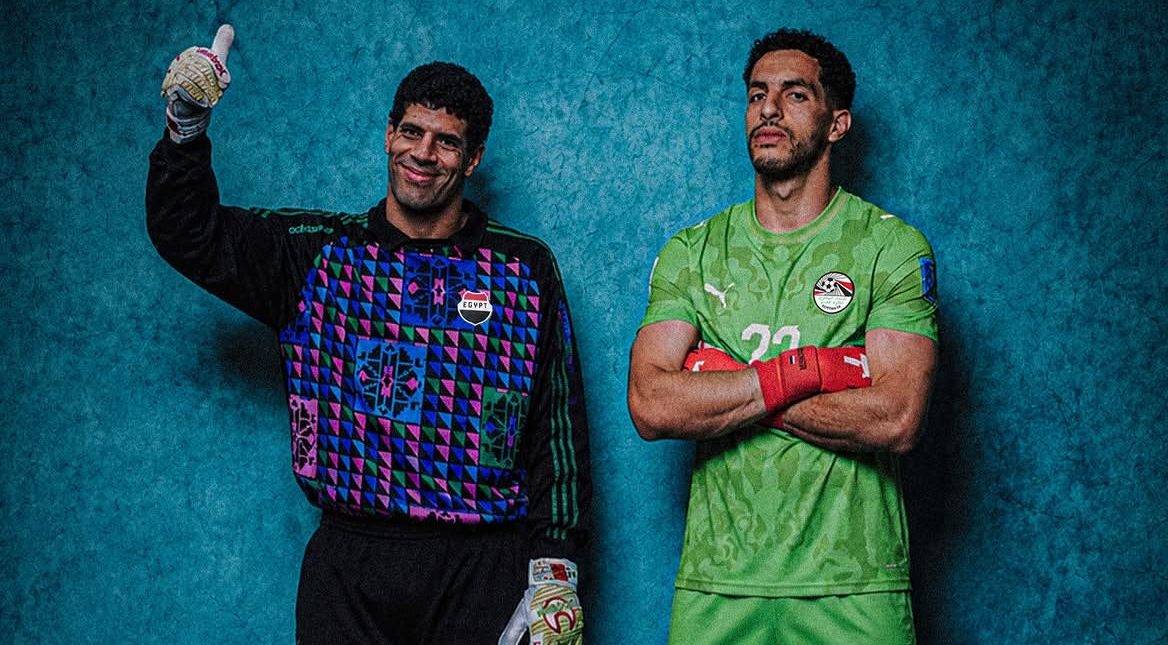
Prominent squad members Mahmoud Hassan, Nabil Emad, and Mostafa Zaki Abdelraouf are globally recognized by their adopted pseudonyms: “Trézéguet,” “Dunga,” and “Ziko,” respectively. These names pay homage to David Trézéguet, Carlos Caetano Bledorn (Dunga), and Arthur Antunes Coimbra (Zico), despite having no biological connection to them. This naming convention serves as an efficient marketing proxy, instantly communicating tactical roles and stylistic attributes to international scouts, media, and fans.
Developmental Monikers: The Genesis of ‘Trézéguet’
The origin of Mahmoud Hassan’s pseudonym, “Trézéguet,” illustrates the profound impact of youth-level mentorship on long-term player branding. His youth coach, Badr Ragab, bestowed the moniker during Hassan’s developmental years at the academy level, citing a striking physical and tactical resemblance to the French striker. Ragab noted that the young Egyptian mirrored the French World Cup winner’s clinical finishing and aerial presence.
This informal academy designation evolved into a permanent professional identity. For Mahmoud Hassan, playing under the name “Trézéguet” established an elite performance benchmark that shaped his tactical development and facilitated his integration into the global transfer market. The permanence of this pseudonym demonstrates how youth coaches act as primary architects of both technical ability and commercial identity.
Tactical Transition: Egypt’s Post-Salah Strategic Outlook
The integration of highly marketable, technically skilled players like Trézéguet, Dunga, and Ziko is critical as the Egyptian National Team navigates a significant generational transition. The squad remains anchored by talismanic captain Mohamed Salah; however, with Salah entering his mid-30s, the Egyptian Football Association must transition from a superstar-dependent model to a decentralized, tactically cohesive collective.
Under Hossam Hassan, the national team focuses on balancing Salah’s veteran leadership with the peak-career capabilities of the squad’s mid-career core. Cultivating a resilient team structure that leverages both tactical versatility and established global brand recognition is vital. The success of this transition will determine Egypt’s ability to translate continental dominance into consistent success during the 2026 World Cup cycle.
Macro Implications for Global Talent Acquisition
The convergence of biological lineage and symbolic naming conventions at the 2026 World Cup underscores the evolving nature of talent acquisition and sports marketing. National federations, particularly in the MENA region, are increasingly utilizing ancestral eligibility pathways to repatriate elite, internationally trained players. This strategic recruitment model provides an immediate competitive advantage for national squads looking to optimize their depth charts.
Simultaneously, these generational and symbolic narratives provide broadcasters and tournament organizers with compelling storylines that bridge historical eras. Whether navigating the legacy of a legendary surname or utilizing a symbolic pseudonym, modern athletes are active participants in a continuous historical continuum. As they enter the global stage, they carry both immediate tactical instructions and the enduring legacies of the footballing dynasties that preceded them.