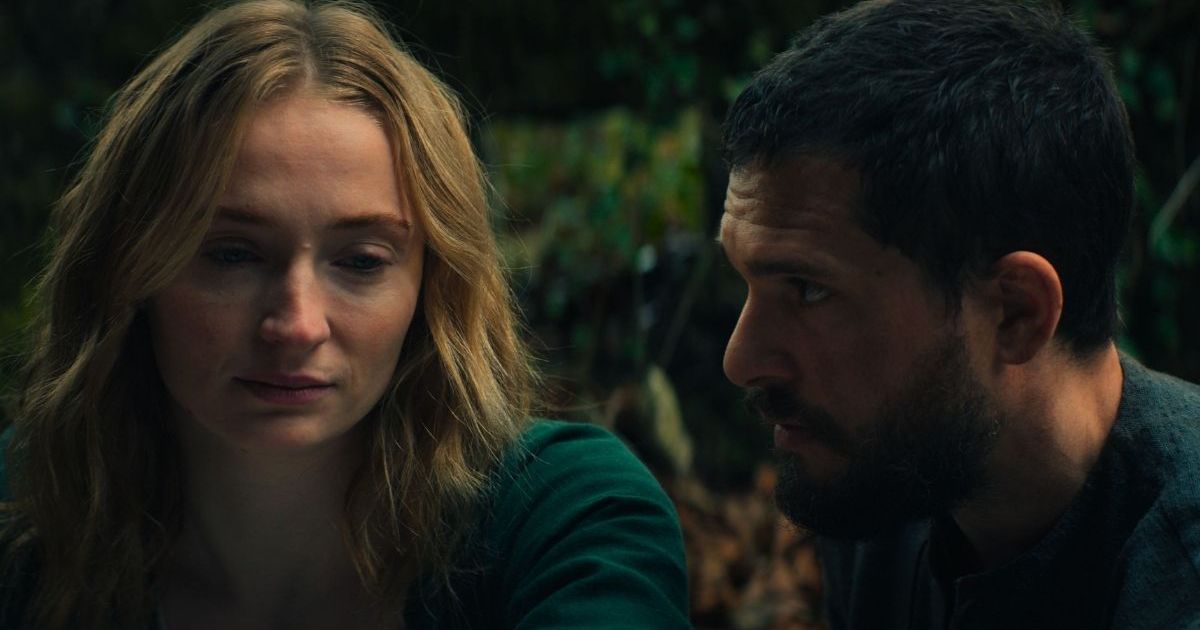
The scheduled release of the Gothic horror film The Dreadful on February 20, 2026, marks a sophisticated strategic pivot for its leads and Lionsgate. By reuniting Sophie Turner and Kit Harington, the production exploits a decade of audience investment in their previous high-fantasy roles while intentionally subverting that established semiotic bond. This casting choice functions as a high-leverage marketing tool, utilizing ‘perceptual friction’—the discomfort of seeing former siblings as romantic leads—to generate immediate viral discourse and media visibility.
Thematic Architecture and the Onibaba Framework
Director Natasha Kermani has grounded the project in the cinematic language of the 1964 Japanese masterpiece Onibaba. This influence signals a departure from traditional jump-scare horror toward a narrative of domestic claustrophobia and primal survival. Set against the historical volatility of the 15th-century Wars of the Roses, The Dreadful utilizes the ‘returned soldier’ trope—embodied by Harington’s mysterious knight—to destabilize the survivalist hierarchy established between Turner’s Anne and her mother-in-law, Morwen.
The addition of Academy Award winner Marcia Gay Harden as Morwen provides the production with necessary institutional prestige. Her character acts as a psychological foil to Turner, framing the film not just as a genre piece, but as an exploration of generational trauma and female autonomy during societal collapse. This structural arrangement mirrors the thematic core of Shindo’s original work, where the arrival of a male catalyst triggers a breakdown in a closed-loop survival system.
Market Positioning and Risk Mitigation
Lionsgate’s distribution strategy—a simultaneous multi-platform release across theaters and digital VOD—reflects contemporary risk-mitigation for mid-budget elevated horror. This ‘day-and-date’ approach maximizes revenue capture during the initial hype cycle while catering to a fragmented consumer landscape. The February window is a calculated placement, targeting the post-holiday ‘prestige horror’ audience that typically supports narrative-driven entries over summer blockbusters.
Furthermore, the production’s move toward grit and historical realism serves as a vital brand-distancing mechanism for Turner and Harington. By stripping away the spectacle of epic fantasy in favor of localized, character-driven tension, the actors are positioned to demonstrate a mature range. The widely reported ‘gagging’ incident during a shared romantic scene underscores the operational difficulty of de-coupling from long-term television identities, yet it simultaneously serves the film’s marketing by emphasizing the radical departure from their past work.
Industry Implications of the Reunion
Ultimately, The Dreadful serves as a case study in how independent productions can utilize ensemble legacy to secure distribution leverage. The project’s success will hinge on whether the ‘curiosity gap’ created by the Turner-Harington reunion can be sustained by Kermani’s ambitious aesthetic. For the broader industry, it highlights the evolving role of the horror genre as a laboratory for established stars seeking to rebrand through challenging, unconventional character dynamics.