Viral Valor and Political Capital: A White House Case Study
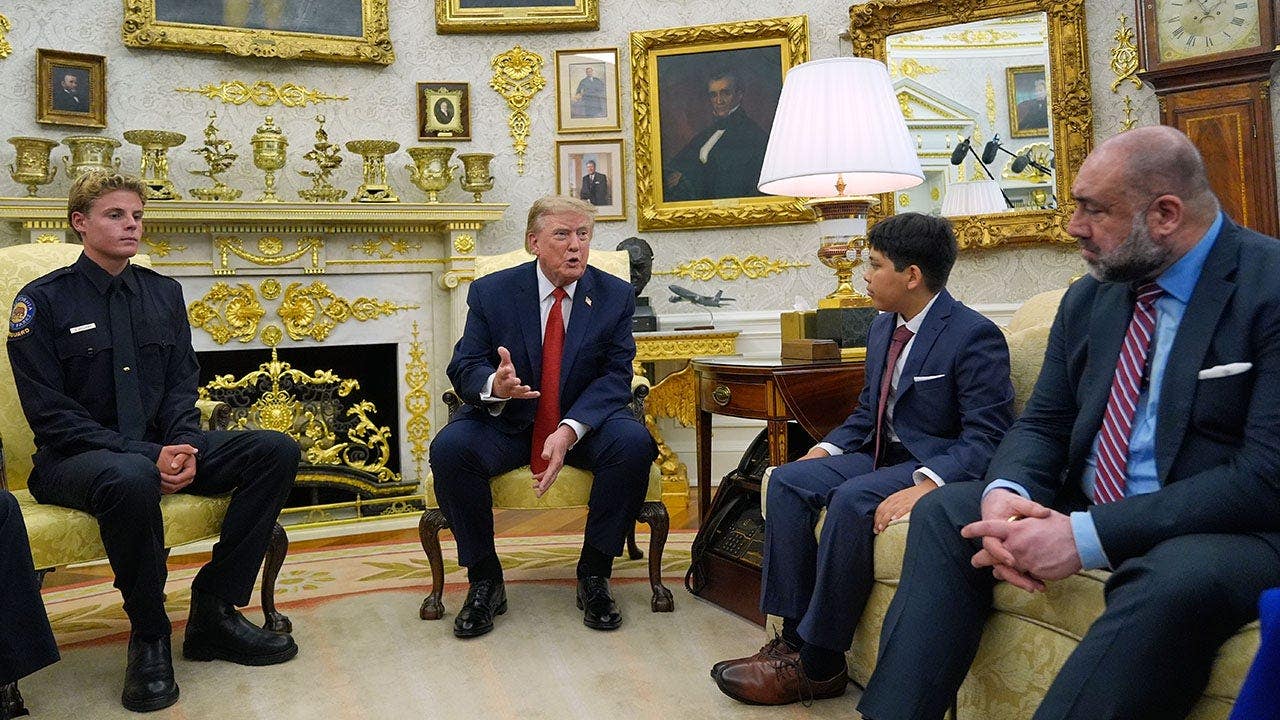
President Donald Trump’s reception of Ryder Williams, a 16-year-old California State Parks lifeguard, and Nathaniel Rai, the 10-year-old boy Williams rescued, in the Oval Office transcended a mere human-interest story. This meticulously orchestrated event served as a compelling case study in the deliberate mobilization of political capital, illustrating the intricate interplay between viral media, strategic political communication, and the institutional recognition of public service.
From Seabright to the Oval Office: The Digital Amplification Pipeline
The dramatic rescue, unfolding at Seabright State Beach in Santa Cruz on July 25, involved Williams’s heroic dash into dangerous surf to save Rai, who had been swept away by powerful waves. The perilous conditions, vividly captured on video as Williams struggled to secure a rescue tube around the boy amidst crashing waves, became the definitive catalyst for national attention.
This raw video footage rapidly circulated across digital platforms, bypassing traditional news gatekeepers and demonstrating the contemporary media landscape’s capacity to elevate individual acts into widespread public spectacles. The incident’s viral trajectory reached Eric Trump, the President’s son, who amplified it on social media. This direct familial connection acted as an accelerated conduit, transforming digital virality into executive awareness and ultimately, a formal White House invitation, underscoring the personalized pathways through which certain narratives gain presidential notice.
Strategic Deployment of Narrative: White House Communication Tactics
The White House’s decision to invite and publicly commend Williams represented a calculated strategic communication maneuver. By associating the presidency with narratives of heroism, selflessness, and civic duty, the administration strategically aligned itself with widely admired virtues, aiming to bolster its public image and reinforce specific societal values.
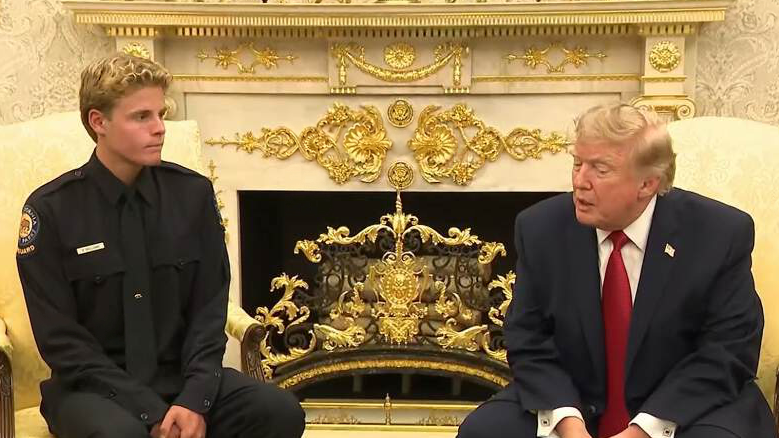
Initially listed as a closed press event, the last-minute decision to open the meeting to the press further amplified its strategic intent. This adjustment maximized public visibility and media coverage, transforming a private commendation into a public spectacle designed for broad consumption and impact. The presence of both rescuer and rescued, alongside their families, provided a compelling visual narrative that reinforced themes of bravery, community, and national pride, precisely the messages the White House sought to convey.
President Trump’s remarks during the Oval Office meeting were central to framing the narrative of heroism. His direct praise of Williams as “incredible” and an “inspiration for young Americans” unequivocally positioned the lifeguard as a national role model. The President’s lighthearted, self-deprecating comment, “I don’t know if I’d do it. I wouldn’t, probably. You’re lucky I wasn’t on the service that day,” served multiple rhetorical purposes: it humanized the presidential figure while simultaneously elevating Williams’s bravery by contrasting it with a hypothetical, less courageous response. This rhetorical approach effectively underscored the exceptional nature of Williams’s actions, making the heroism more relatable and impactful, and aligning the administration with the recognition of such extraordinary courage.
Operational Impact: Public Service Institutions and Personnel Morale
For institutions like California State Parks, the national recognition of one of its lifeguards carries significant operational and reputational implications. Such high-profile commendations not only enhance the public perception of the organization but can also critically aid in recruitment efforts for essential public safety roles, attracting individuals inspired by valorized service.
The valorization of a lifeguard’s actions at the highest level of government serves as a potent morale booster for frontline personnel across various public service sectors. It validates the inherent risks, rigorous training, and dedication associated with such professions, fostering a stronger sense of purpose and commitment among staff. While direct financial implications are not immediately apparent, the increased visibility and positive public sentiment can indirectly strengthen public and political support for funding and operational enhancements.
Individual Trajectories: Exposure and Long-Term Implications
For Ryder Williams and Nathaniel Rai, the White House meeting marked a transformative moment of public exposure. Their lives, previously private, were thrust into the national spotlight, bringing both opportunities and challenges inherent in sudden fame.
Williams, as a young public servant, gained immense reputational capital, a platform that could profoundly influence his future career trajectory within public safety or other fields. This recognition, while providing a unique springboard, also necessitates careful management of his public persona. For Rai, the experience of being rescued and subsequently meeting the President creates a powerful personal narrative that can shape his outlook and public identity, carrying implications for his personal and professional development.
Conclusion: The Economy of Attention and Societal Values
The White House’s decision to host Williams and Rai exemplifies institutional strategy within the economy of attention. In a fragmented media environment, capturing and directing public attention toward specific narratives is a valuable political asset. By celebrating a widely admired act of heroism, the administration strategically aligns itself with positive public sentiment, subtly diverting attention from potentially contentious issues and reinforcing a unifying national message. This represents a sophisticated deployment of symbolic capital to achieve broader communication objectives.
The incident further highlights the evolving nature of presidential engagement, where social media virality can directly influence the executive agenda, signaling a shift in how public sentiment is gauged and how public relations opportunities are identified and capitalized upon by political institutions. Ultimately, this event serves as a compelling demonstration of how a localized act of bravery, amplified by digital media, can become a significant point of intersection for political strategy, public service recognition, and the broader societal discourse on heroism and civic responsibility, underscoring its importance in shaping national identity and values.