Operational Breach and the Proliferation of FOD Risks
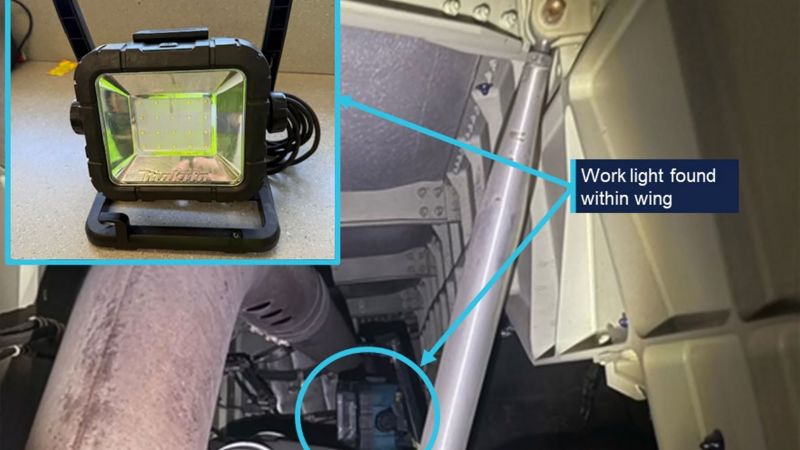
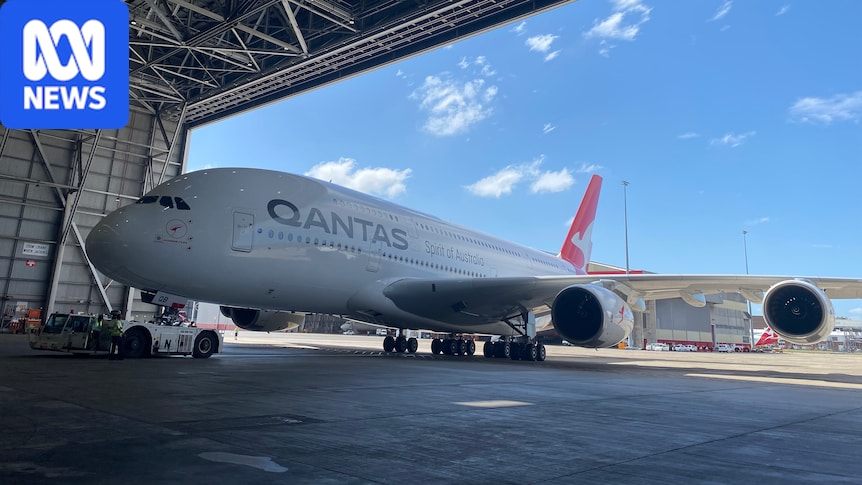
The Australian Transport Safety Bureau (ATSB) investigation into a Qantas Airbus A380 (VH-OQD) highlights a sophisticated breakdown in Maintenance, Repair, and Overhaul (MRO) protocols. A 13-inch battery-operated LED work light was left inside the left-wing trailing edge for four flight cycles, including a trans-Pacific Sydney-to-Dallas return mission. This incident transcends localized human error, signaling a failure in the multi-layered redundancy systems designed to mitigate Foreign Object Debris (FOD) within primary flight structures.
The Decoupling of Digital and Physical Reconciliation
A core finding involves the breakdown of the tool-control ecosystem. Despite the use of a barcode-based digital tracking system, the failure to reconcile the physical inventory at the conclusion of the maintenance task allowed the error to propagate. This decoupling of digital records from physical verification suggests that administrative safeguards were bypassed or treated as secondary to turnaround efficiency. The mandatory Foreign Object Clearance (FOC) inspection also failed to identify the 33-centimeter device, indicating potential gaps in inspection visibility within the A380’s complex internal wing geometry.
Diffusion of Responsibility in Complex MRO Environments
The ATSB report identifies a ‘diffusion of responsibility’ during shift handovers. When multiple technicians are tasked with invasive procedures—such as the air conditioning sensor replacement involved here—the accountability for tool recovery can become fragmented. This organizational lapse turned a procedural safeguard into a formality, allowing the aircraft to be cleared for service while an unanchored object remained in a critical aerodynamic zone.
Physics of Risk in Ultra-Long-Haul Aviation
While no structural damage was recorded, the potential for catastrophic failure remains high. Foreign objects in the wing structure can obstruct the movement of flight control surfaces like flaps and slats or damage hydraulic lines. On ultra-long-haul routes, the window for an unsecured object to migrate due to vibration, atmospheric pressure shifts, and thermal expansion is significantly increased, amplifying the risk profile for secondary system failures.
Strategic Remediation and Regulatory Implications
In response, Qantas has initiated a dedicated working group to overhaul tool-management governance. This shift from incremental adjustments to structural reform is essential for maintaining premium safety certifications. For global aviation regulators and the Civil Aviation Safety Authority (CASA), this case serves as a benchmark for evaluating how digital tool-tracking must be integrated with rigorous physical audits to prevent the recurrence of systemic maintenance oversights.