The Intersection of Technical Mastery and Operational Lapse
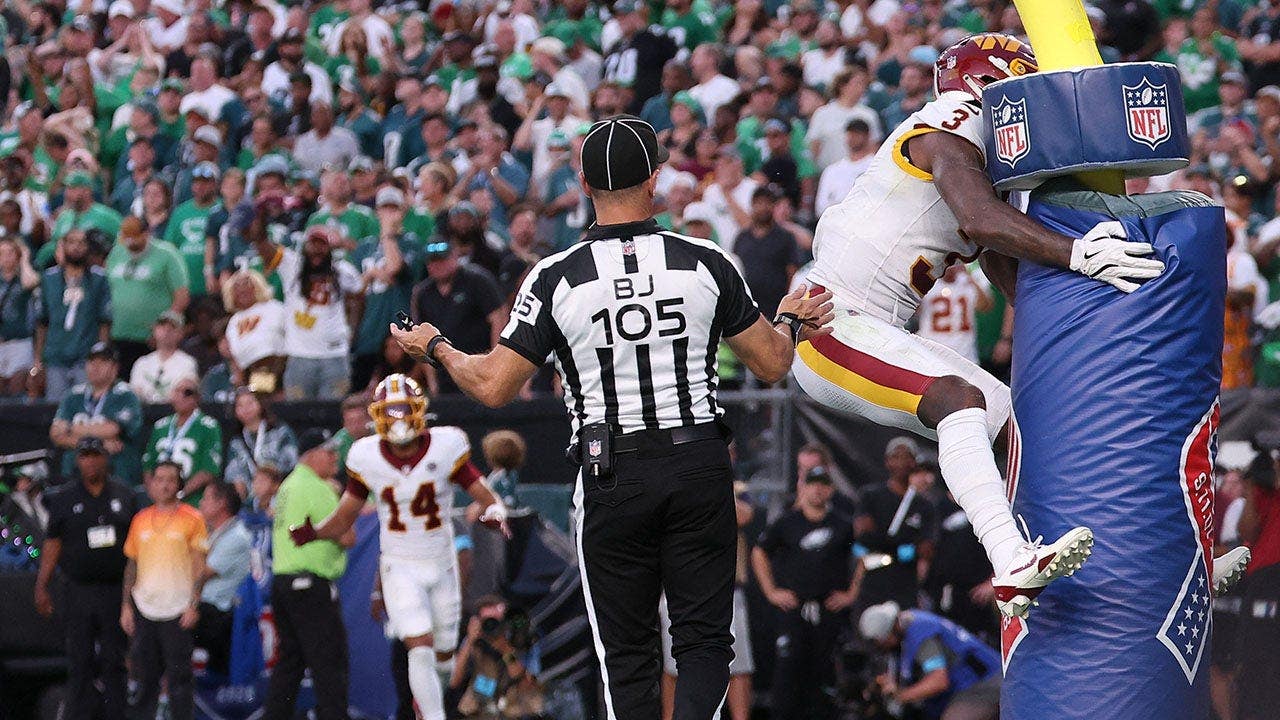
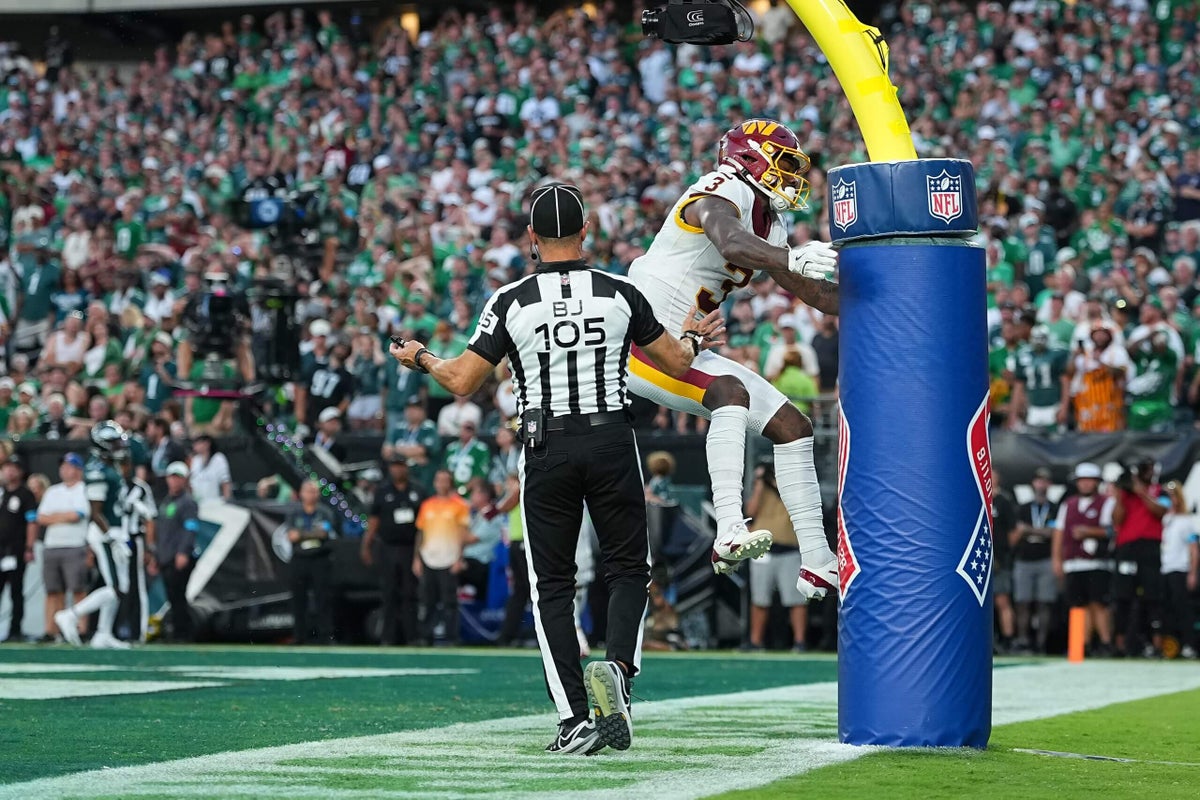
Stefon Diggs’ performance in the Washington Commanders’ Week 1 matchup against the Philadelphia Eagles served as a stark illustration of the narrow margins defining professional football. While his 10-yard touchdown reception showcased the elite route-running capabilities that have defined his career, the subsequent celebration introduced a catastrophic variable into the team’s strategic calculus.
By manipulating the leverage of Eagles cornerback Cooper DeJean, Diggs demonstrated the high-level technical execution that justifies his position as a primary offensive focal point. However, the immediate transition from tactical success to a procedural violation highlights a recurring tension between individual expression and the rigid disciplinary structures of the National Football League.
The penalty for using the goalpost as a prop is not merely a localized error; it represents a failure in situational awareness that carries significant downstream consequences for game management. For a veteran of Diggs’ stature, the move was characterized by observers as a lapse in judgment that undermined the very momentum his athletic performance had generated.
Strategic Erosion and the Two-Point Conversion Calculus
The most immediate impact of the unsportsmanlike conduct penalty was the forced recalibration of the Commanders’ scoring strategy during a critical fourth-quarter juncture. Head coach Dan Quinn explicitly stated that the original intent was to attempt a two-point conversion to tie the game at 17-17 following the touchdown.
The 15-yard enforcement of the penalty fundamentally altered the risk-reward profile of that decision, pushing the line of scrimmage back and making a conversion attempt statistically non-viable. This shift forced the Commanders into a conservative PAT attempt from 48 yards, a distance that introduces significantly higher operational risk for a kicker compared to the standard try.
While Drew Stevens successfully converted the 48-yard kick to bring the score to 17-16, the loss of the opportunity to tie the game fundamentally changed the leverage dynamics for the remainder of the contest. The Commanders were forced to play from behind in a high-leverage environment where a single successful conversion earlier could have neutralized the Eagles’ lead.
Institutional Discipline and the New NFL Fine Schedule
The penalty occurs against the backdrop of a significant shift in the NFL’s internal regulatory environment, specifically regarding the implementation of a new fine schedule. This system, which utilizes a point-based structure, is designed to track recurring violations and can lead to escalating consequences, including player suspensions.
For a player like Diggs, who is currently on his fourth team in four years, these disciplinary markers carry weight beyond the immediate game-day impact. The league’s move toward a more automated and punitive system for on-field conduct suggests that prop-based stunts will be met with increasing institutional resistance.
The potential for financial complexities adds operational stress, but the primary concern for franchises remains the availability of key assets. If the point system identifies a pattern of behavior, the strategic risk shifts from a 15-yard penalty to a multi-game absence, affecting the long-term capital investment the Commanders have made in the wide receiver.
Leadership Dynamics and the Rookie-Veteran Inversion
The post-game reactions from the Commanders’ locker room revealed a notable inversion of traditional leadership roles between the veteran Diggs and rookie quarterback Jayden Daniels. Daniels’ public comments regarding situational football and the timing of celebrations suggest a level of maturity that was momentarily absent in his most experienced target.
In a rebuilding environment, the veteran’s role is ostensibly to provide a stabilizing influence and a blueprint for professional conduct under pressure. When the veteran becomes the source of a self-inflicted strategic wound, it creates a friction point in the team’s developing hierarchy and complicates the coaching staff’s efforts to instill discipline.
Dan Quinn’s acknowledgment of the situation—balancing his appreciation for Diggs’ competitive fire with the reality that accountability is paramount—indicates a need for internal recalibration. The Commanders’ ability to compete in the NFC East depends on minimizing unforced errors, particularly those that negate the advantages provided by elite talent.
Structural Implications for Officiating and Game Flow
The immediate flag thrown by officials at Lincoln Financial Field signals a league-wide mandate to strictly enforce rules regarding the use of equipment as props. This regulatory stance is intended to maintain a specific standard of professional decorum, but it also serves as a tool for game control.
For coaching staffs, this means that the celebration phase of a play must be coached with the same rigor as the play itself. The failure to account for these officiating priorities can turn a moment of triumph into a liability, as seen in the 15-yard shift that moved the PAT attempt and resulted in a difficult 48-yard kick.
As the NFL continues to refine its disciplinary protocols, teams that prioritize situational football in all phases of the game—including post-play behavior—will likely find themselves with a competitive advantage. The Commanders’ loss serves as a case study in how institutional rules can override individual brilliance to dictate the final outcome of a professional contest.