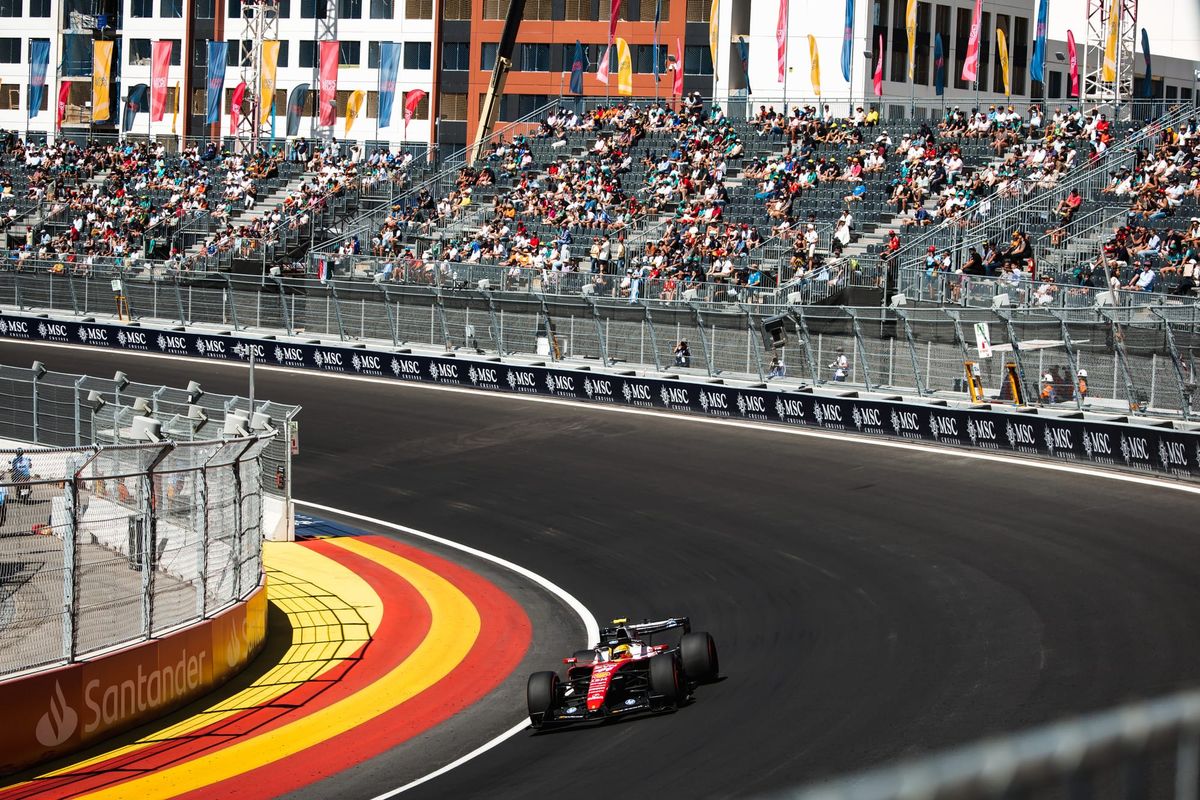
Setup Extrapolation in an Informational Vacuum
The inaugural Spanish Grand Prix at the Madring circuit forced Formula One engineering desks to operate without empirical track models. Setup matrices were derived strictly from virtual simulation loops and rubber-in progression observed in Formula 2 and Formula 3 feeder sessions. In this environment of elevated track evolution, McLaren’s operational deficit was compounded when mechanical disruptions restricted Lando Norris’s run plan in Free Practice 2, severely truncating baseline aerodynamic and mechanical platform validation.
Telemetry Deconstruction: Norris’s High-Variance Q3 Decider
McLaren team principal Andrea Stella characterized the final qualifying run as a “masterpiece,” recognizing that the MCL chassis lacked the intrinsic pace delta to head the field on raw balance alone. Micro-sector analysis revealed a 0.701-second delta between Norris’s preliminary and final Q3 attempts, underpinned by elevated tire temperature management on the out-lap and aggressive apex commitment.
The performance profile was defined by extreme variance. Norris surrendered an estimated three-tenths of a second at the final corner after a snap of oversteer carried the chassis wide toward the retaining barrier. The sector preceding the mistake, however, generated a sufficient positive delta to secure provisional pole, underscoring the high-risk operational envelope required to offset baseline performance deficits.
Title Mathematics and Regulatory Trajectory
Zak Brown affirmed McLaren’s operational posture regarding the drivers’ championship, emphasizing that strategic planning must reflect mathematical feasibility until elimination is confirmed. Consecutive victories in Hungary and the Netherlands demonstrated that the Woking outfit has rectified early correlation issues under the 2026 technical regulations, yet bridging the points deficit against championship pacesetter Kimi Antonelli demands flawless execution across high-degradation operational weekends.
Launch Phase Vulnerabilities: Empirical Disadvantage from P1
Feeder-series metrics from the weekend indicate that grid position on the primary line carries structural liabilities at Madring. Across five combined Formula 2 and Formula 3 standing starts, the P2 starter captured the lead into the braking zone of Turn 1 on four occasions.
Telemetry traces show low-grip micro-texture on the pole side, prompting polesitters to adopt a defensive lateral sweep to the left immediately post-clutch release to break the slipstream and geometric advantage of the driver on the right. For Norris, launch phase clutch slip calibration and first-phase traction will be decisive in negating P2’s statistical advantage off the line.