The Media as a Mirror of Socioeconomic Stratification
The second season of ‘Beef’ on Netflix functions as a sophisticated diagnostic tool for contemporary societal anxieties. By transitioning from the visceral, individualistic road rage of the first season to the systemic frictions of a high-stakes country club, the narrative pivots toward an examination of institutionalized class resentment. This shift reflects a broader media trend where explosive anger is framed not as a personal failing, but as an inevitable byproduct of rigid economic stratification.
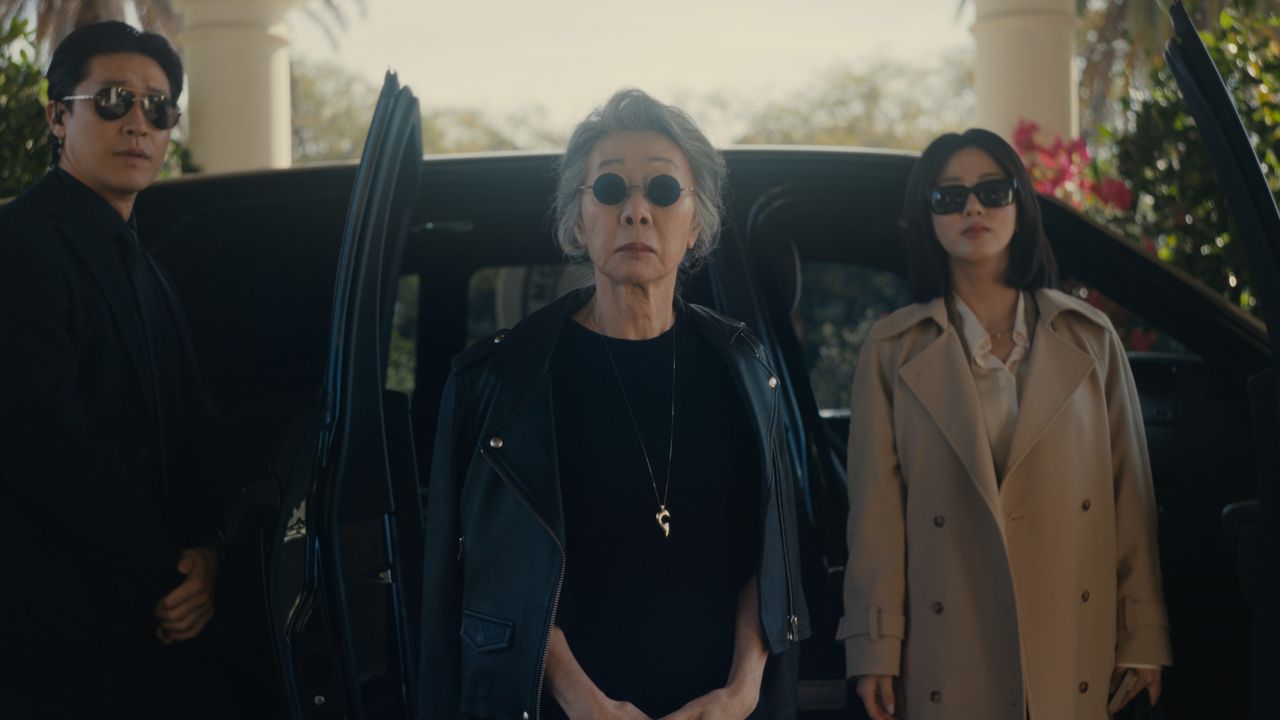
The introduction of Chairwoman Park, a South Korean billionaire who acquires a Montecito country club, serves as the catalyst for this exploration. This specific setting—a traditional bastion of Western elite sociality repurposed by East Asian industrial capital—encapsulates the fluidity of modern global wealth and the resulting displacement of established social hierarchies. The narrative utilizes this intersection to probe the operational reality of concentrated economic influence.
The Structural Mechanics of Chaebol Dominance
Within the series, the term ‘chaebol’ is elevated from a descriptor of corporate size to a signifier of systemic centrality. These family-controlled conglomerates are the primary architects of the South Korean industrial landscape, exerting influence that transcends traditional market boundaries. Unlike Western corporations characterized by dispersed ownership, chaebols operate through complex cross-shareholding networks that consolidate power within hereditary lineages.
The claim that Chairwoman Park’s entity accounts for 2% of South Korea’s GDP is a critical data point illustrating asymmetric market leverage. Such concentration creates a high-barrier-to-entry environment, where the conglomerate’s strategic pivots can dictate national interest rates, employment stability, and innovation cycles. This systemic integration ensures that the chaebol’s internal family dynamics carry profound macroeconomic consequences.
Governance and the ‘Korea Discount’ Logic
The ‘family-run’ aspect of the chaebol model presents unique governance challenges, often resulting in strategic priorities that favor dynastic legacy over immediate shareholder value. This model frequently leads to transparency concerns and market inefficiencies, yet it grants the conglomerate a long-term operational horizon that public Western firms often lack. The series explores this through the characterization of Park as ‘scarily powerful,’ a sentiment rooted in the reality of unchecked corporate-political synergy.
Furthermore, the scale of these entities complicates regulatory oversight. When a single family-run entity controls significant portions of a nation’s productive capacity, the distinction between private corporate strategy and national economic policy becomes increasingly blurred. This allows for the projection of power on a global scale, facilitating large-scale asset acquisitions in foreign jurisdictions like the United States.
Transnational Capital Flows and Elite Convergence
The acquisition of a Montecito country club by a South Korean billionaire is a case study in the globalization of capital. It represents the transition from domestic industrial dominance to the acquisition of transnational ‘trophy assets.’ These investments serve as strategic footholds in prestigious international markets, functioning as both a store of value and a vehicle for cultural soft power.
This movement of capital triggers a convergence of global elites, where traditional Western markers of status are challenged by the sheer volume of emerging market wealth. The resulting friction is a central theme in modern media, exploring how disparate cultural histories are unified—or polarized—by the shared language of hyper-capitalism. This transaction is less about hospitality and more about the symbolic dominance of capital over geographical and social boundaries.
The Commodification of Class Conflict
Media commentators have identified a ‘White Lotus Derangement Syndrome’ within the industry—a strategic commissioning trend that prioritizes narratives of class antagonism. By placing service-level characters in inescapable proximity to the ultra-wealthy, producers leverage the visceral nature of economic disparity for high audience engagement. This trend reflects a calculated recognition of widespread public fatigue regarding wealth concentration.
This narrative strategy serves as a dual-purpose tool: it provides a platform for social critique while simultaneously commodifying the very resentment it depicts. The consistent portrayal of systemic exploitation and the psychological toll of service-oriented labor resonates with a global viewership navigating similar economic precarity. In ‘Beef,’ this is operationalized through the country club’s exclusive environment, which acts as a pressure cooker for class-based grievances.
The Soft Power of Elite Access
The personal testimony of series creator Lee Sung Jin regarding his induction into the ‘upper echelons’ of Korean society highlights the psychological dimensions of power. The allure of elite access—described as ‘tempting’ and ‘juicy’—illustrates the mechanics of soft power. Proximity to influence often leads to institutional co-option, where the critical perspective of the observer is softened by the benefits of inclusion.
This dynamic has significant implications for narrative construction. When creators gain access to the spheres they critique, there is a strategic risk of ‘sanitizing’ the depiction of wealth or becoming enamored with the aesthetic of power. However, it also allows for a more granular, authentic exploration of the motivations and isolation inherent in extreme wealth, providing the ‘analytical density’ required to move beyond simple caricature.
Strategic Trajectories in Economic Storytelling
The enduring popularity of these themes suggests that media will continue to serve as a primary arena for negotiating class-based anxieties. As global wealth inequality persists, the demand for content that demystifies and dramatizes the levers of economic power—such as the chaebol system—will likely increase. These stories act as a cultural proxy for the regulatory and social debates that are often too complex for mainstream political discourse.
Ultimately, the strategic focus of ‘Beef’ Season 2 on the intersection of Korean corporate structures and American social exclusivity provides a valuable lens for interpreting real-world financial dynamics. By analyzing the mechanisms of power, rather than just the symptoms of anger, the series contributes to a more nuanced public understanding of how global capital shapes individual and national identities.