Cislunar Situational Awareness and Verification Loops
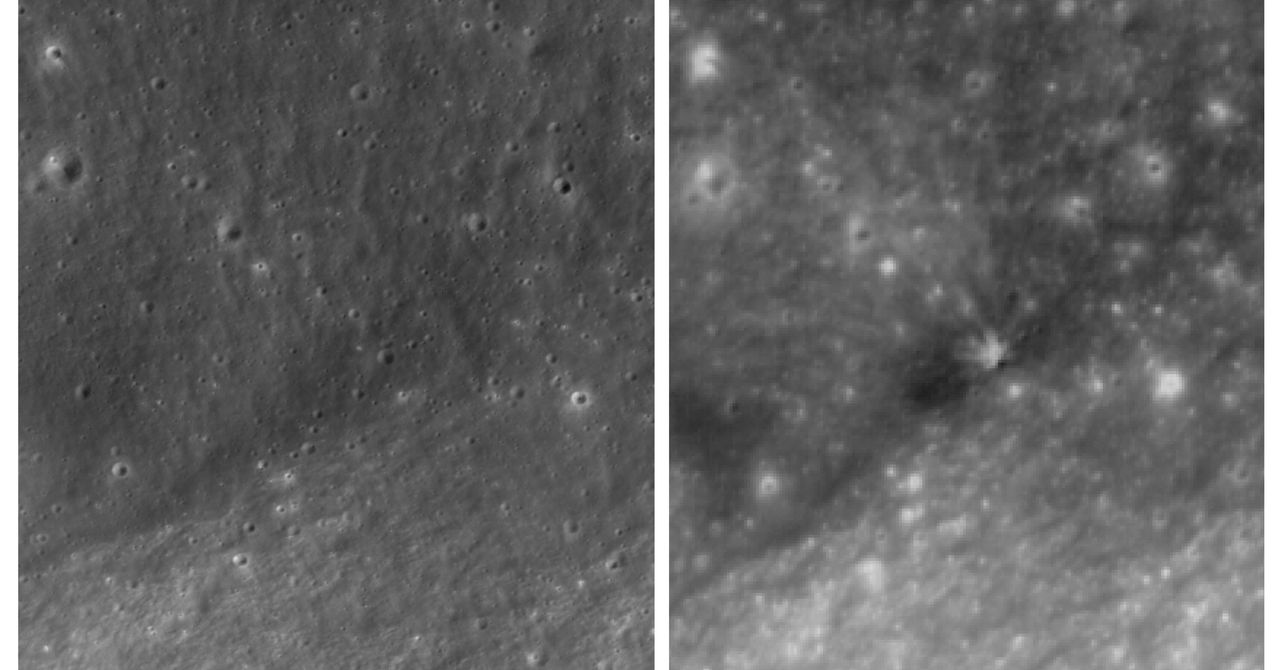
The impact of a SpaceX Falcon 9 upper stage on the lunar surface represents a pivotal case study in cislunar situational awareness (CSA). Documented by the Korea Aerospace Research Institute’s (KARI) Danuri orbiter, the event marks a shift from theoretical tracking to empirical verification by international assets. This collision, situated between the Einstein and Bell craters, highlights a growing necessity for multilateral surveillance as commercial mission frequency increases, necessitating a formal infrastructure for monitoring post-mission hardware disposal.
The transition of this hardware from a functional delivery system to a lunar projectile was driven by stochastic variables, including solar radiation pressure and complex gravitational perturbations within the Earth-Moon system. For stakeholders in the lunar economy, the event underscores the narrow margin between successful orbital management and the unplanned creation of lunar debris. KARI’s rapid documentation demonstrates a level of responsive imaging and orbital coordination that establishes a benchmark for non-NASA agencies in deep-space monitoring.
Strategically, the use of the Danuri spacecraft—itself launched via SpaceX in 2022—closes a loop of institutional accountability. This intersection of commercial launch services and international scientific oversight provides a template for future cislunar traffic management. It illustrates how sovereign space assets can serve as independent auditors of commercial mission outcomes, ensuring that environmental impacts on the Moon are recorded with scientific precision.
Orbital Dynamics and Stochastic Perturbations
The Falcon 9 stage originated from the January 15, 2025, launch of Firefly Aerospace’s Blue Ghost 1 lander, part of NASA’s Commercial Lunar Payload Services (CLPS) program. While payload delivery was nominal, the subsequent trajectory of the spent stage highlights the volatility of high-energy lunar orbits. Gravitational ‘three-body’ effects, combined with fluctuating solar activity, converted a standard disposal orbit into a terminal descent path, emphasizing the difficulty of long-term trajectory prediction in the cislunar environment.
Institutional tracking by NASA’s Center for Near Earth Object Studies (CNEOS) provided a 100% impact probability estimate, enabling a coordinated multi-asset observation campaign. Traveling at approximately 5,400 mph, the stage’s kinetic energy transfer was sufficient to produce a distinct geological signature. The Danuri orbiter’s before-and-after imagery serves as primary evidence for calibrating hypervelocity impact models, which are essential for protecting future lunar infrastructure from both human-made and natural projectiles.
Spectroscopic Signatures and Kinetic Modeling
The unplanned impact provided an opportunistic experiment for real-time spectroscopic analysis of the lunar regolith. Observations from the Very Large Telescope (VLT) identified sodium and lithium signatures within the ejecta plume, providing a chemical map of the subsurface materials displaced by the 5,400 mph collision. This data allows researchers to differentiate between indigenous lunar elements and potential contamination from terrestrial hardware, a critical distinction for future in-situ resource utilization (ISRU).
The resulting crater, estimated at dozens of feet in diameter, offers a controlled data set for hypervelocity dynamics. By cross-referencing Danuri’s visual data with predicted energy dissipation models, scientists can better understand how kinetic energy behaves in a vacuum. This synergy between commercial hardware failure and scientific acquisition turns an operational externality into a high-value data point for planetary science.
Normative Frameworks for Commercial Hardware
The communication between SpaceX and NASA regarding this event reflects an evolving framework for commercial-government transparency. Under the CLPS model, the responsibility for the hardware footprint is shared, necessitating robust data exchange. The tracking of this stage by planetary defense infrastructure suggests that existing assets are being repurposed to manage the logistics of an increasingly crowded deep-space environment.
However, the incident also exposes gaps in real-time monitoring. The difficulty in capturing the exact moment of impact due to environmental constraints suggests that current cislunar surveillance networks require expansion. As commercial traffic scales, the reliance on international assets like Danuri for verification will likely transition into a formalized, multi-national monitoring protocol to ensure the sustainability of the lunar environment.
Geopolitical and Regulatory Implications
South Korea’s success in documenting this impact elevates its strategic standing within the global space community. By providing the definitive record of a high-profile U.S. commercial impact, KARI has demonstrated technical parity in lunar surveillance. This contributes to a multipolar lunar environment where data validation is distributed, reducing reliance on any single agency for environmental monitoring.
As NASA and its partners establish more permanent lunar presences, the lessons from this Falcon 9 impact will mandate stricter end-of-life disposal protocols. The detection of terrestrial elements like lithium post-impact raises concerns regarding the long-term chemical integrity of the lunar surface. Future missions will likely require precise de-orbiting maneuvers to avoid sensitive regions, moving away from accidental data collection toward a structured, regulated environmental management system in cislunar space.