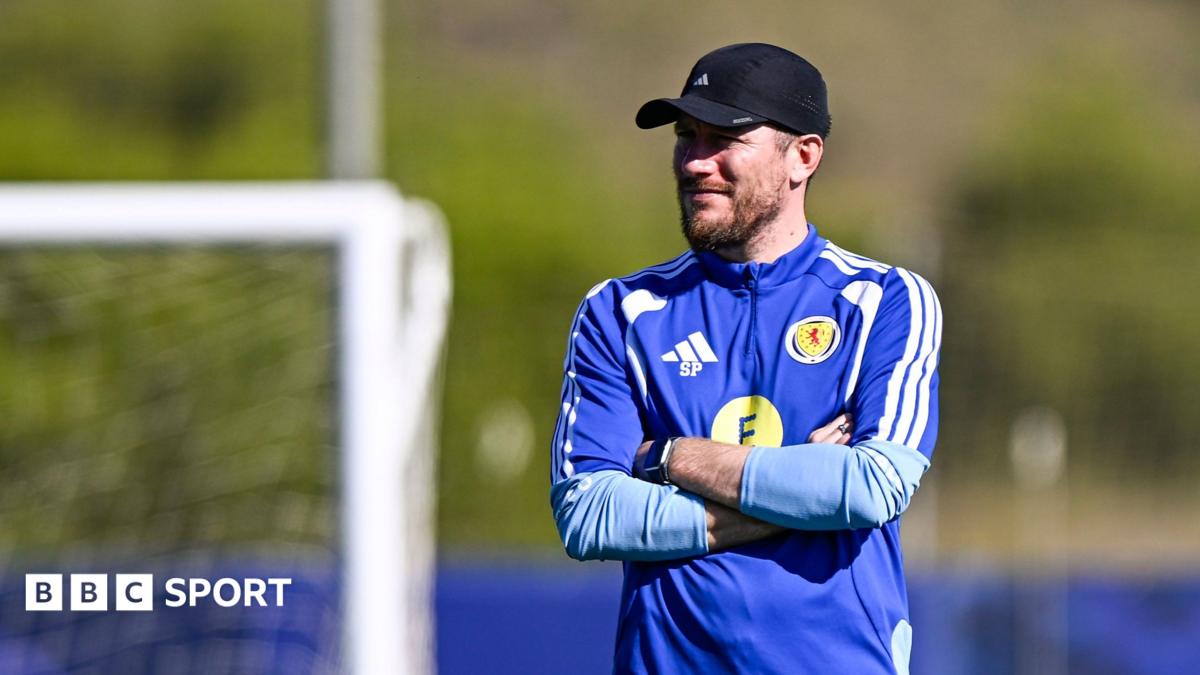
The appointment of Sebastien Pocognoli as Scotland’s head coach represents an intentional rupture with the functionalist era of Steve Clarke. While Clarke’s seven-year tenure successfully ended a generational international wilderness, securing qualification for three major tournaments, it eventually hit a ceiling of tactical inertia. The transition to Pocognoli signals an institutional pivot toward a more progressive, high-performance identity, timed to coincide with the nation’s role as co-host for Euro 2028.
Institutional Risk and the Managerial Gamble
The Scottish Football Association’s (SFA) selection of the 39-year-old Belgian is a calculated gamble that prioritizes cultural modernization over domestic experience. By bypassing the traditional pool of UK-based managers, the SFA is attempting to align the national program with contemporary European coaching trends. This decision carries significant reputational weight; the governing body must now demonstrate that abandoning the pragmatic stability of the previous regime is a necessary evolution rather than a reckless abandonment of a proven formula.
Early goodwill for Pocognoli stems from his commitment to squad rejuvenation, addressing a perceived stagnation in the player pool. However, this support is contingent upon his ability to deliver tangible technical improvements without compromising the defensive grit that characterized the team’s recent successes. The strategic challenge involves balancing the integration of emerging talent with the rigorous demands of the Nations League, where tactical exposure is immediate.
Tactical Transition and Personnel Optimization
Pocognoli’s inaugural lineup against Slovenia reveals a nuanced approach to the transition. Retaining a five-man defensive structure provides a safety net, yet the personnel choices indicate a shift in intent. The inclusion of Stephen Welsh and Sevilla’s Robbie Ure as debutants underscores a desire to integrate the ‘next generation’ into the senior setup immediately. By placing high-potential players in starting roles, Pocognoli is dismantling previous seniority-based hierarchies to foster a more meritocratic environment.
The recall of Oli McBurnie, absent from the international stage since 2021, suggests a recalibration of the team’s offensive focal point. McBurnie’s profile facilitates a more expansive attacking style, potentially unlocking the creative technicality that fans have long demanded. Meanwhile, the midfield core of Gilmour, McGinn, and Ferguson remains the engine room. Their task is now more complex: they must bridge the gap between Clarke’s rigid organization and Pocognoli’s envisioned fluidity, managing the increased risk-taking inherent in a possession-oriented system.
Competitive Benchmarks in Ljubljana
The Nations League fixture in Slovenia serves as an essential analytical benchmark. Slovenia, anchored by Jan Oblak and a disciplined 4-4-2, offers a prototype of the mid-tier European resistance Scotland must learn to dismantle. For Pocognoli, the objective is to prove that a ‘freshened’ squad can retain defensive integrity while increasing technical sophistication. The competitive stakes of Group B1 ensure that this debut is more than a low-stakes experiment; points are vital for ranking stability and future tournament pathways.
Failure to achieve a cohesive performance would intensify scrutiny on the SFA’s decision-making process. The Nations League provides the primary laboratory for the Euro 2028 project, and the 2026-2028 cycle demands immediate adaptation to avoid a cycle of negative momentum. Pocognoli must navigate the psychological residue of recent tournament exits, providing a narrative of renewal that resonates with both players and stakeholders.
Stakeholder Dynamics and Long-Term Legacy
The shift to a younger, European-style coaching profile aligns the national team with the development trajectories of Scottish players currently competing in top-tier continental leagues. This alignment is critical for the long-term sustainability of the talent pipeline. For the ‘Tartan Army,’ the demand for results remains absolute, yet there is a clear appetite for a more ‘easy-on-the-eye’ product. Pocognoli’s tenure will be defined by his ability to reconcile these aesthetic desires with the brutal pragmatism required at the international level.
If successful, this era will validate the SFA’s strategy to look beyond traditional borders for leadership, potentially diversifying the domestic coaching landscape. Conversely, failure would likely trigger a regression toward conservative appointments. The match in Ljubljana is the opening gambit in a strategic overhaul that will define the identity of Scottish football for the next decade.