
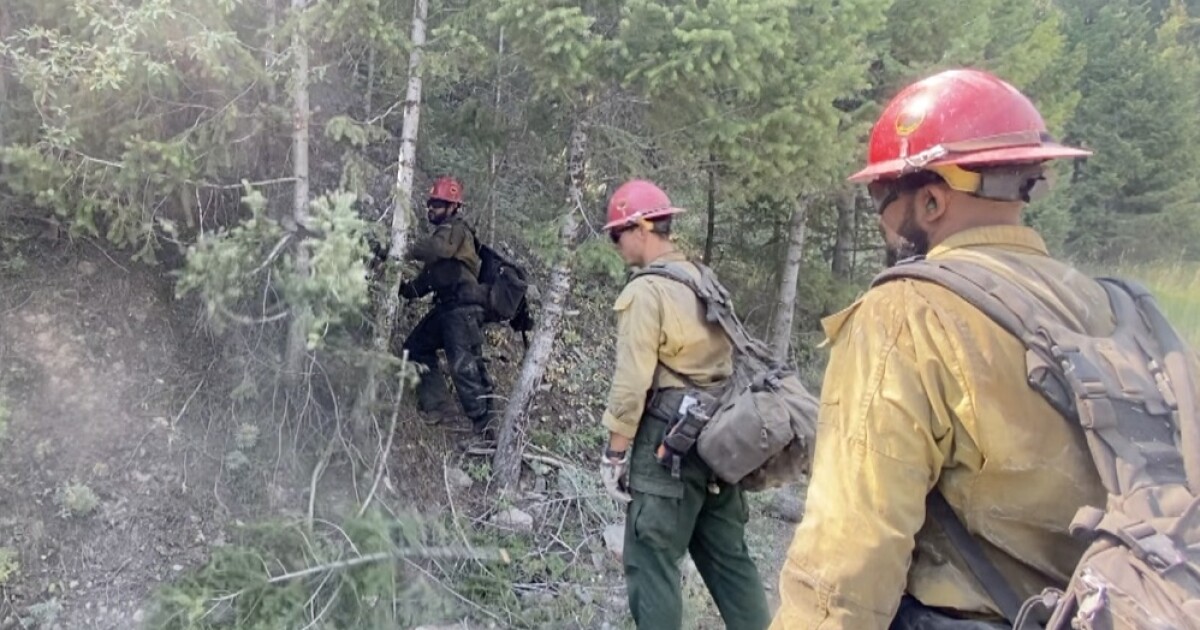
The escalation of the Sand Creek wildfire in southwest Montana highlights a critical intersection of environmental volatility and high-value recreational infrastructure. As the blaze expanded to approximately 23,000 acres, its progression onto the peak of Maverick Mountain transitioned the event from a timber-management challenge to a direct threat to capital-intensive assets. The confirmed destruction of the primary chairlift and an adjacent ski shack represents a significant operational setback, as uphill transportation systems serve as the mechanical artery for resort viability.
While Beaverhead County Sheriff David Wendt confirmed that the Maverick Mountain ski lodge and the nearby Elkhorn Hot Springs lodge remained intact as of Tuesday afternoon, the damage to the lift infrastructure creates a functional bottleneck. In the specialized sector of ski resort management, repairing such assets involves rigorous safety certifications and complex engineering. The survival of hospitality structures preserves core capacity, yet the resort’s seasonal readiness remains tethered to the integrity of its mechanical systems, which bore the brunt of the fire’s thermal energy at higher elevations.
The Beaverhead County Sheriff’s Office has intensified civil protection measures, expanding the ‘Go’ evacuation status for the Polaris region. This mandatory directive now extends from Billings Creek north to the Ma Barnes subdivisions, including Mountain View, Highboy Drive, Sawtooth Road, and Clark Creek Road. This strategic shift reflects an increasing risk profile for residential clusters as the fire’s trajectory follows steep, mountainous terrain that can bypass traditional ground-based containment lines.
From an institutional perspective, the logistical complexity of clearing multiple subdivisions tests the limits of local jurisdictional resources. Maverick Mountain’s reliance on social media for public updates underscores a modern crisis communication strategy necessitated by restricted physical access. The inability to conduct ground-level damage assessments introduces a period of financial uncertainty for stakeholders, potentially impacting insurance recovery and long-term investment attractiveness.
The economic interdependence of the Polaris area suggests that a prolonged closure of Maverick Mountain will have downstream effects on regional tourism, specifically affecting the Elkhorn Hot Springs. While the preservation of the lodges provides a foundation for recovery, the regional strain on land management and the necessity of hardening infrastructure against wind-driven fire behavior remain paramount for the community’s eventual return and phased reopening.
Photo by TheRealTimTam on Pixabay.