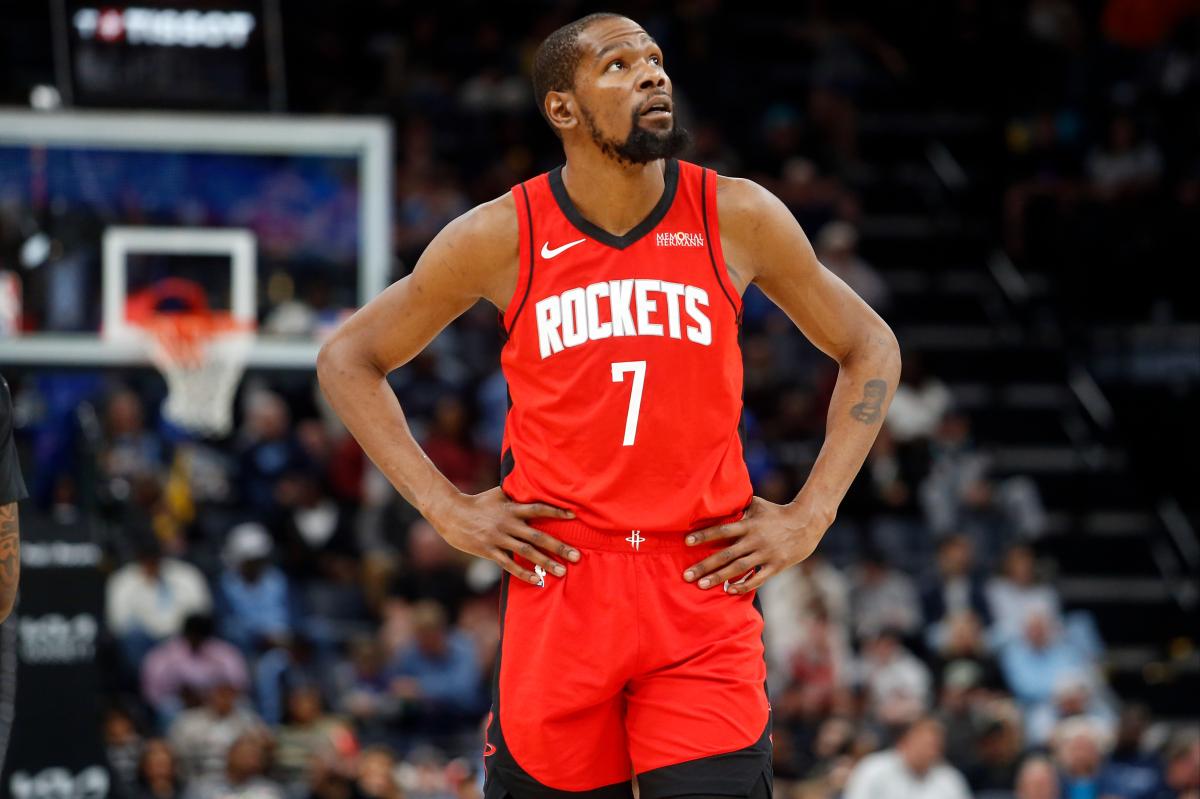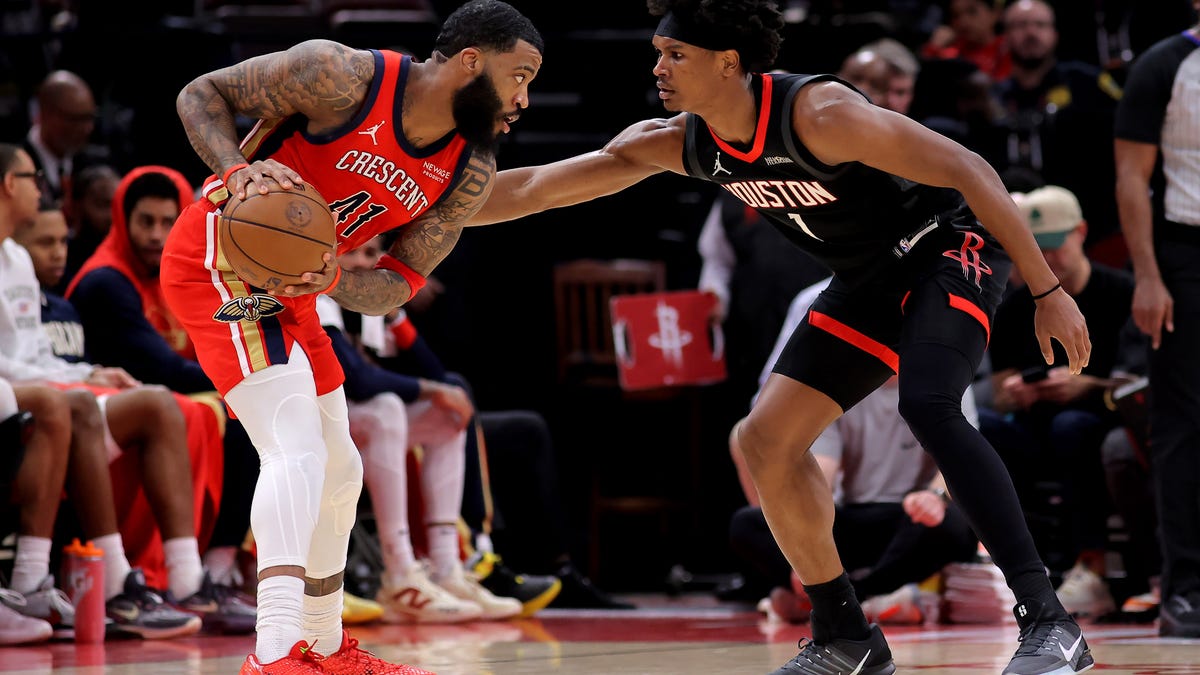
The impending fixture between the Houston Rockets and the New Orleans Pelicans at the Smoothie King Center functions as a high-stakes pivot point for both franchises, illustrating the late-season divergence between postseason aspiration and structural reconstruction. As the NBA calendar enters its final stretch, the intersection of competitive leverage and market valuation creates a complex landscape for analysts and stakeholders alike.
Western Conference Seeding Calculus and Postseason Leverage
Positioned sixth in the Western Conference with a 44-29 record, the Houston Rockets have transitioned from playoff qualification to seeding optimization. The organizational priority is the avoidance of the high-variance Play-In Tournament. Currently trailing the fifth-seeded Minnesota Timberwolves by 0.5 games and the fourth-seeded Denver Nuggets by 2.0 games, Houston’s strategic objective is the attainment of home-court advantage—a variable statistically correlated with higher series win probability and increased gate revenue.
Conversely, the mathematical threat of falling into the Play-In bracket necessitates a high-urgency approach to road games. A failure to secure a victory in New Orleans would not only stall their ascent but potentially erode the narrow margin they hold over seventh-place pursuers, making this matchup a critical exercise in risk management and momentum maintenance.
The Incentive Asymmetry: Competitive Integrity vs. Asset Optimization
The New Orleans Pelicans (25-50) present a stark contrast, having been mathematically eliminated from postseason contention. This status introduces the ‘Tanking Paradox’: a systemic misalignment between the coaching staff’s professional mandate to win and the front office’s long-term objective of maximizing NBA Draft Lottery equity. Their current four-game losing streak, while detrimental to morale, optimizes their position for capital acquisition through the draft.
This internal tension defines the Pelicans’ late-season ecosystem. Recent performance, specifically the 119-106 defeat to the Toronto Raptors, highlights the difficulty of maintaining defensive intensity when organizational incentives favor a lower winning percentage. For the Rockets, exploiting this lack of defensive cohesion is a tactical necessity.
Personnel Attrition and Tactical Adaptations
Houston’s operational efficiency faces severe headwinds due to the absence of key personnel. The loss of Fred VanVleet to an ACL injury removes a primary playmaker and a point-of-attack defensive anchor, forcing a recalibration of the backcourt rotation. Furthermore, the absence of Steven Adams due to an ankle injury compromises Houston’s interior gravity and offensive rebounding rate.
Despite these absences, the Rockets maintain a defensive floor of 110.2 points allowed per game. This efficiency acts as a structural hedge against New Orleans’ inconsistent offensive output. The coaching staff must now rely on bench depth to sustain this defensive identity in high-pressure road environments, testing the roster’s functional versatility.
Market Inefficiencies and Betting Dynamics
A significant discrepancy is observed in the betting markets, where the Pelicans are positioned as nine-point favorites despite their inferior record and recent form. This valuation likely overweights home-court advantage at the Smoothie King Center while pricing in the perceived volatility of a depleted Rockets rotation. Historically, the Rockets’ 21-11 record in double-digit games indicates high performance-leverage when favored, yet this current spread challenges that trend.
The integration of theScore Bet and its associated promotional frameworks (e.g., $1,000 bet resets) illustrates the deepening synergy between NBA viewership and legal sports wagering. For analysts, the 107-105 result from their previous encounter on March 14 serves as a more reliable barometer of competitive parity than the current market spread suggests.
Strategic Conclusion and Media Integration
This contest concludes a three-game road trip for Houston, where they have posted a 1-2 record. Securing a win is paramount to entering their upcoming home stand with psychological momentum. For New Orleans, the focus shifts to talent evaluation and the development of younger assets under live-game conditions. The game’s multi-platform broadcast strategy ensures maximum visibility for these diverging narratives, reflecting the NBA’s successful monetization of even its most asymmetric matchups.