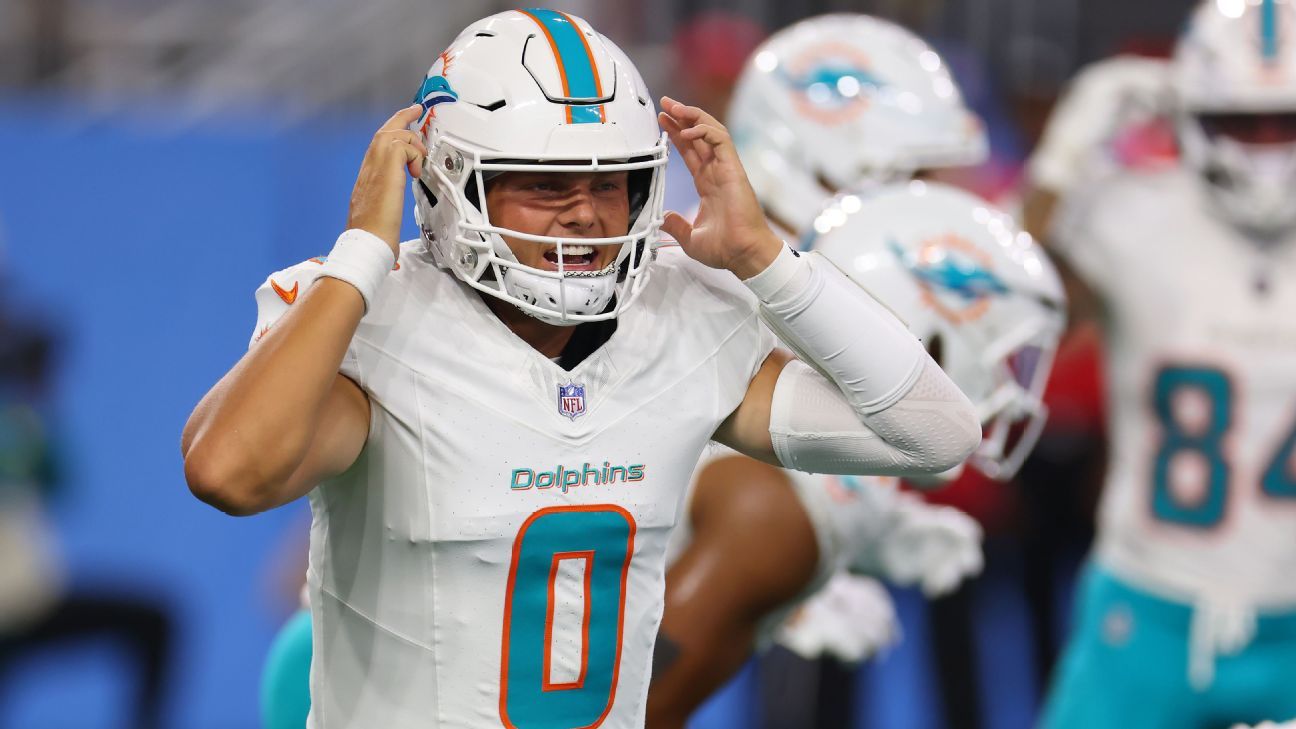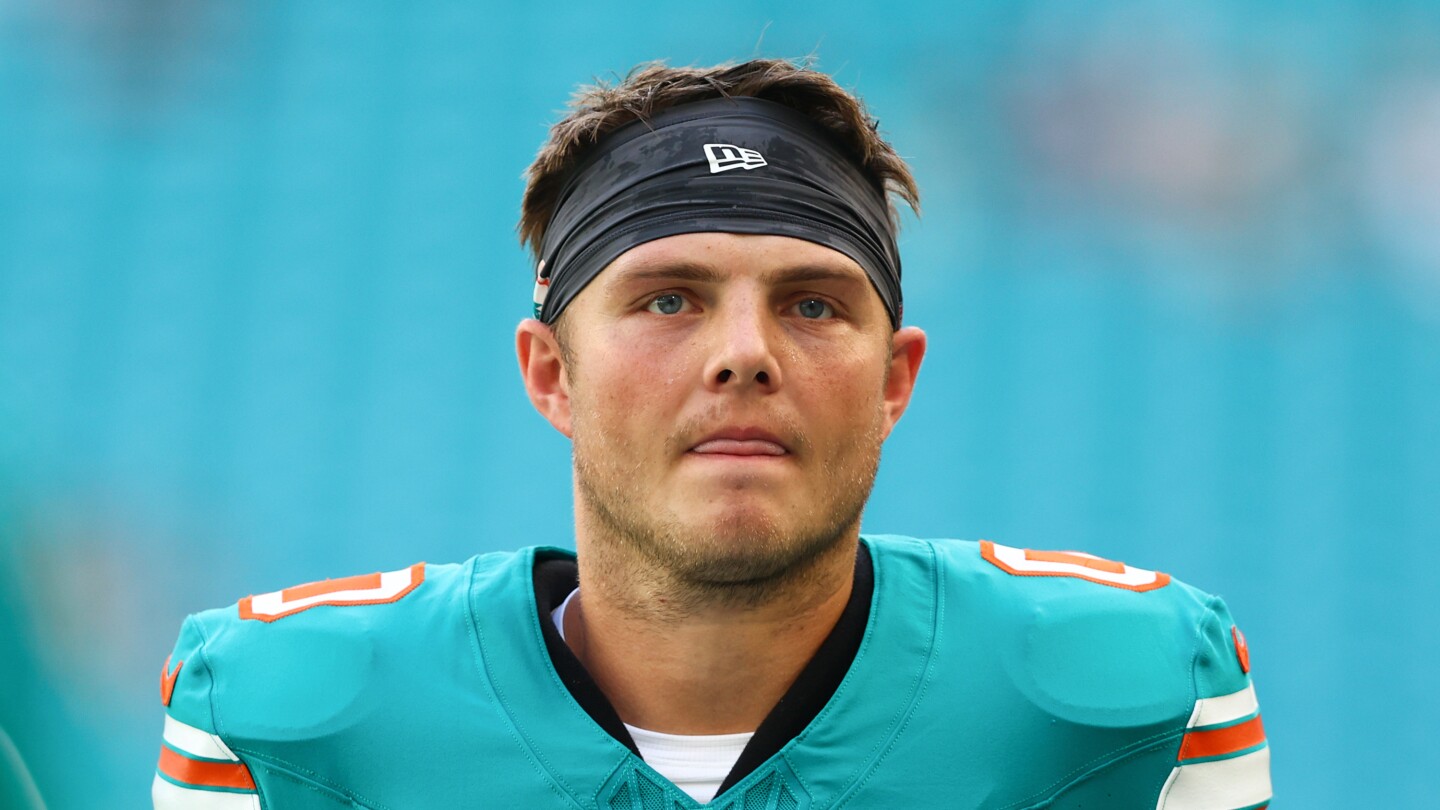
The New Orleans Saints have fundamentally restructured their offensive contingency plans by signing veteran quarterback Zach Wilson to a one-year contract. This acquisition serves as a direct response to the vacancy created by Jake Haener’s departure to the Kansas City Chiefs, signaling an institutional preference for veteran reclamation over linear developmental continuity.
Wilson joins a depth chart currently stabilized by Tyler Shough, who secured the starting role following a definitive 2025 campaign. By integrating Wilson, the Saints are not merely filling a roster spot; they are introducing a high-pedigree, albeit distressed, asset to compete with 2024 fourth-round pick Spencer Rattler for the primary backup designation.
Strategic Roster Construction and the Moore Doctrine
Offensive Coordinator Kellen Moore’s directive—articulated during the NFL Scouting Combine—emphasized the necessity of operational redundancy. The signing of Wilson executes this philosophy by maximizing the performance floor of the secondary unit. This move ensures that any potential disruption to Shough’s availability is met with a choice between two distinct archetypes: the experienced, high-ceiling reclamation project in Wilson and the system-embedded developmental talent in Rattler.
The vacuum left by Haener’s exit required a player capable of immediate high-volume practice participation. While Wilson’s recent tenures in Denver and Miami were characterized by limited efficiency and internal friction, his profile as a former second-overall pick provides a theoretical ceiling that standard third-string options lack.
The Miami Friction and Psychological Integration
Wilson’s transition follows a turbulent stint with the Miami Dolphins, where organizational pivots frequently marginalized his role. The decision to bypass Wilson for rookie Quinn Ewers in late 2025 highlighted a disconnect between the player’s expectations and Miami’s developmental trajectory. New Orleans must now navigate this professional baggage, rehabilitating a player whose confidence has been subjected to significant institutional volatility.
Statistically, Wilson’s 2025 output remained negligible, completing 54.5% of limited pass attempts. However, the Saints’ evaluation hinges less on recent production and more on the projection of his physical tools within Moore’s scheme—a system that demands rapid processing and high-level field vision.
Market Dynamics and Financial Flexibility
The transaction occurs within a volatile veteran market, mirroring recent moves by signal-callers like Trevor Siemian and Joe Flacco. For the Saints, the one-year framework is a low-risk mechanism to assess Wilson’s utility without compromising long-term salary cap elasticity. This financial discipline allows the front office to maintain flexibility for the 2026 season while securing a cost-effective insurance policy.
The competition between Wilson and Rattler represents a microcosm of modern NFL roster management: balancing the fixed costs of a rookie contract against the variable potential of a former elite prospect. The winner of this training camp battle will likely define the Saints’ secondary offensive identity for the foreseeable future.
Operational Conclusion: A Calculated Gamble
By finalizing this deal, the Saints have concluded their primary recruitment phase for the 2026 cycle. The focus now shifts to the tactical integration of Wilson into a locker room that has undergone significant turnover. Ultimately, the success of this signing will be measured by Wilson’s ability to move past the confusion of his Miami tenure and provide the Saints with a reliable, high-upside alternative to their established starter.