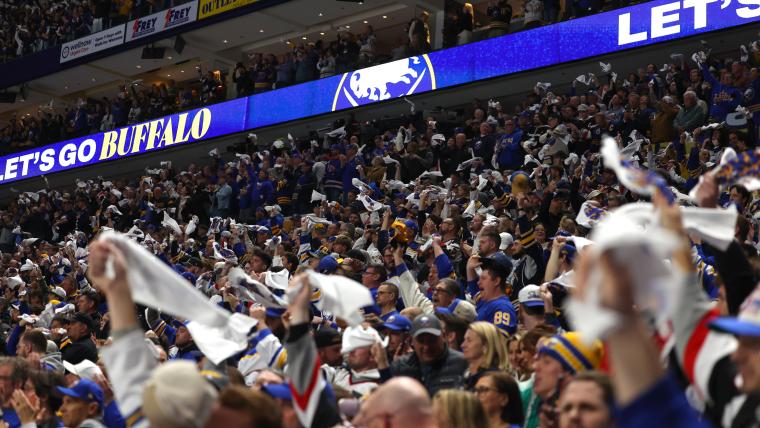
Sabres Reinstate Doug Allen for Pivotal Game 7 National Anthems
The Buffalo Sabres have chosen a familiar voice for their national anthems ahead of a critical Game 7 against the Montreal Canadiens. Doug Allen, the franchise’s long-serving anthem singer, is set to return for this high-stakes contest, replacing Cami Clune, who had performed during the playoff run.
This strategic shift from Clune, a local singer and ‘The Voice’ contestant, to Allen, who previously held the role for decades, underscores the organization’s emphasis on leveraging historical connections and fan sentiment during a pivotal postseason moment. The move signals a calculated deployment of established figures amidst intense fan engagement and franchise significance.
Operational Shift and Stakeholder Implications
Cami Clune announced her absence from the anthem duties via social media, noting her performance at the ‘Party in the Plaza’ event. This operational adjustment allows the Sabres to engage Clune in a fan-facing capacity outside the arena while reinstating a figure deeply associated with the team’s history, potentially resonating with a fanbase that remembers Allen’s tenure.
The implications extend to fan perception and team narrative. For long-time supporters, Allen’s return may evoke nostalgia and a sense of continuity, especially as the team faces a game of immense importance. This tactical decision aims to harness established goodwill and tradition to rally support, crucial for a team striving to overcome past postseason challenges.
Strategic Rationale and Competitive Context
The decision to bring back Doug Allen, who departed the organization in 2021 over its COVID-19 vaccination policy, introduces a layer of strategic consideration. His return, despite the previous divergence, suggests a pragmatic approach by Sabres management to prioritize immediate fan engagement and symbolic continuity over past organizational differences.
This move occurs within the broader competitive landscape of the NHL playoffs, where team performance is amplified by fan energy and narrative. By reintroducing a recognized figure, the Sabres likely aim to generate a heightened sense of occasion and unity, leveraging a known quantity to influence the psychological environment of a do-or-die game.
Financial and Brand Leverage
While direct financial implications of anthem singer selection are minimal, the branding and fan loyalty aspects are significant. The Sabres, owned by Terry Pegula, who has interests in the music industry, may be subtly leveraging established relationships or simply acknowledging the power of a familiar face in a high-pressure environment. The mention of artists Kelsea Ballerini and Chris Young, associated with Pegula’s Black River Records, hints at the broader entertainment ecosystem the ownership commands, though their direct involvement is speculative.
The decision to re-engage Allen can be viewed as a low-cost, high-impact strategy to bolster team morale and fan connection. In a sport where momentum and psychological advantage are critical, such symbolic gestures can contribute to overall brand perception and fan investment, potentially translating into sustained engagement.
Historical Continuity and Future Implications
Doug Allen’s decades-long association with the Sabres provides a strong narrative thread of historical continuity. His return for Game 7 indicates an organizational willingness to draw upon its past to energize its present, particularly in moments of extreme pressure and fan anticipation.
This decision could set a precedent for how the Sabres manage public-facing roles during significant events, highlighting the value placed on established figures who embody the franchise’s history. This may influence future decisions regarding team ambassadors and ceremonial roles.
Fan Engagement and Media Exposure
The speculation surrounding the anthem singer’s identity, amplified by Cami Clune’s announcement, generated considerable fan interest and media discussion. The eventual reveal of Doug Allen ensures continued conversation, amplifying the pre-game narrative and drawing additional attention to the event.
This strategic use of a returning performer, particularly one with deep franchise ties, maximizes media exposure and fan engagement, transforming a routine element into a talking point and contributing to the buzz surrounding a critical Game 7. This tactic is often employed by sports organizations to enhance the fan experience and media narrative.
Organizational Strategy and Performance Leverage
The Sabres’ decision to reinstate Doug Allen for Game 7 reflects a calculated organizational strategy to leverage established goodwill and fan sentiment. By re-engaging a figure with deep historical ties, the team seeks to amplify the emotional resonance of a high-stakes playoff game.
This move is designed to create a palpable sense of occasion and unity, potentially translating into tangible performance leverage. The psychological impact of a familiar, respected voice can contribute to a more charged atmosphere, energizing players and galvanizing the home crowd—critical factors in playoff hockey.
Cultural Resonance and Fan Identity
Doug Allen’s extensive tenure as the Sabres’ anthem singer has embedded him within the team’s cultural fabric and the collective memory of its fanbase. His return for Game 7 taps into this deep-seated cultural resonance, reinforcing fan identity and a shared sense of history.
This strategic choice acknowledges the importance of tradition and continuity in sports fandom. By reintroducing Allen, the Sabres invoke a symbol of the franchise’s past, aiming to connect with fans on an emotional level and foster collective purpose during a crucial playoff juncture.
Media Narrative and Public Relations
The shift in anthem singers, particularly the return of a former long-term performer, creates a compelling media narrative. It offers journalists an angle to explore themes of nostalgia, team history, and strategic decision-making in high-pressure situations.
This public relations maneuver aims to generate positive buzz and fan engagement. By highlighting a familiar face and a return to tradition, the Sabres seek to control the pre-game narrative, focusing attention on team spirit and historical connection.
Economic Ecosystem and Ownership Influence
The mention of country music stars Kelsea Ballerini and Chris Young, associated with Terry Pegula’s Black River Records, subtly highlights the economic ecosystem surrounding the team’s ownership. While not directly linked to Allen’s performance, it points to broader entertainment and music industry connections.
This interconnectedness suggests that decisions regarding team events, including entertainment, may operate within a wider strategic framework leveraging diverse assets. Allen’s selection, while seemingly straightforward, could be viewed through the lens of optimizing fan engagement across various touchpoints within the ownership’s portfolio.
Institutional Memory and Strategic Re-engagement
The Sabres’ decision to bring back Doug Allen for Game 7 signifies a deliberate act of re-engaging with institutional memory. Allen’s departure in 2021 over vaccination policies marked a divergence; his return suggests a pragmatic prioritization of immediate needs over past disagreements.
This action underscores how sports franchises, particularly in high-stakes moments, may revisit past relationships to bolster current efforts, demonstrating a willingness to bridge divides for collective momentum and fan support.
Performance Leverage and Fan Morale
The selection of Doug Allen for the national anthems is linked to performance leverage, specifically concerning fan morale and arena atmosphere. A performer with a long-standing connection can evoke shared history and pride, contributing to a more electric environment.
This strategic choice aims to amplify the psychological impact of Game 7. Reintroducing a beloved figure seeks to create a surge in fan energy, potentially providing a tangible boost for players in a decisive playoff game.
Competitive Dynamics and Fan Engagement Tactics
In the competitive NHL playoffs, every element influencing fan engagement and team momentum is scrutinized. The Sabres’ decision to use Doug Allen for the anthems is a tactic to enhance this engagement during a pivotal moment.
This move employs a strategic tool to rally the fanbase, seeking to create a unified and fervent atmosphere that could offer a competitive edge where psychological factors are significant.
Media Narrative and Brand Reinforcement
The return of Doug Allen for Game 7 provides a strong narrative hook for media coverage, reinforcing the Buffalo Sabres’ brand through themes of tradition and fan loyalty. This strategic use of a familiar face generates organic publicity and discussion.
By highlighting a performer with decades of association, the Sabres reinforce their identity as an organization valuing history and community connection, aiming to cultivate positive public relations during critical postseason competition.
Operational Flexibility and Fan Experience
Cami Clune’s simultaneous performance at the ‘Party in the Plaza’ demonstrates operational flexibility and a multi-pronged approach to fan experience, maximizing reach and impact both inside and outside the arena.
The Sabres are effectively managing talent and engagement resources by deploying Clune in an accessible location while bringing back a symbolic figure for game-time rituals, ensuring broader fan participation and a comprehensive game-day experience.