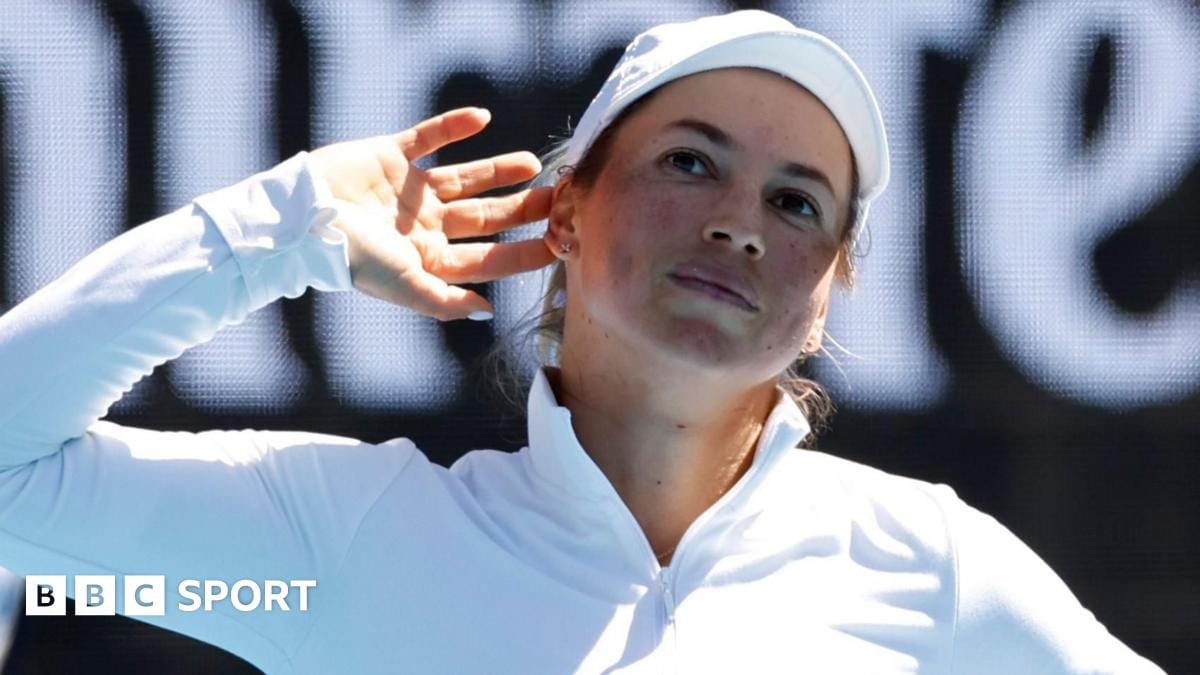
The Song of the Rabbit in the Storm
The roar of the crowd can be a powerful ally or a deafening foe in the high-stakes world of professional tennis. For Yulia Putintseva at the Australian Open, it became the latter, pushing the Kazakh player to an unconventional tactic to reclaim her focus and her match.
As the tension mounted on the court against Turkey’s Zeynep Sonmez, it became clear that Putintseva wasn’t just battling her opponent; she was contending with the vocal disapproval of a significant portion of the spectators. The atmosphere, thick with partisan energy, threatened to overwhelm the player.
Finding Solace in a Familiar Tune
In a moment captured by many observers, Putintseva, facing what she later described as ‘disrespectful’ jeers, turned inward. Instead of engaging with the negativity, she opted for a unique form of self-soothing and defiance: she began to sing. Her chosen melody? A song about rabbits.
This unexpected soundtrack to a Grand Slam match wasn’t a spontaneous outburst of frustration but a deliberate strategy. The song, a simple tune, became an auditory shield, a personal anthem designed to drown out the noise and reconnect her with the game at hand. It was a remarkable display of mental fortitude under pressure.
The Match Unfolds: A Test of Nerves
The third-round encounter at the 2026 Australian Open in Melbourne was already poised to be a demanding affair. Putintseva, known for her tenacity and sometimes fiery on-court demeanor, found herself in a particularly challenging environment. The crowd, seemingly rallying behind her Turkish opponent, Zeynep Sonmez, made their allegiances known with vociferous support.
As the match progressed, the partisan atmosphere intensified. Reports suggest that much of the crowd was vocally against Putintseva, creating an intimidating backdrop. The pressure to perform while under such scrutiny is immense for any athlete, and Putintseva was visibly feeling the weight of the crowd’s disapproval.
A Provocative Response to Adversity
Rather than falter, Putintseva appeared to draw strength from the adversity. Her decision to sing a song about rabbits served as a powerful statement. It was a way of reclaiming control in a situation where she felt her space and concentration were being invaded.
This act can be interpreted as more than just a coping mechanism; it was a form of subtle protest. By turning to a cheerful, almost whimsical, song in the face of aggression, she was, in essence, refusing to be cowed. The ‘dance’ mentioned in some descriptions of the event might refer to a physical expression of her defiance, a way of moving through the discomfort with a unique personal rhythm.
The Mental Game of Tennis
Tennis, at its elite level, is as much a battle of the mind as it is of physical skill. Players must manage not only their own emotions and physical condition but also the external factors that can influence performance – including the crowd.
Putintseva’s tactic highlights the diverse strategies athletes employ to maintain their mental equilibrium. While some might engage with the crowd, either positively or negatively, others retreat into a zone of intense focus. Her approach was a blend of both: acknowledging the external noise but choosing to insulate herself with a personal soundtrack.
A Wider Context: Crowd Behavior in Sports
The incident also raises questions about crowd etiquette and sportsmanship. While passionate support for a home or favored player is expected, crossing the line into ‘disrespectful’ behavior can detract from the integrity of the competition.
In international tournaments like the Australian Open, where players from various nationalities compete, managing diverse fan bases is crucial. Organizers and players alike often face the challenge of ensuring a respectful environment for all participants, regardless of their national origin or perceived popularity on a given day.
Looking Ahead: The Rabbit Song’s Legacy
Yulia Putintseva’s ‘rabbit song’ moment at the Australian Open has become a talking point, a testament to her resilience and unique personality on the court. It serves as a reminder that the human element, with all its quirks and emotional responses, is an integral part of professional sports.
While the specifics of her victory over Zeynep Sonmez are important, this match will likely be remembered for the way Putintseva navigated the storm of crowd disapproval, finding an unexpected and memorable way to perform under pressure.
“It’s about not letting them get to you. You have to find your own way to stay calm and play your game.” – A hypothetical reflection on Putintseva’s mindset.