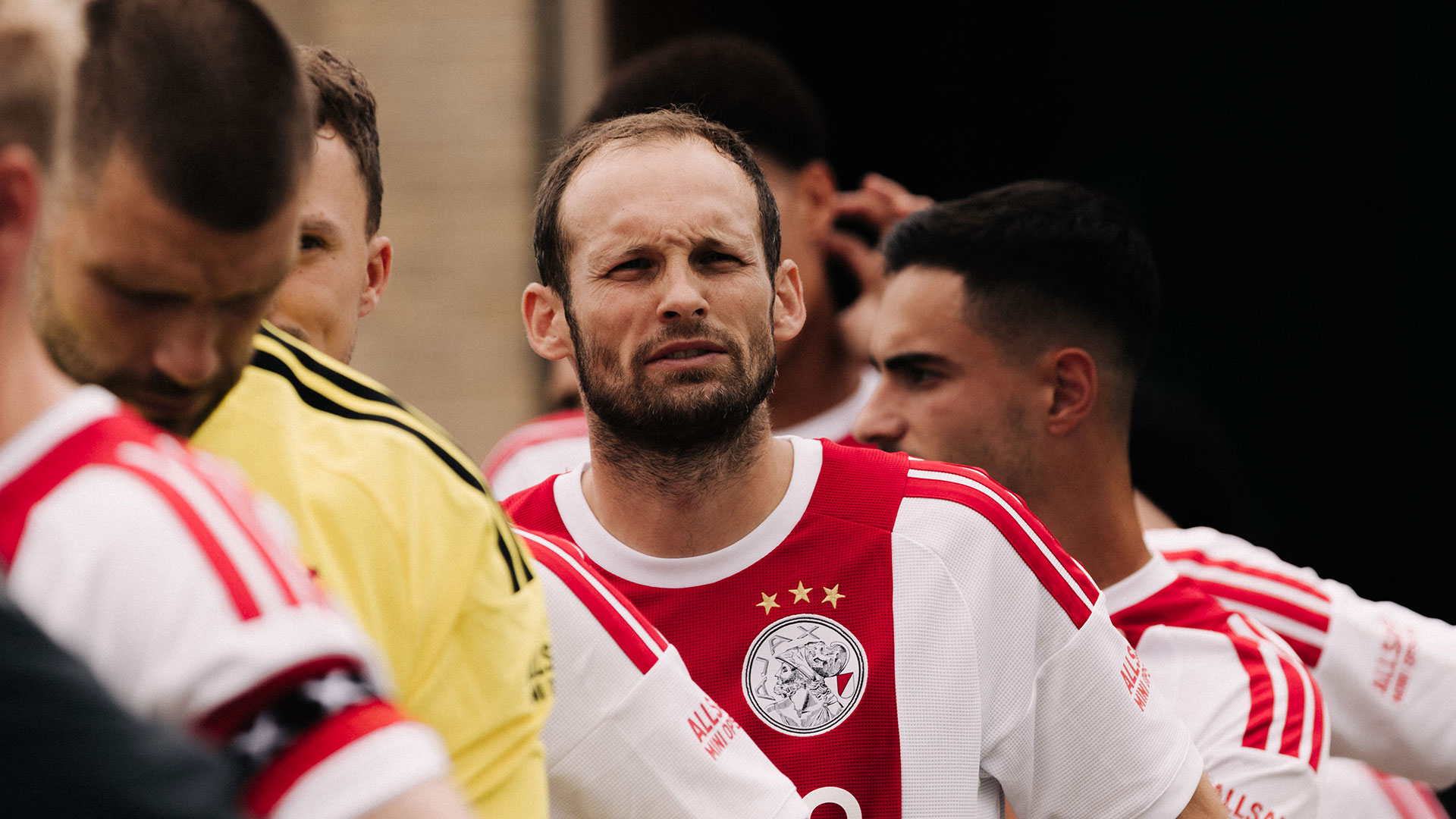
Pre-Season Friendlies: A Strategic Laboratory for Global Football Economics and Operational Acumen
The recent pre-season friendly between Ajax and Burnley at the Johan Cruyff Arena, alongside other preparatory fixtures, offers a granular analytical lens into the complex operational, financial, and strategic underpinnings of modern professional football. These encounters, far from being mere exhibitions, serve as critical mechanisms for clubs to refine tactical approaches, integrate new personnel, and rigorously test coaching philosophies, all vital for competitive readiness ahead of the demanding season.
Global Sports Media Rights: The Geopolitics of Broadcast Exclusivity
A prominent aspect of the Ajax-Burnley friendly was the explicit geo-restriction of its livestream, rendering it unavailable in the Netherlands, Russia, Brazil, Portugal, and Israel. This restriction vividly illustrates the highly fragmented and commercially strategic landscape of global sports media rights. Territorial exclusivity remains a foundational pillar for revenue generation, allowing clubs and leagues to maximize the value of their content by segmenting markets.
These sophisticated licensing agreements enable rights holders to strategically allocate exclusive broadcasting privileges to diverse media partners across various regions. For football clubs, these arrangements are not just technical stipulations; they constitute significant commercial assets directly impacting financial stability, global brand reach, and fan engagement strategies. The operational challenge for clubs and their broadcasting partners lies in meticulously enforcing these digital borders, ensuring compliance with complex contractual obligations while navigating disparate regulatory environments. This enforcement directly shapes fan access, creating varied viewing experiences based on geography and potentially influencing demand for unauthorized content streams.
The strategic implications are profound: clubs must balance immediate revenue maximization from exclusive deals with the long-term goal of cultivating a unified global fanbase. Inability for supporters in key regions to access official content risks disengagement, prompting clubs to innovate their content distribution and fan outreach beyond traditional broadcast models. The specific exclusion of the Netherlands, Ajax’s home market, strongly indicates a prior, exclusive domestic broadcasting agreement, highlighting strategic choices around primary market distribution – often a balance between direct-to-consumer platforms and established broadcast partnerships. The inclusion of diverse international markets like Russia, Brazil, Portugal, and Israel further underscores the globalized nature of these media rights negotiations, where each territory presents a distinct commercial opportunity or existing partnership defining content distribution terms within football’s intricate financial ecosystem.
Ajax’s Tactical Integration: Coaching Philosophy as a Strategic Asset
Ajax’s preparation for their first competitive fixture against FK Vojvodina was significantly shaped by Head Coach Míchel Sánchez’s articulated philosophy and its integration into the squad. Sánchez’s emphasis on a high-pressing style, epitomized by his statement, “A player who presses gives energy to the team,” signals a clear tactical direction for the season. This philosophical pivot carries profound operational implications, necessitating intensive training regimens focused on physical conditioning, tactical understanding, and collective coordination. The pre-season thus becomes a crucial period for assessing player adaptability and execution of these new demands.
The coach’s early observations directly inform squad selection, player development strategies, and potential transfer market activities. Successful integration of the new philosophy is a key performance leverage point, directly influencing on-field results and competitive standing. Strategically, the adoption of a distinct playing philosophy under a new coach redefines a club’s identity and long-term vision, impacting youth academy development, scouting profiles, and overall brand perception among fans and potential recruits. The pre-season interview serves as a strategic communication tool, articulating the coach’s vision and setting expectations, fostering alignment essential for building competitive momentum.
Burnley’s Performance Trajectory: Strategic Adjustments and Market Positioning
Burnley’s pre-season trajectory, marked by two defeats in three matches during their recent US tour, underscored an immediate imperative for strategic adjustments under Nicky Hayen. The friendly against Ajax, a club renowned for its tactical prowess, provided a high-level stress test for implementing improvements. The decision to undertake a US tour followed by European friendlies reflects a multi-faceted pre-season strategy balancing commercial expansion (brand building, international fan engagement) with rigorous on-field preparation against diverse playing styles. The club’s media engagement, exemplified by writer Matt Scrafton’s live updates, reinforces a commitment to transparency and fan connectivity during this critical preparatory phase.
For Burnley, pre-season results transcend exhibition outcomes; they are critical indicators of squad readiness for league competition. The imperative for “improvements” directly reflects performance pressure, impacting player morale, coaching staff confidence, and ultimately, the club’s financial outlook through league standing. The strategic selection of opponents, escalating from a US tour to a “Dutch giant,” illustrates a deliberate progression designed to challenge the squad, identify areas for refinement, and build resilience against higher-caliber teams prior to the domestic season.
Operational Complexities: Navigating Pre-Season Volatility and Risk Management
The documented cancellations of several other club friendlies, including De Graafschap vs. Kickers Emden, Ostia Mare vs. Benevento, Seraing Liège, and Viktoria Köln vs. Sandhausen, highlight the inherent operational complexities and potential volatility of pre-season scheduling. Such disruptions can arise from logistical challenges, unforeseen circumstances, or strategic shifts in club planning. These cancellations carry immediate financial implications, including lost gate receipts, wasted travel/accommodation expenses, and potential contractual penalties. Critically, they disrupt meticulously planned training schedules and tactical preparations, impacting player fitness and tactical integration by reducing planned match minutes.
Clubs must maintain significant operational flexibility and robust risk management protocols to adapt to these unforeseen changes, often requiring rapid rescheduling or adjustments to training regimens to compensate for lost match practice. This adaptability is crucial for maintaining competitive readiness. From an institutional perspective, the frequency of such cancellations highlights the decentralized nature of pre-season organization, often relying on bilateral agreements rather than a centralized governing body. This structure, while offering flexibility, inherently introduces a higher degree of risk. The varied outcomes of other friendlies, like Wrexham’s victory over Leeds United or Montedio Yamagata’s win against Albirex Niigata, further illustrate the diverse competitive landscape of pre-season, where results contribute to team morale, player confidence, and early assessments of squad depth and tactical effectiveness.
In essence, the pre-season period, as illuminated by these diverse events, serves as a crucial microcosm of the broader operational and strategic challenges confronting professional football clubs. From the intricate management of global media rights and the integration of new coaching philosophies to the navigation of logistical hurdles and the imperative of performance optimization, each element fundamentally shapes a club’s trajectory for the season ahead, underscoring the deep interconnections within football’s global economic and strategic framework.