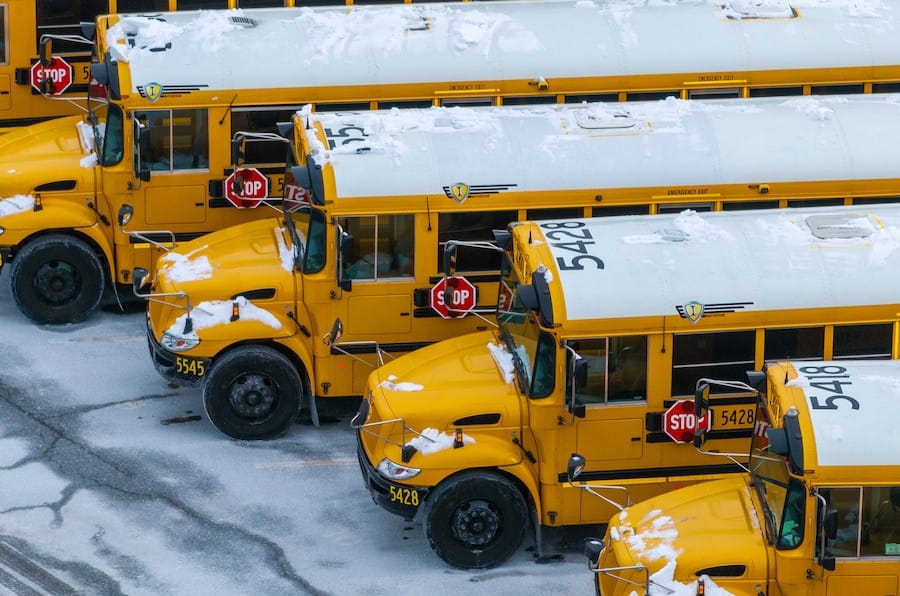
Prince George’s County Schools Announce Rare Multi-Day Closures Amid Ice Storm Challenges
WASHINGTON – Prince George’s County Public Schools (PGCPS) announced Monday that classes would be canceled until further notice, a significant step following a weekend snowstorm that has coated the region in a hazardous layer of ice and snow. The decision marked a rare departure from the district’s usual day-by-day approach to weather-related closures, highlighting the severity of conditions and the logistical challenges facing local municipalities.
The announcement came as the Washington, D.C., metropolitan area continued to grapple with the aftermath of the storm. The National Weather Service (NWS) issued a third cold weather advisory for the week on Wednesday, underscoring the persistent and dangerous conditions.
The Logistical Challenge: Ice Packed on Snow
The primary complication stems from the specific nature of the weather event. The initial snowfall from the weekend storm was followed by freezing rain, creating a thick layer of ice packed on top of several inches of snow. This combination presents a significant challenge for transportation, infrastructure, and public safety.
According to reports from local authorities, the mixture of ice and snow makes roads impassable for vehicles, including emergency services and school buses. The wind chills, dropping into the teens in many areas, further exacerbate the risk to residents and recovery crews. Digging out from this type of accumulation is a slow and difficult process, requiring specialized equipment to break through the icy layer before plows can effectively clear the underlying snow.
Impact on the Washington D.C. Metropolitan Area
The severe weather has effectively stalled normal activity across the entire D.C. area. In addition to Prince George’s County, most schools throughout the region remained closed for several days following the initial storm. Public transportation systems also faced significant limitations as crews worked to clear tracks and ensure safe operations.
The closure of schools and limitations on public transit directly impact the daily lives of hundreds of thousands of residents. For families, multi-day closures necessitate alternative childcare arrangements, creating disruptions to work schedules. For the regional economy, a multi-day shutdown of public services and transportation can result in millions of dollars in lost productivity and business revenue.
PGCPS Rationale for Multi-Day Closure
The decision by Prince George’s County schools to announce several days of closures at once is notable for its rarity. Typically, school districts evaluate conditions daily, often making announcements late in the evening before a closure or early in the morning of the affected day. This approach allows maximum flexibility for changing weather forecasts. The PGCPS announcement, however, signals a high degree of certainty regarding the long-term nature of the hazardous conditions and the time required for proper recovery.
School administrators weigh several factors when making closure decisions, including road safety for buses and staff, the condition of school parking lots and walkways, and the functionality of building utilities. When conditions involve a thick layer of ice, the time required to clear every school campus and ensure safe transport routes extends beyond a single day, necessitating a preemptive multi-day announcement.
The third cold weather advisory issued mid-week further supports this rationale. Persistent sub-freezing temperatures prevent the natural melting of ice and snow, making the task of clearing surfaces even more demanding and time-consuming.
The challenge of dealing with prolonged severe weather events in large metropolitan areas like Washington D.C. highlights critical aspects of infrastructure preparedness, public communication strategies, and the ripple effects on daily life. When a major city is effectively immobilized, it impacts more than just local residents; it affects national institutions and a significant portion of the country’s economic activity.
The specific conditions of ice over snow are particularly challenging for municipal services. Unlike fresh powder, which can be easily plowed, ice requires a different approach. Road crews must often apply layers of salt, sand, or chemical treatments to break up the ice before it can be removed. This process is slow, and its effectiveness diminishes rapidly when temperatures drop below certain thresholds, as indicated by the cold weather advisories.
Furthermore, the scale of the Washington D.C. metropolitan area complicates cleanup efforts. The jurisdiction spans multiple counties in Maryland and Virginia, each responsible for clearing its own roads and public spaces. A lack of coordinated efforts or varying levels of resources across jurisdictions can lead to inconsistencies in road conditions, making travel even more hazardous for commuters who cross state lines for work.
For PGCPS specifically, a multi-day closure triggers a host of academic and logistical considerations. School districts operate under strict guidelines regarding the number of instruction days per academic year. Multi-day closures often necessitate adjustments to the school calendar, potentially extending the year into summer or converting future holidays into instructional days to meet state requirements. The district must also consider the provision of essential services, such as free and reduced-price meal programs, for students who rely on school meals. Prolonged closures can create food insecurity for vulnerable families.
The decision to close for multiple days at once represents an administrative calculation designed to provide certainty to parents and staff, allowing them to make necessary arrangements rather than face uncertainty each morning. This decision also reflects an assessment of the safety risks involved in attempting to resume operations too early, particularly regarding school transportation and potential liability issues.
The impact of severe weather events on schools and transportation systems extends beyond immediate safety concerns to broader issues of community resilience. The frequency and intensity of such events in recent years have forced municipal leaders to re-evaluate infrastructure investments, emergency preparedness plans, and communication protocols. For school districts, this includes investing in remote learning capabilities to ensure educational continuity during prolonged closures, minimizing disruption to the academic calendar.