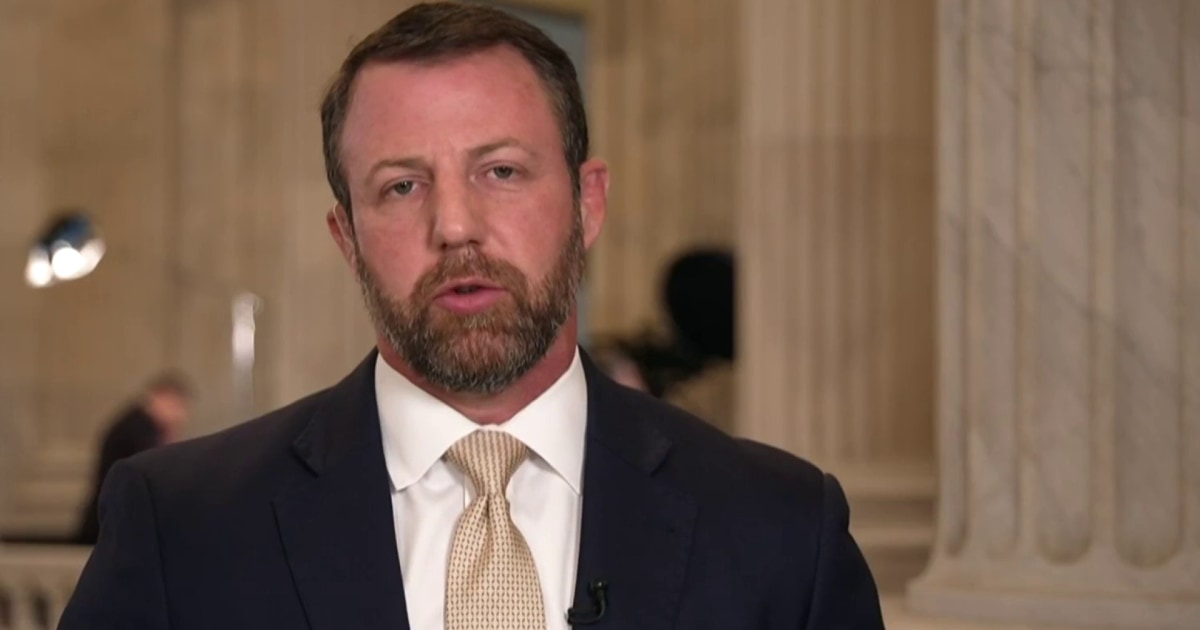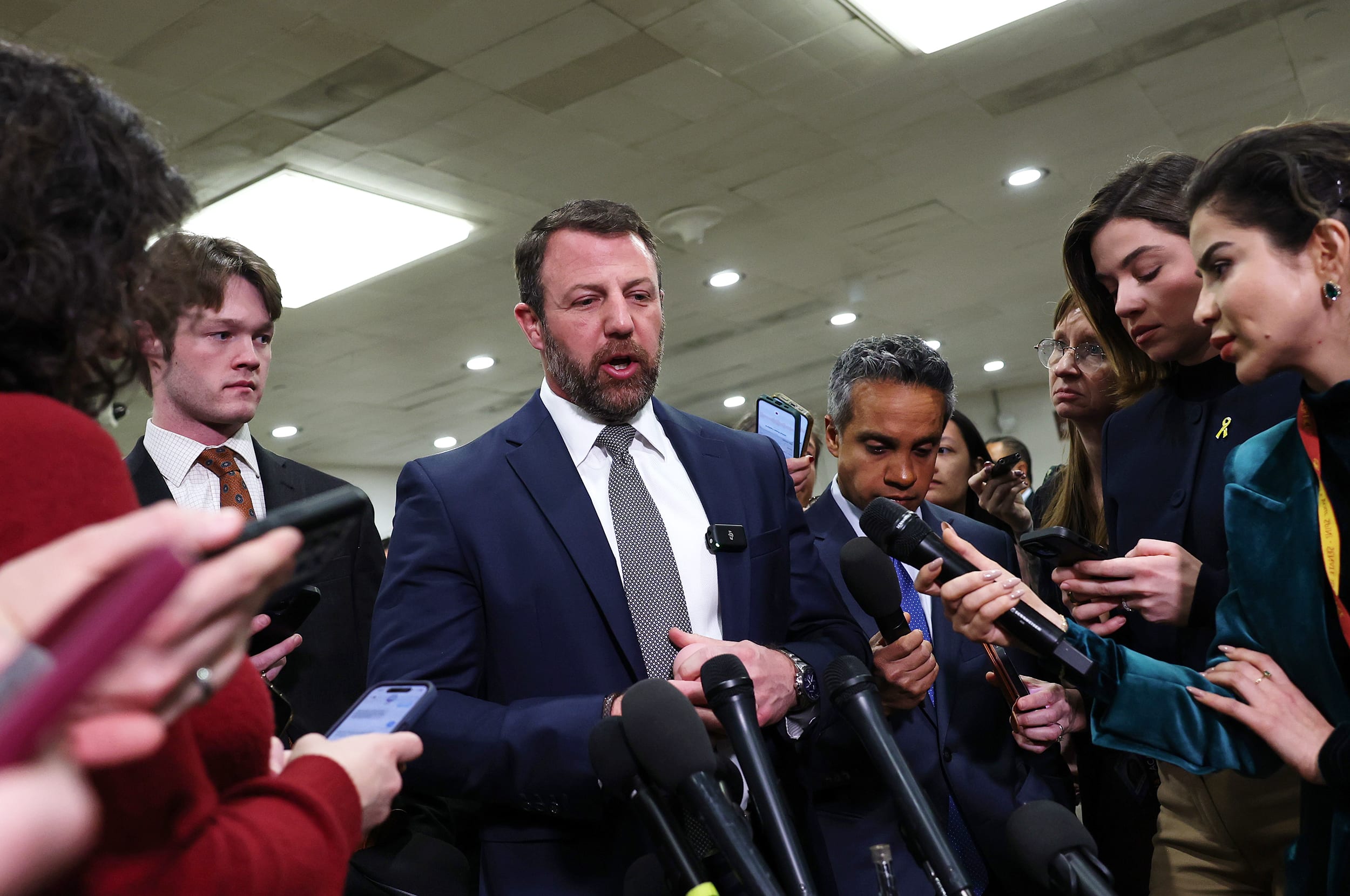
The recent rhetorical volatility displayed by Senator Markwayne Mullin regarding U.S. military operations in Iran highlights a significant lack of coordination between the executive branch and its primary legislative surrogates. By oscillating between denying the existence of a state of war and providing visceral, sensory descriptions of combat, Mullin has exposed a strategic vacuum in how the administration defines its kinetic engagements. This inconsistency is not merely a matter of messaging but carries profound implications for the legal frameworks governing military action and the domestic political capital required to sustain them.
The Strategic Significance of Defining War
The definition of “war” in a contemporary geopolitical context is a high-stakes legal and institutional determination that dictates the level of Congressional oversight and the applicability of the War Powers Act. When Senator Mullin initially stated that the United States was not at war with Iran, he was likely attempting to maintain the administration’s posture of targeted, defensive operations rather than a full-scale conflict. However, his subsequent shift to describing the “smell” and “taste” of war suggests an attempt to capitalize on the gravitas of military action to justify the offensive to a domestic audience.
This rhetorical pivot creates immediate friction with the statements of Defense Secretary Pete Hegseth, who explicitly labeled the situation a war, and President Donald Trump, who suggested the same. Such divergence among key stakeholders suggests a breakdown in the unified front typically required during high-intensity military operations. For the international community and adversaries like Iran, these conflicting signals can be interpreted as a lack of strategic clarity or internal division, potentially inviting miscalculation or escalation.
The Credibility Gap and Surrogate Efficacy
Mullin’s use of sensory imagery—specifically the smell and taste of war—despite having no personal record of military service, introduces a significant credibility gap that political opponents have already begun to exploit. In the high-authority environment of international relations, the perceived authenticity of a surrogate is a critical component of their leverage. By adopting the language of a combat veteran without the underlying experience, Mullin risks alienating the veteran community and undermining his effectiveness as a defender of the administration’s military policy.
The backlash from actual veterans and Democratic lawmakers, such as those mocking the Senator’s remarks as being more akin to a video game experience than reality, shifts the focus from the strategic objectives of the Iran mission to the personal credibility of its proponents. This distraction is a net negative for the administration, as it forces a defensive posture on domestic optics rather than a proactive articulation of national security goals. The erosion of surrogate authority can lead to a broader skepticism regarding the necessity and conduct of the military offensive itself.
Institutional Friction and Foreign Policy Divergence
The internal debate within the Republican party regarding the ultimate goal of the Iran operations reveals a fundamental rift between tactical destruction and regime change. Senator Mullin’s assertion that Iran’s Supreme Leader “had to be removed” to halt the nuclear program represents a maximalist position that exceeds the stated goals of other prominent GOP voices. Senator Marco Rubio, for instance, has framed the operations as a targeted effort to destroy missile capabilities, a distinction that carries vastly different legal and operational requirements.
This divergence is further complicated by Senator Lindsey Graham’s public stance that it is “not our job” to select Iran’s leadership, even following the death of Khamenei. The lack of a consensus on the desired end-state—whether it is containment, degradation of assets, or total regime change—creates a strategic ambiguity that can be dangerous during active hostilities. Without a clear, unified objective, the military risks mission creep, and the administration faces increasing difficulty in justifying the long-term costs and risks to the American public.
Domestic Political Exposure and Voter Sentiment
The domestic political landscape is increasingly sensitive to the perceived lack of safety and the lack of a clear exit strategy in the Middle East. NBC News polling indicating that a majority of voters disapprove of the handling of the Iran situation suggests that the administration’s current messaging is failing to resonate with the electorate. This dissatisfaction provides an opening for Democratic critics, such as Representative Ro Khanna, to argue that the killing of high-level Iranian officials has not made Americans safer, but rather increased the risk of retaliatory strikes.
The electoral consequences of this dissatisfaction are already being felt in primary contests, where incumbents are facing pressure to account for the human and financial costs of the conflict. In states like Texas and North Carolina, the “monster numbers” run up by challengers indicate a potential shift in voter priorities away from interventionist foreign policy. For surrogates like Mullin, the challenge is to reconcile the administration’s hawkish actions with a public that is increasingly wary of open-ended military commitments.
Legal and Operational Consequences of Rhetorical Shifts
The legal implications of Senator Mullin’s shifting definitions cannot be overstated, as the executive branch’s authority to conduct military operations is often predicated on the classification of those operations. If the administration maintains that the U.S. is not at war, it can continue to operate under existing authorizations for the use of military force or Article II powers. However, if high-profile surrogates and the Defense Secretary label the situation as a “war,” it strengthens the argument for a new Congressional authorization, which would subject the administration’s strategy to intense legislative scrutiny.
Furthermore, the operational tempo of the military is influenced by the political narrative surrounding the conflict. If the narrative is one of a limited offensive, the military may be constrained in its target selection and resource allocation. Conversely, a narrative of regime change, as pushed by Mullin, implies a much larger commitment of forces and a higher tolerance for casualties and collateral damage. The disconnect between these narratives creates uncertainty within the military command structure regarding the long-term political support for their operations.
The Role of Strategic Ambiguity in Modern Conflict
While strategic ambiguity can sometimes be a tool for deterrence, the current situation appears more indicative of a lack of internal policy alignment. The rapid reversals in Mullin’s statements—from denying war on Sunday to describing its horrors on Monday afternoon, and then reverting to a denial on Monday evening—suggest a surrogate who is struggling to find a sustainable rhetorical middle ground. This volatility undermines the administration’s ability to project strength and consistency to both domestic and international audiences.
In the absence of a clear and consistent message, the narrative is being shaped by external critics and the inherent chaos of the conflict itself. Former CIA Director David Petraeus’s observation that regime change cannot be forced “through the air” serves as a sobering reminder of the limitations of the current military strategy. As the administration continues its offensive, the need for a coherent strategic framework that aligns tactical actions with political objectives becomes increasingly urgent to avoid a protracted and indecisive conflict.
Forward-Looking Strategic Evaluation
The long-term impact of this rhetorical instability will likely manifest in a more contentious relationship between the White House and Congress regarding foreign policy. Representative Michael McCaul’s demand for an explanation of U.S. military involvement in Iran signals that even within the President’s own party, there is a growing demand for transparency and a clearly defined strategy. This pressure will only increase as the human and financial costs of the operation continue to mount.
Ultimately, the effectiveness of the U.S. intervention in Iran will be judged not just by the destruction of missile sites or the removal of leaders, but by the resulting regional stability and the security of American interests. The current lack of a unified message from surrogates like Senator Mullin suggests that the administration has yet to fully articulate how its tactical successes will translate into a sustainable strategic victory. Without this clarity, the risk of a strategic quagmire remains high, with significant implications for the 2026 and 2028 political cycles.