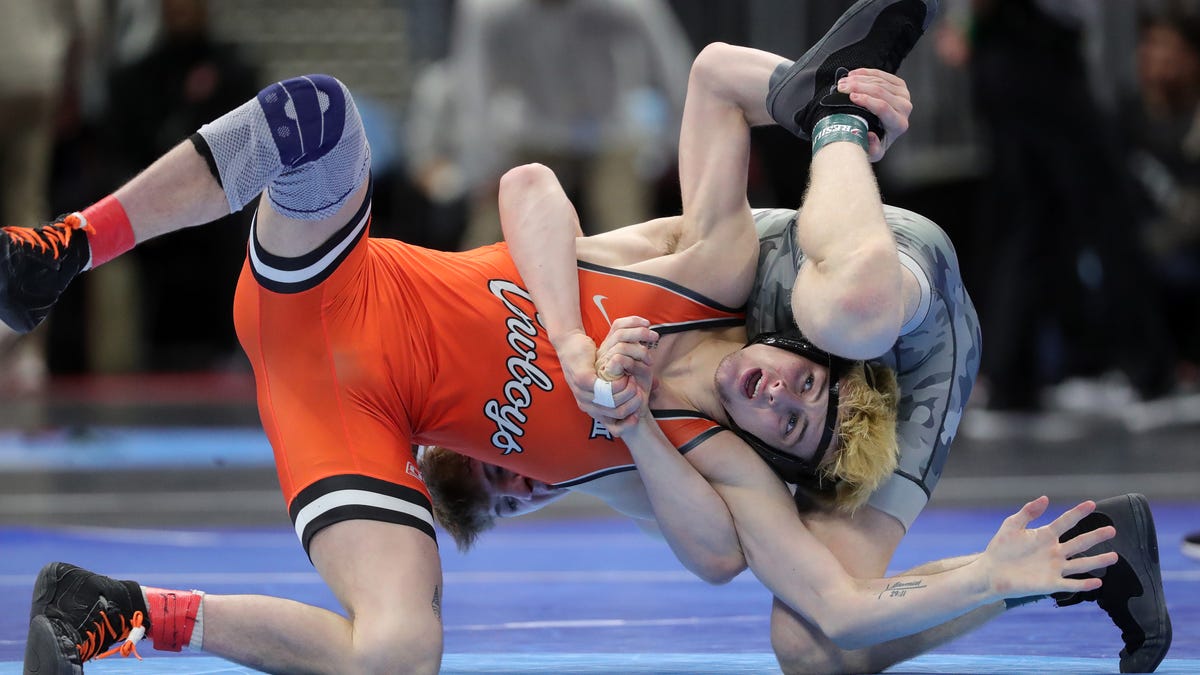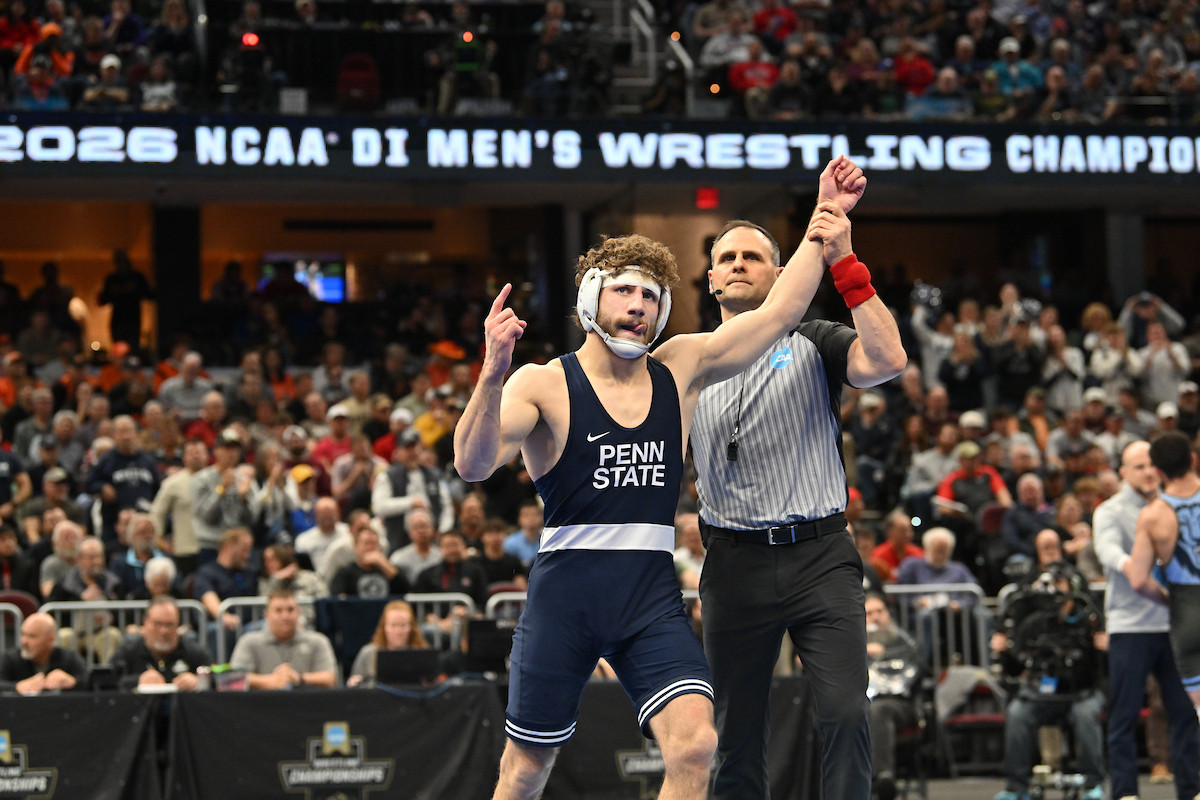
The 2026 NCAA Division I Wrestling Championships concluded with Penn State University achieving mathematical certainty for its fifth consecutive national title prior to the final session. Entering the championship round with 164.0 points, the Nittany Lions established a prohibitive 45-point lead over runner-up Oklahoma State (119 points), illustrating a widening competitive chasm within the sport’s upper echelon.
Systemic Efficiency and the Bonus Point Mandate
The program’s victory is a byproduct of high-efficiency scoring metrics. While individual talent is a prerequisite, Penn State’s operational success stems from a systemic mandate to generate bonus points throughout the championship brackets. This strategy was evidenced by their ability to surpass the 150-point threshold before the marquee matches commenced. Following the leaders, Nebraska (101.5), Iowa (92.5), and Ohio State (84.5) formed a secondary tier, emphasizing the unique statistical profile of the Nittany Lions’ performance.
A critical factor in this dominance is the program’s semifinal conversion rate. Penn State advanced six wrestlers to the national finals, tying the NCAA record they established in 2024. This marks the seventh instance of a single program producing six finalists. Since 2011, under head coach Cael Sanderson, the program has maintained an 82.7% win percentage in the semifinals, producing 65 finalists. This conversion rate functions as a statistical outlier, indicating superior tactical and psychological preparation compared to peer institutions.
Tactical Analysis of Individual Performances
At 125 pounds, top-seeded Luke Lilledahl exemplified the Nittany Lions’ aggressive technical philosophy. In his 8-1 semifinal victory over Oklahoma State’s Troy Spratley, Lilledahl utilized a low-level single-leg attack to dictate the tempo. His capacity to transition immediately from the takedown to mat-return sequences effectively neutralized Spratley’s counter-offensive options, securing critical riding time and back points that maximized the team’s scoreboard pressure.
In the 133-pound division, undefeated freshman Jax Forrest demonstrated the program’s recruitment efficacy. Forrest’s trajectory to the finals included a pin, two technical falls, and a major decision. This aggressive scoring profile is not merely incidental but a core strategic objective that provides a scoring buffer, insulating the team from the inherent volatility of consolation rounds. By securing All-America status for eight of their ten starters, Penn State maximized their point-flooring across nearly every weight class.
Institutional Impact and Market Growth
The 2026 championships highlight the evolution of wrestling as a commercial and media-driven entity. Increased engagement through platforms like FloWrestling and Fubo reflects a growing demand for high-stakes collegiate competition. The narrative of Penn State’s pursuit of scoring records serves as a primary driver for viewer retention and sponsorship interest, further entrenching the program’s brand as the global benchmark for the sport.
As the final matches in Cleveland determine individual legacies, the institutional hierarchy remains settled. Penn State’s performance suggests a sustainable model of success fueled by seamless talent integration and a coaching staff that has mastered the nuances of the NCAA scoring system. For rival programs, the 2026 results necessitate a fundamental reevaluation of developmental strategies to counter a dynasty that shows no signs of regression.