Patrick Kane Returns to the Chicago Blackhawks
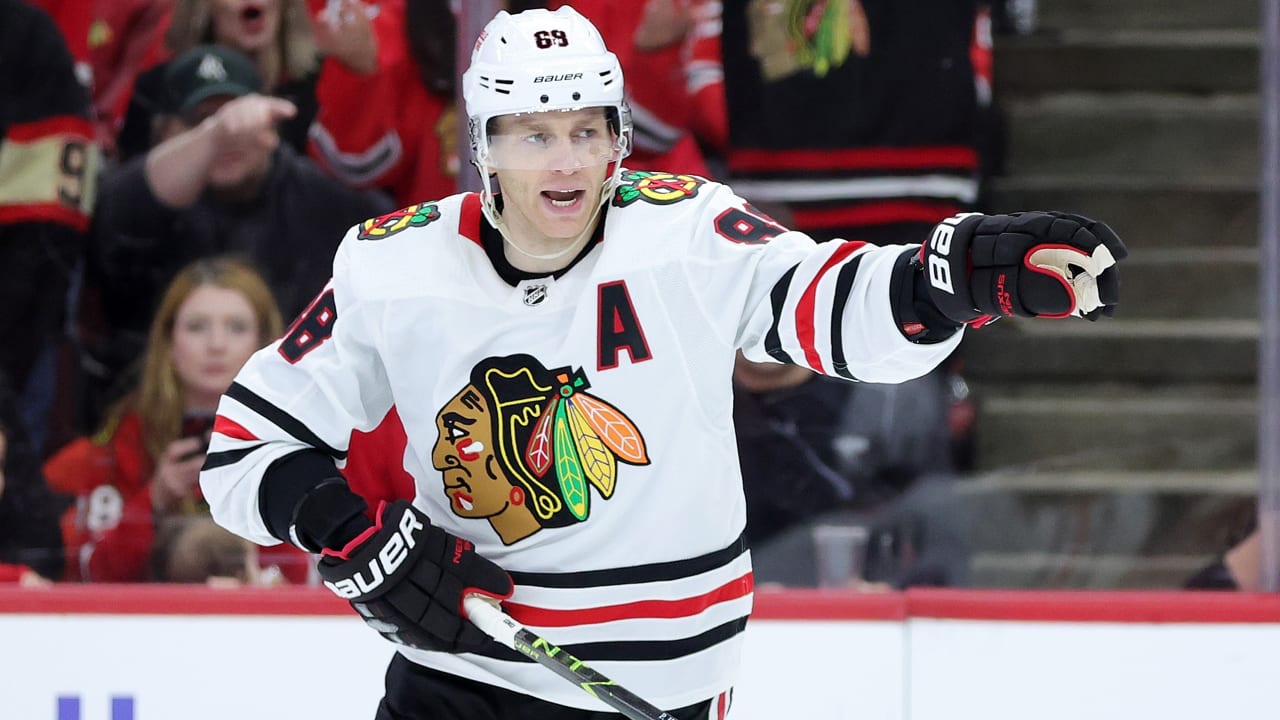
Patrick Kane has officially returned to the Chicago Blackhawks on a two-year contract, marking a reunion with the franchise where he secured three Stanley Cup titles in 2010, 2013, and 2015. Having spent the first 16 of his 19 NHL seasons in Chicago, Kane rejoins the organization carrying an extensive legacy of individual and team accomplishments. His historical stature within the franchise is matched by his status as the United States-born player with the most points in National Hockey League history, totaling 1,400 points across 1,369 games.
During his tenure with the Blackhawks, Kane accumulated numerous prestigious honors, ranging from the Calder Memorial Trophy in the 2007-08 season to the Hart Memorial Trophy, Art Ross Trophy, and Conn Smythe Trophy during subsequent championship campaigns. This historical depth underscores the structural weight of his return for an organization undergoing a generational transition. Rather than functioning merely as a sentimental addition, his signing introduces immediate elite production into a roster environment that requires veteran stabilization.
Performance Metrics and Offensive Value
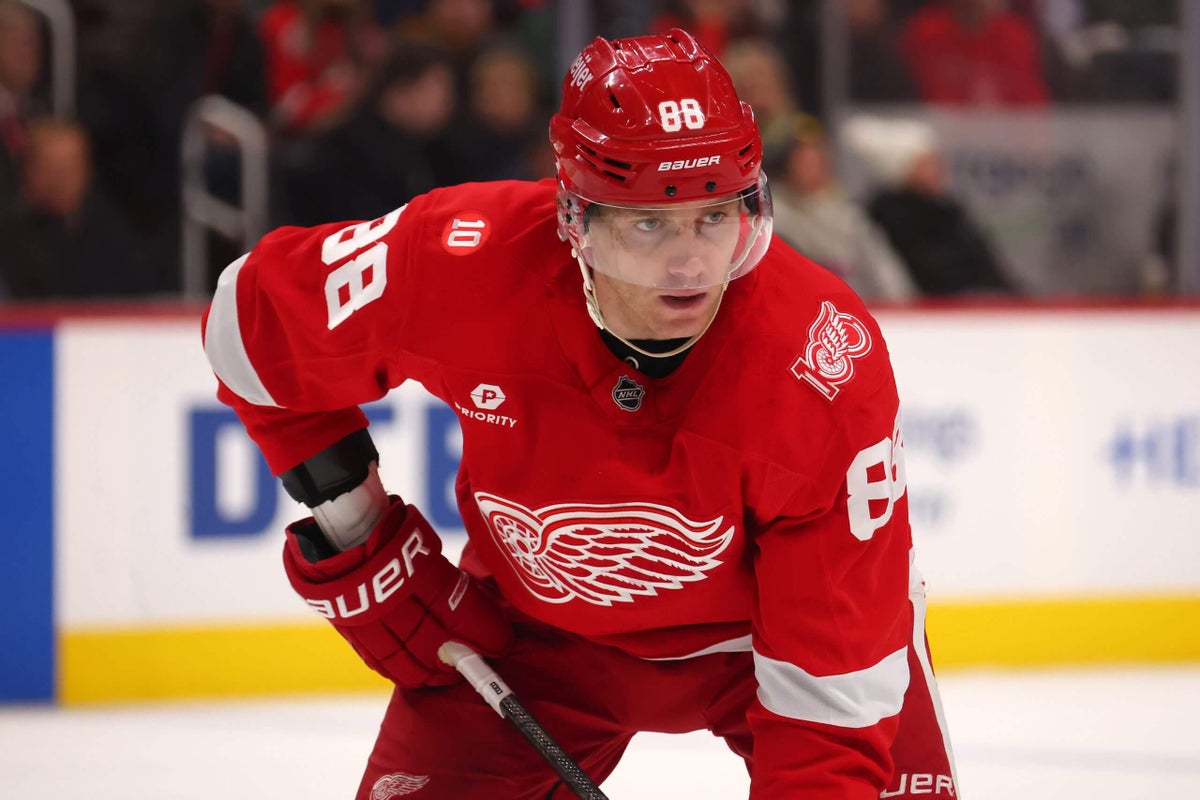
An evaluation of Kane’s output during his recent tenure with the Detroit Red Wings demonstrates that his offensive efficacy remains high despite playing a limited schedule of 67 games out of 82. He finished that campaign ranking fourth on the team in total goals with 16, assists with 41, and points per game at 0.85, highlighting his durability and sustained scoring efficiency. Furthermore, his distribution included 14 even-strength goals, 38 even-strength points, and four game-winning goals, proving that his impact extends beyond specialized power-play deployment.
Advanced tracking data from NHL Edge further clarifies his specific offensive utility, particularly in perimeter shooting categories where he maintained elite percentile rankings among forwards. Kane placed in the 89th percentile for long-range shots on goal with 19, and in the 87th percentile for midrange shots on goal with 59. These metrics indicate that even approaching his 38th birthday, which he will reach on November 19, he retains the spatial awareness and shooting volume necessary to generate high-danger opportunities from the outside.
Roster Integration and Tactical Adjustments
While alternative destinations such as Buffalo or Toronto might have utilized Kane within a middle-six supplementary scoring role, his insertion into the Chicago lineup carries vastly different operational implications. Given his history and current output level, he immediately steps into the upper tier of forwards available to the franchise. This deployment becomes even more critical as the team navigates the absence of top forward Connor Bedard, who is recovering from shoulder surgery with an anticipated return in mid-November.
The structural ripple effect of Kane’s arrival forces significant adjustments across the forward lines, altering a projected roster that had appeared relatively settled just weeks prior. Initial projections place Kane alongside Roman Kantserov and Frank Nazar on a top line designed to maintain offensive momentum during Bedard’s absence. This configuration sets up a tactical convergence upon Bedard’s eventual return, where integrating Kane alongside the young star will dictate the team’s primary offensive architecture.
Lineup Depth and Positional Distribution
Beyond the top line, the influx of Kane alters the configuration of supporting units, bringing together players such as Tyler Bertuzzi, Anton Frondell, and Nick Lardis into complementary scoring roles. Subsequent forward combinations feature Ryan Donato alongside Oliver Moore and Teuvo Teräväinen, creating a balanced distribution of playmaking and defensive responsibility through the middle six. Jordan Greenway, Ryan Greene, and Cole Smith complete the projected lower framework, with Landon Slaggert and Andrew Mangiapane positioned as immediate organizational extras.
This depth chart restructuring highlights the administrative challenge facing the coaching staff as they balance veteran integration with the development of younger prospects. The presence of a forward of Kane’s pedigree creates internal competition and tactical flexibility, ensuring that line combinations can be modulated based on situational demands. Consequently, the team gains a high-leverage asset capable of elevating overall power-play performance and offensive zone entry success.
Strategic Implications of the Two-Year Commitment
The decision to commit to a two-year contract structure reflects a calculated alignment between organizational timeline and player availability. For the franchise, securing a historically significant figure provides immediate stability and competitive credibility during a transitional phase of roster construction. For Kane, the agreement offers a familiar operational environment where his specific skill set can command primary deployment without the transitional friction of a new market.
As the franchise prepares for the challenges of a demanding regular season schedule, the integration of Kane will serve as a primary indicator of the team’s offensive ceiling. The interplay between veteran leadership and emerging foundational pieces will shape the operational trajectory of the Blackhawks well into the duration of this multi-year commitment. Ultimately, the reunion bridges different eras of franchise history while directly addressing immediate competitive needs on the ice.