
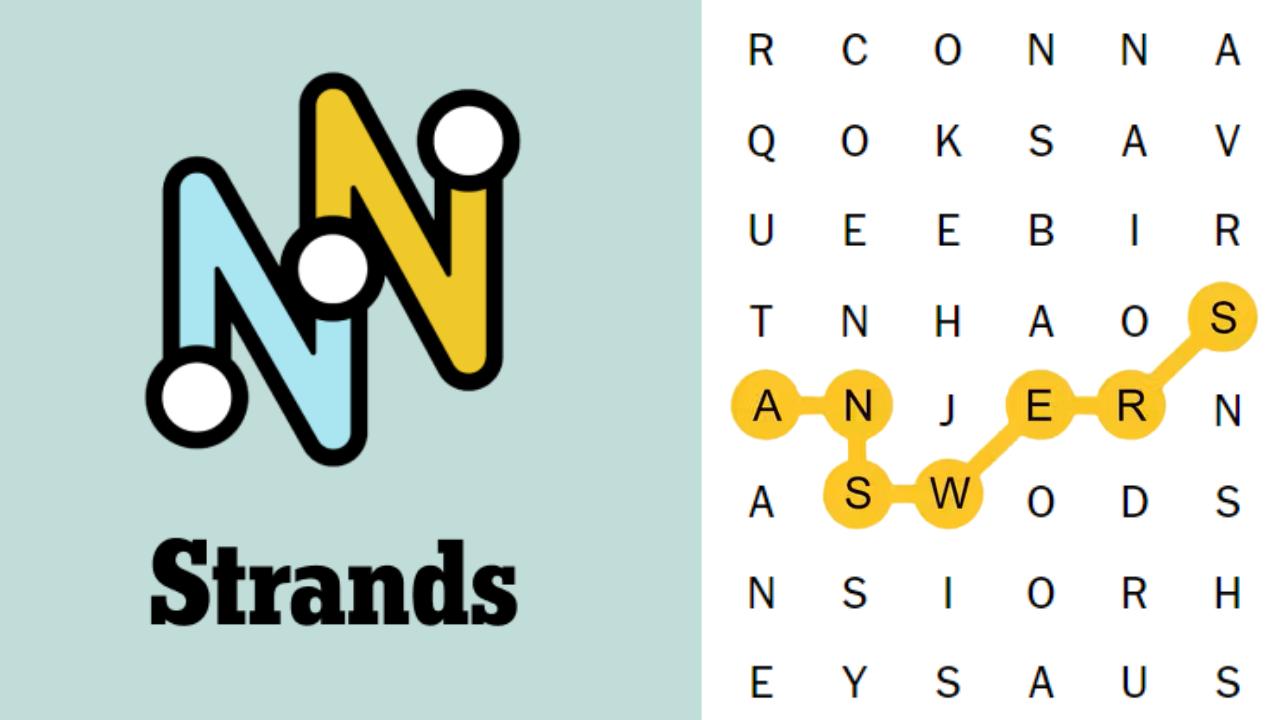
Digital word games function as strategic engagement engines for modern media publishers. The New York Times utilizes properties like Strands to drive user retention, daily active usage, and subscriber loyalty. Analyzing these offerings requires evaluating how publishers balance cognitive friction with accessibility.
Unlike standard linear word searches, Strands utilizes directional fluidity where letters link across horizontal, vertical, and diagonal axes with unrestricted turns. Every letter integrated into the matrix serves a designated structural purpose, eliminating waste and demanding spatial awareness.
Structural Mechanics and the Spangram Architecture
The operational framework relies on a dual-layer cognitive challenge comprising thematic answers and a unifying spangram. The spangram functions as a structural anchor, spanning opposite grid borders horizontally or vertically to encapsulate the core theme. This requires players to recognize both localized lexical clusters and overarching categorical definitions.
By withholding the word list and providing only a thematic prompt, the publication shifts the user experience from mechanical scanning to deductive reasoning. This deliberate friction distinguishes Strands from rapid-completion formats like Wordle, increasing cognitive capital investment and session duration.
Publisher Strategy and Audience Engagement Models
Puzzle portfolios operate as critical funnels for subscriber acquisition and retention. Games like Strands establish daily behavioral routines while encouraging community sharing and secondary guide consumption. Publishers calibrate difficulty curves to maintain broad accessibility while satisfying advanced users, particularly when themes involve abstract concepts that widen the semantic distance between hint and solution.
Information Architecture and Linguistic Engineering
Constructing a Strands grid requires rigorous linguistic engineering to ensure all letters map precisely to valid thematic entries. Designers intertwine variable-length words while accommodating the trajectory requirements of the central spangram, limiting viable themes and demanding precise letter-density calibration.