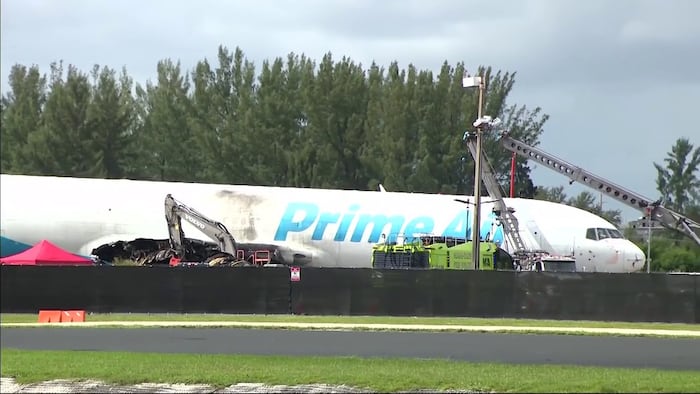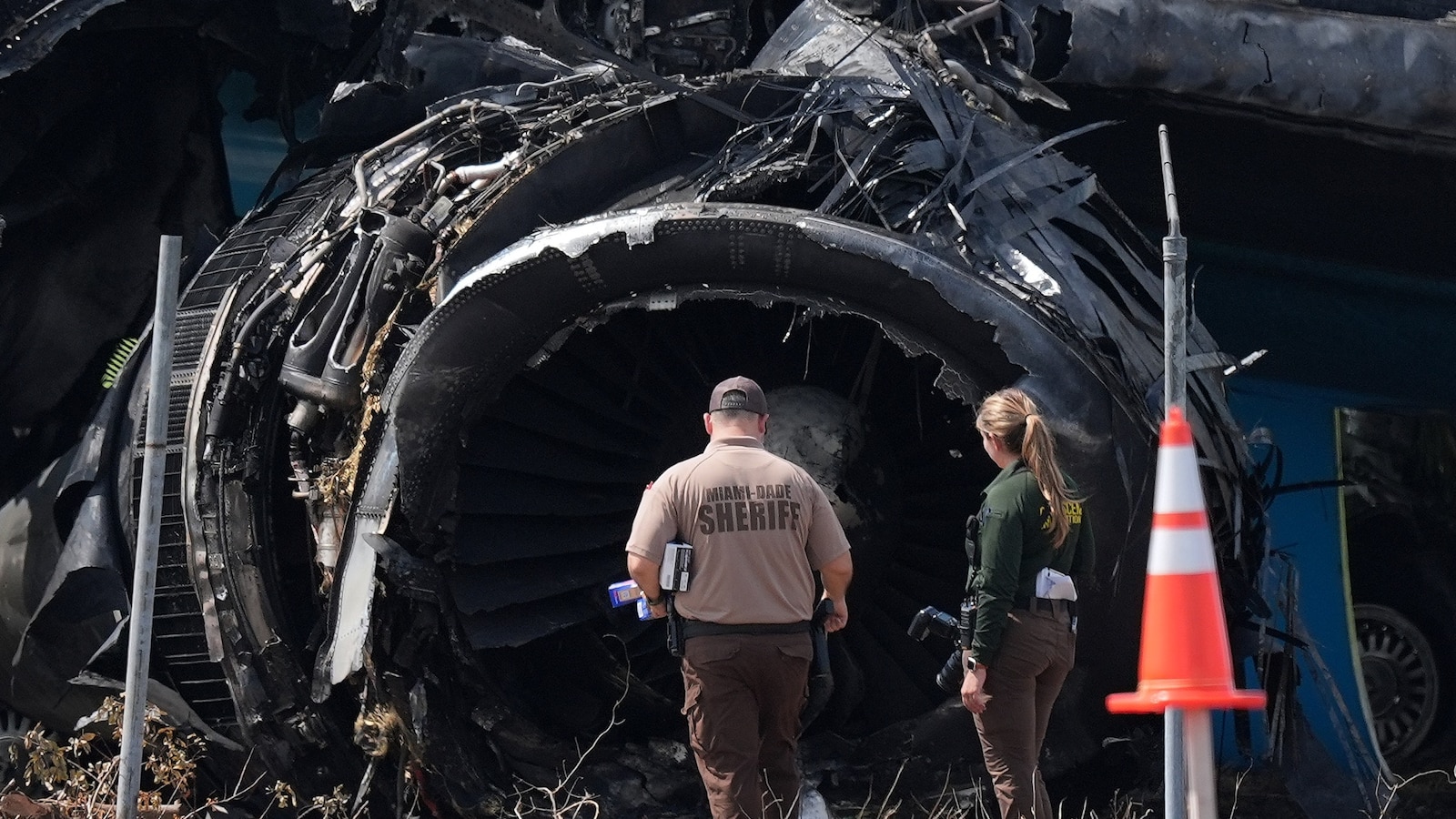
Preliminary data from the National Transportation Safety Board (NTSB) concerning the Amazon Air cargo plane crash at Miami International Airport (MIA) highlights critical events in the final moments of the flight. Cockpit voice recordings indicate the flight crew recognized significant approach parameter issues, including excessive speed, well before the aircraft crossed the runway threshold.
Recordings show a pilot voiced concerns about “excessive speed” approximately 1 minute and 42 seconds before impact, signaling a prolonged period of unstabilized approach conditions. The persistence of these warnings suggests the crew struggled to manage the aircraft’s kinetic energy to meet safe landing criteria. Standard aviation procedure for an unstabilized approach is an immediate go-around, a maneuver the crew did not initiate despite continued verbalized risks.
The sequence leading to the runway excursion indicates a critical delay in aborting the landing. The NTSB noted sounds consistent with touchdown occurred roughly 30 seconds before the crash. However, the go-around command was issued only 15 seconds after initial runway contact. This delay is significant, as transitioning from a landing roll to a climb after substantial ground contact often exceeds remaining runway length and required engine spool-up times for lift-off.
The consequences of this delayed go-around were immediate and catastrophic. The aircraft veered off the runway just five seconds after the maneuver began, demonstrating a complete loss of directional control and exhaustion of runway safety margins.
The overrun resulted in five fatalities and a significant operational disruption at MIA, a major logistics hub. One of the airport’s four primary runways remains closed for investigation and wreckage removal, reducing MIA’s capacity to 75% and causing numerous flight delays for both passenger and cargo carriers. This closure creates a bottleneck impacting North and South American trade, increasing operational costs for airlines and freight forwarders.
The physical recovery involves dismantling the aircraft on-site using cranes and specialized crews to facilitate removal from the active airfield. This process is meticulously documented by NTSB investigators. The timeline for clearing the site and inspecting pavement and lighting systems for damage is ongoing.
Beyond the technical investigation, the incident has exposed institutional friction between local government entities, specifically concerning emergency response management and public communication. Disagreements between the Miami-Dade Sheriff and the Mayor highlight potential breakdowns in unified command structures critical for disaster management and accurate information dissemination.
The financial and reputational implications for Amazon Air and the aircraft operator are substantial. The NTSB’s focus on excessive speed and a late go-around call raises questions about cockpit resource management (CRM) and potential systemic pressures within the cargo industry, such as tight delivery schedules in e-commerce, that may contribute to latent safety risks.
Insurance providers and legal representatives are analyzing the NTSB’s preliminary findings to establish liability. The aircraft’s impact with civilian vehicles post-overrun introduces complex legal questions regarding airport perimeter security and runway overrun protection systems.
As the NTSB continues its investigation, awaiting data from the flight data recorder (FDR) to complement audio recordings, the focus remains on translating this tragedy into actionable safety improvements for the aviation industry. The event serves as a stark case study in the critical importance of approach stabilization and the narrow margins of error in modern aviation.