Broadcast Rights Realignment in Week 1
The National Football League has restructured its traditional opening-week calendar by decoupling its primary Thursday night telecast from Amazon Prime Video. For the 2026 season opener, digital distribution for the late-window international fixture has shifted directly to Netflix under the bespoke banner of the NFL Melbourne Game. This standalone broadcast arrangement establishes an unprecedented operational precedent for the league, which had historically anchored early-season inventory within legacy linear windows or dedicated domestic streaming agreements.
The procedural split temporarily bypasses Amazon’s standard Thursday Night Football contractual package, which does not initiate operations until Week 2 on September 17. By segmenting the Week 1 Thursday slate, the league demonstrates its capacity to carve out distinct global broadcast rights rather than consolidating entire weekday slates under exclusive multi-year domestic packages. This platform reallocation directly tests consumer friction points, requiring domestic audiences to navigate disparate streaming subscriptions across the opening forty-eight hours of competition.
For Netflix, acquiring the live rights to the NFC West rivalry contest marks a targeted expansion into high-tier live sporting inventory. Branded specifically as an international marquee fixture, the broadcast allows the streaming entity to capture high-density evening viewership in the United States while servicing an offshore event. The corporate strategy suggests an appetite for premium, non-recurring global events that carry significant promotional value without requiring full-season programming commitments.
Calendar Architecture and the Wednesday Pivot
The Week 1 rescheduling stems from a calculated institutional shift in the annual NFL Kickoff window, which was brought forward to Wednesday, September 9. That season-opening matchup featured a Super Bowl rematch between the reigning champion Seattle Seahawks and the New England Patriots, establishing an early broadcast benchmark. By vacating the standard Thursday slot for the official kickoff designation, the league engineered room to stage a secondary marquee broadcast twenty-four hours later without diluting the domestic premiere.
This scheduling mechanism disrupts long-standing consumer consumption habits that typically tie opening-week festivities to a single prime-time Thursday telecast. The introduction of competitive football on consecutive mid-week evenings illustrates a deliberate strategy to maximize total inventory exposure across staggered broadcast partners. As a result, the early phase of the regular season functions as a high-density, rolling television window rather than a single ceremonial night.
Operating on Wednesday also established a functional broadcast buffer for international logistical staging. Staggering the domestic kickoff independently from the overseas event protected domestic audience capture from schedule conflict and operational overlap. The resulting calendar deployment maximizes week-long engagement, extending regular-season opening metrics across three distinct calendar days before standard Sunday regional distribution begins.
Temporal Arbitrage and Global Scheduling Logistics
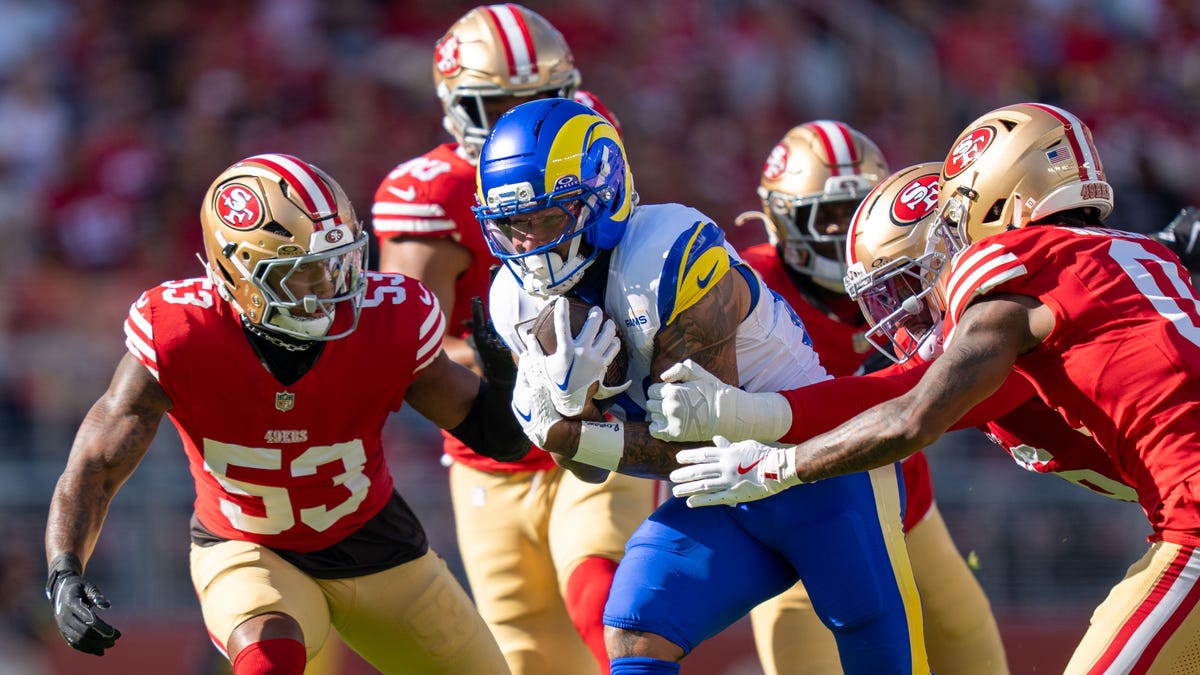
The administrative mechanics of staging American football in the Southern Hemisphere require a precise balance of domestic prime-time demand and host-market facility constraints. The matchup between the Los Angeles Rams and the San Francisco 49ers is scheduled locally for Friday, September 11 at 10:35 a.m. Australian Eastern Time at Melbourne. Due to trans-Pacific time zones, this morning kickoff down under aligns directly with a domestic prime-time window in the United States, landing on Thursday, September 10 at 8:35 p.m. Eastern Time and 5:35 p.m. Pacific Time.
This temporal conversion allows the league to monetize an offshore morning fixture as an elite evening property across domestic television households. Because the game is contested during standard workday hours locally, the economic return of the event is heavily tilted toward United States advertising inventory and digital carriage values. Melbourne functions as the physical host venue, while the domestic media ecosystem remains the primary revenue driver for commercial distribution.
Managing such time differences demonstrates the operational viability of utilizing overseas territories as remote television production hubs for peak domestic viewing hours. The league effectively captures prime-time inventory without subjecting domestic stadiums to non-traditional scheduling demands. The dual-market timing structure illustrates an evolving template for future international series fixtures positioned outside conventional European time boundaries.
High-Performance Protocols and Circadian Management
The trans-oceanic flight patterns and rapid time transitions have introduced distinct sports science and performance dilemmas for both coaching staffs. On-field competitive equity has become intertwined with off-field operational logistics, specifically regarding player recovery protocols and circadian adjustment. The geographical demands placed upon both NFC West rosters represent some of the most rigorous travel challenges executed in regular-season league history.
Faced with a massive biological shift, the two franchises executed contrasting physiological methodologies to prepare their personnel. The San Francisco 49ers elected to deploy their travel party to Australia a full week ahead of the scheduled kickoff, opting for progressive environmental acclimation. This phased approach intended to neutralize acute travel fatigue, recalibrating biological sleep cycles through prolonged exposure to Australian daylight and local time structures.
Conversely, the Los Angeles Rams adopted an inverse logistical paradigm, delaying their long-haul departure until the latest possible window. The institutional hypothesis behind this compressed timeline was to keep athletic personnel synchronized with their native domestic body clocks, reducing operational downtime abroad. This divergence in operational philosophy creates an unprecedented comparative case study regarding sleep economics and biological readiness during elite professional competition.
Roster Dynamics and High-Stakes Personnel Debuts
Beyond the structural distribution mechanisms and physical preparation models, the Melbourne matchup presents major intra-divisional strategic implications for the NFC West. The Los Angeles Rams feature the organizational debut of defensive standout Myles Garrett, altering their defensive deployment scheme. Garrett’s integration immediately transforms front-seven run-stopping and pass-rushing dynamics, presenting complex structural blocking assignments for San Francisco’s front office and coaching staff.
Simultaneously, the San Francisco 49ers navigate the on-field reintegration of George Kittle, who is returning from a torn Achilles tendon. Kittle’s physical readiness represents a substantial performance indicator for San Francisco’s offensive flexibility, given his dual contribution as an inline blocker and primary intermediate passing target. His deployment after significant physical rehabilitation provides a benchmark for how elite athletes endure long-haul aviation while resuming contact activity under championship-level physical intensity.
These roster developments carry immediate tactical significance within the early-season standings of a competitive NFC West landscape. Introducing structural schematic adjustments during an overseas contest amplifies operational vulnerability for both coaching groups. Every individual personnel package must perform effectively despite anomalous field conditions, distinct warm-up parameters, and disrupted baseline training routines.
Long-Term Structural Implications for League Expansion
The execution of the NFL Melbourne Game confirms the continuous geographical widening of the league’s competitive footprint into non-traditional territories. Moving an established NFC West rivalry fixture across continents demonstrates institutional comfort with staging high-value divisional matchups on foreign soil. By deploying primary franchise assets to the Australian market, administrative stakeholders signal that competitive integrity concerns will not restrict international market development.
The event also functions as an experimental sandbox for platform-agnostic distribution, proving that high-profile regular-season games can exist outside traditional network packages. If digital streaming entities like Netflix achieve requisite audience scale via bespoke standalone agreements, the league gains substantial leverage in forthcoming media rights renegotiations. Fragmenting rights into boutique single-event broadcasts allows commercial leadership to maximize per-game value without over-committing full seasonal portfolios.
As media platforms diversify and athlete biometric tracking becomes increasingly central to game preparation, the intersection of operational endurance and rights management will dictate league policy. The early-season shifts between Wednesday openers, Thursday morning overseas kickoffs, and rotating streaming platforms confirm an aggressive adaptation phase for professional sports governance. The outcome of the Melbourne fixture will establish organizational benchmarks across television rights, competitive balance, and athletic longevity for future international expansion.