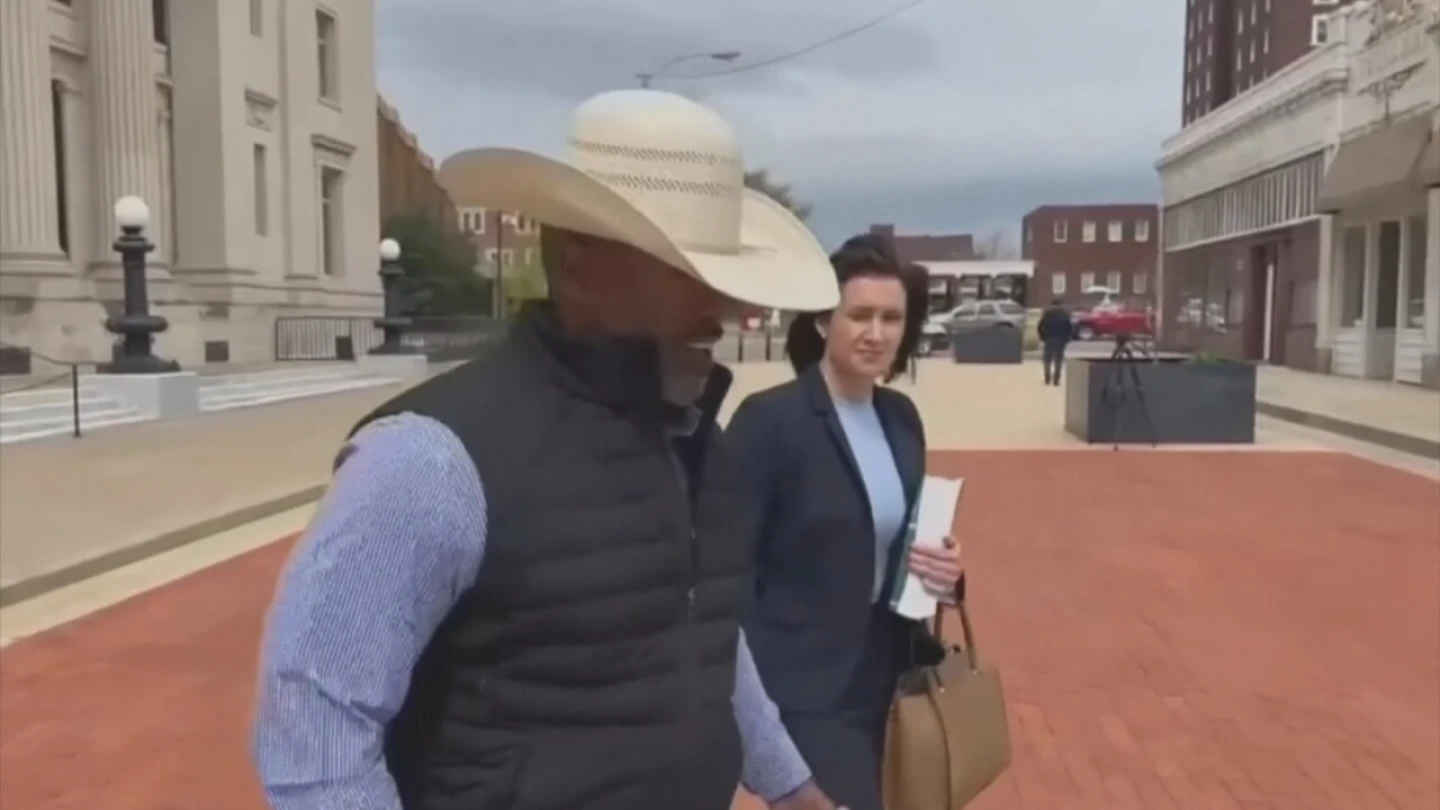
The federal sentencing of former NFL running back LeShon Johnson to 60 months in prison delivers a definitive conclusion to one of the most extensive animal welfare investigations in recent history. This judicial outcome, delivered in Muskogee, Oklahoma, underscores the Department of Justice’s intensified focus on dismantling high-volume illicit trafficking networks that operate under the guise of legitimate kennel operations. The transition from state-level offenses in 2004 to a multi-decade federal enterprise reveals a sophisticated circumvention of previous rehabilitative measures, signaling a persistent, profit-driven criminal trajectory.
The Enterprise: Scale, Sophistication, and Recidivism
Johnson’s operation, initially known as Krazyside Kennels and later rebranded as Mal Kant Kennels, functioned as a commercial entity meticulously designed for the breeding, conditioning, and nationwide distribution of fighting dogs. Evidence presented at trial established the enterprise was not merely a localized fighting ring but a structured trafficking venture operational since at least 2007. By treating the breeding process as a lucrative business, the operation scaled significantly, leading to the largest single-individual seizure in federal dogfighting history: 190 dogs from a property near Broken Arrow.
The sheer scale of this seizure highlights both the logistical complexity and the significant capital investment required to sustain such an inventory. For federal authorities, managing nearly 200 animals as living evidence presented substantial institutional challenges concerning care, housing, and forensic documentation. This volume strongly indicates that the Mal Kant Kennels infrastructure supported a high-turnover market, catering to demand spanning multiple states and jurisdictions. The jury’s conviction on six felony counts under the federal Animal Welfare Act unequivocally demonstrates a comprehensive failure in the defendant’s previous legal deterrents. While a 2004 guilty plea to state-level offenses in Oklahoma might have been a terminal point for many, Johnson demonstrably utilized the intervening years to expand the scope and professionalization of his illicit activities, leveraging his profile and resources into a more resilient and lucrative criminal market.
Judicial Outcome: Penalties and Institutional Scrutiny
The imposition of a $30,000 fine alongside a five-year prison term represents a judicial attempt to strip the financial incentives associated with high-value animal trafficking. However, when juxtaposed against the potential revenue from breeding and selling hundreds of dogs over an 18-year period, the fine primarily serves as a regulatory penalty rather than a total clawback of illicit gains. The inherent cash-heavy and often decentralized nature of such operations invariably complicates the full assessment of their economic impact for federal investigators, making accurate profit forfeiture difficult.
The prominent involvement of the FBI and the Department of Justice’s Office of Public Affairs in this case signals its high-priority status within large-scale animal welfare violations. The initial administrative error regarding the sentence length in official press releases, subsequently corrected to 60 months, further underscored the intense scrutiny and public interest surrounding the case. Such institutional attention is typically reserved for cases that establish significant legal precedent or involve public figures whose actions can broadly impact organizational reputations.
A crucial component of the sentence is the three-year period of supervised release following incarceration. This post-incarceration oversight mechanism is critical for long-term monitoring of Johnson’s professional and financial activities, specifically designed to prevent the re-establishment of kennel operations under new aliases or third-party ownership. Given Johnson’s history of rebranding from Krazyside to Mal Kant, federal probation officers will undoubtedly maintain a sharp focus on any future involvement in animal husbandry or interstate commerce involving livestock, reinforcing the court’s intent to permanently sever his ties to dogfighting.
Disrupting the Illicit Supply Chain: Operational Impact and Digital Evidence
The conviction for transporting and delivering animals for fighting ventures directly attacks the logistical backbone sustaining the dogfighting industry. By systematically targeting the source of the animals—the breeding and trafficking hubs—federal authorities aim to significantly disrupt the supply side of this illicit market. The removal of 190 dogs from the circuit effectively eliminates a major genetic and operational node within the national fighting network, creating a substantial void that other illicit actors may struggle to fill, at least in the short term.
Testimony detailing the breeding of hundreds of dogs for profit reveals a level of specialization and operational acumen rarely seen in individual-led criminal cases. Maintaining such a large animal population demands significant operational knowledge, encompassing advanced veterinary care, nutrition, security protocols, and strategic breeding. Consequently, the dismantling of Mal Kant Kennels represents a substantial loss of institutional knowledge and infrastructure within the illicit dogfighting community.
The pivotal role of digital evidence, such as screen grabs sent by Johnson showcasing his dogs, was instrumental in establishing the intent and nature of the kennel’s activities. In the digital age, the very documentation used to market fighting dogs frequently becomes primary evidence for federal prosecutors in proving violations of the Animal Welfare Act. This case serves as a stark warning to similar operations that digital footprints and communication trails are increasingly central and irrefutable components of federal investigative strategies.
Broader Implications and Legal Precedent
This case establishes a significant benchmark for the maximum number of animals seized from a single individual, providing critical data points for future sentencing guidelines and resource allocation in similar investigations. The successful prosecution in Muskogee exemplifies the effectiveness of robust multi-agency coordination between local law enforcement and federal bureaus like the FBI. As federal agencies refine their approach to the Animal Welfare Act, there is a discernable strategic shift towards individuals who provide the foundational infrastructure for the industry, rather than solely targeting participants in the fights themselves, signifying a more systemic enforcement strategy.
The jury’s eight hours of deliberation underscore a thorough review of extensive evidence, which meticulously traced the defendant’s activities back to 2007. This long-term perspective enabled the prosecution to convincingly portray a persistent, calculated criminal enterprise, rather than an isolated incident. The resulting 60-month sentence is a clear reflection of the cumulative nature of these offenses and Johnson’s status as a repeat, high-level offender within this specific criminal niche.
For the broader sports and entertainment industry, the conviction of a former high-profile athlete in such a high-stakes federal case brings renewed and intense attention to the profound personal and professional risks associated with involvement in illicit activities. The reputational damage to the individual and associated institutions is often irreversible, serving as a powerful deterrent to others in similar positions of influence. Furthermore, the longevity of Johnson’s enterprise highlights systemic vulnerabilities in state-level monitoring and the persistence of certain illicit subcultures resistant to mainstream legal and social norms, underscoring the necessity of comprehensive federal intervention in large-scale interstate trafficking cases.
Conclusion
The finality of the 60-month sentence delivers an unambiguous message regarding the severe consequences of large-scale animal trafficking and the deliberate violation of federal welfare laws. The judicial system has signaled that recidivism, particularly in the context of organized animal cruelty for profit, will be met with significant and sustained terms of incarceration. The case of LeShon Johnson stands as a landmark in the enforcement of the Animal Welfare Act, profoundly reflecting both the entrenched scale of the problem and the unwavering commitment of federal authorities to address it decisively.
Ultimately, the resolution of this case in Muskogee vividly illustrates the critical intersection of celebrity, crime, and federal law. It serves as a compelling case study on how a former professional athlete’s resources can be systematically misdirected into a sophisticated criminal enterprise, and how the federal government ultimately closes the loop on long-term illicit operations. The legacy of this case will be defined by its record-breaking seizure of 190 animals and its pivotal role in shaping future federal animal welfare prosecutions, setting a new precedent for diligence and enforcement.