Coastal Flood Watch Issued for New York City and Westchester
Parts of downstate New York, including Staten Island, Southern Queens, and southern Westchester, are under coastal flood advisories and watches as the region continues to recover from a recent storm.
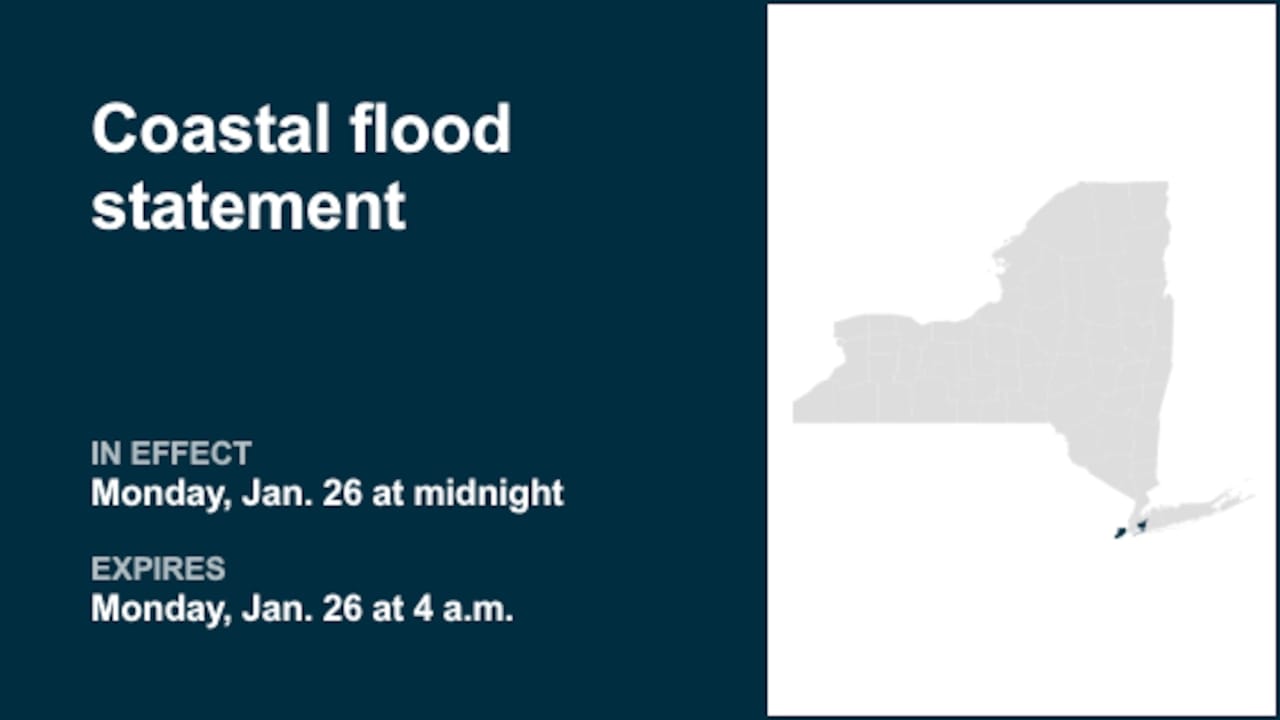
The National Weather Service (NWS) issued a coastal flood statement Sunday afternoon, valid for Monday between midnight and 4 a.m., for Richmond (Staten Island) and Southern Queens. A similar advisory was also issued for southern Westchester, warning of potential minor coastal flooding on January 25th.
Icy Roads and Frosty Temperatures Forecast for Monday
Long Island is bracing for a day of challenging weather as it digs out from Sunday’s storm. Residents can expect treacherous icy roads, possible snow, and frosty temperatures throughout Monday.
The combination of lingering moisture from the storm and dropping temperatures is expected to create hazardous driving conditions. Authorities are urging commuters to exercise extreme caution and allow for extra travel time.
Beach Erosion and Coastal Impacts
In addition to the flooding and icy conditions, beach erosion is also a concern across the affected areas. The storm surge associated with the recent weather system has likely impacted shorelines, potentially causing damage to coastal properties and infrastructure.
Coastal communities are advised to monitor updates from the NWS and local emergency management agencies. Preparation for potential flooding and erosion is recommended.
Context: Recent Storm and Lingering Weather Effects
The current advisories are a direct consequence of the recent storm system that swept through the region. While the primary snow event may have passed, its aftermath continues to present a range of weather-related hazards.
The NWS continuously monitors weather patterns to provide timely warnings. Residents are encouraged to stay informed through official channels, especially during periods of significant weather events.
Understanding Coastal Flooding Risks
Coastal flooding occurs when the sea level rises above the normal tide, inundating coastal land. This can be caused by a combination of factors, including high tides, storm surges, and onshore winds.
The NWS categorizes coastal flooding based on its severity. ‘Minor’ flooding typically refers to water levels that may cause excessive erosion, wetting of beaches, and inundation of some low-lying areas or roads. ‘Moderate’ and ‘major’ flooding indicate more severe impacts, potentially leading to widespread property damage and significant disruption.
The Role of the National Weather Service
The National Weather Service plays a crucial role in forecasting and disseminating warnings for hazardous weather. Their advisories, watches, and warnings are critical tools for public safety and emergency preparedness.
Coastal flood statements, like those issued for Staten Island, Southern Queens, and Westchester, alert the public to potential flooding conditions. Watches indicate that flooding is possible, while warnings mean that flooding is imminent or occurring.
Impact on Long Island and Surrounding Areas
Long Island, with its extensive coastline, is particularly susceptible to coastal flooding and beach erosion. The recent storm has exacerbated these risks.
The forecast for icy roads and frosty temperatures on Monday presents a dual threat. Drivers must contend with slick surfaces, reduced visibility, and the potential for downed trees or power lines, in addition to the coastal flood risks.
Advice for Residents and Commuters
Residents in affected areas are advised to secure any outdoor items that could be affected by wind or water. Those living in low-lying coastal zones should be prepared to take protective measures if necessary.
Commuters should check traffic conditions before departing and consider alternative transportation if possible. Avoiding unnecessary travel during the peak of the icy conditions and potential flooding is strongly recommended.
Broader Weather Patterns
The current weather situation is part of a larger pattern influencing the northeastern United States. Understanding these patterns can help in anticipating future weather events.
Cold air masses moving in after a storm can lead to flash freezing of wet surfaces, creating dangerous ice. Simultaneously, lingering moisture can interact with these cold air masses to produce additional light snow or flurries, further complicating travel.
Importance of Staying Informed
Staying informed through reliable sources like the NWS and local news outlets is paramount during periods of severe weather. Emergency services emphasize that public awareness and preparedness are key to mitigating the impact of these events.
Local authorities may issue specific instructions or closures based on the evolving weather conditions. Following these directives can ensure the safety of individuals and communities.
Looking Ahead: Potential for Further Weather Changes
While the immediate focus is on Monday’s coastal flooding and icy conditions, weather patterns can shift rapidly.
It is always prudent to remain aware of forecasts for the coming days, especially in regions prone to dynamic weather changes. This proactive approach helps communities prepare for a range of potential impacts.