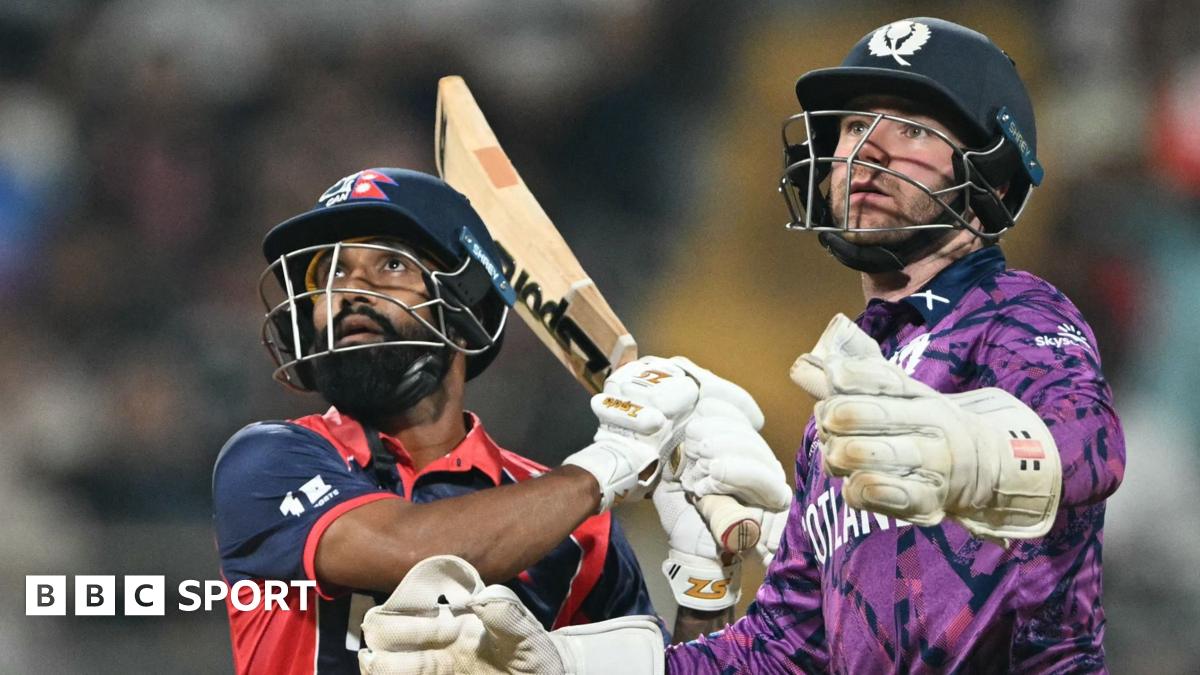
Nepal secured a significant, performance-validating victory over Scotland in the ICC T20 World Cup, successfully chasing a 170-run target at Wankhede Stadium. This win provides a crucial benchmark against a higher-ranked associate nation, even in a dead rubber context following early elimination from Super 8 contention.
Strategic Devaluation and Performance Validation
The match context—where both teams were mathematically out of the Super 8 race—shifted the strategic objective from progression to performance leverage impacting ICC rankings and future tournament seeding. Scotland, entering late as a replacement, concluded with only one group win, underscoring an inability to sustain competitive momentum.
Scottish Middle-Order Collapse: A Systemic Vulnerability
Michael Jones’ 71 off 45 laid a strong foundation, but Scotland’s critical collapse from 132-1 to 162-7 reveals systemic fragility in managing pressure during the crucial middle-to-late innings phase. The failure to convert a dominant platform into a match-winning total on a conducive batting surface points toward tactical inflexibility under duress.
Nepal’s Clutch Execution and Acceleration Capacity
Nepal’s success was defined by Dipendra Singh Airee’s explosive, unbeaten 48 runs from 23 balls, delivering the necessary acceleration to overhaul the target with four balls remaining. This superior clutch execution contrasts sharply with Scotland’s defensive capitulation, indicating a higher immediate tactical ceiling in high-leverage chase scenarios.
Institutional Impact on ICC Pathway Integrity
The participation dynamics, including Scotland’s late entry, expose the operational fragility within ICC qualification protocols. The performance differential between the two associates underscores the uneven development curve across the ICC’s tiered membership structure.
Scorecard Analysis: Efficiency Discrepancies
Scorecard metrics reveal operational inefficiencies. Scotland’s batting proved top-heavy (Jones contributed significantly, but the middle order failed to maintain the run rate). Furthermore, 13 extras conceded suggest lapses in fielding discipline or wicket-keeping precision, which proved decisive in a four-ball margin victory.
Conversely, Airee’s match-winning strike rate validated Nepal’s investment in aggressive late-innings batting optimization, a key differentiator in modern T20 cricket separating contenders from participants.
Commercial Value and Stakeholder Incentives
Nepal’s win enhances the perceived value of their participation rights within the South Asian broadcast market, strengthening their negotiating position for future bilateral series against Full Members. This exposure directly impacts the capital available for their development pipeline.
For the ICC, associate success validates the expanded World Cup model by demonstrating competitive volatility outside the established elite, supporting strategic decisions regarding tournament size and global relevance.
Forward Strategic Evaluation
The result feeds directly into the ICC’s long-term performance metrics for seeding in future cycles. Scotland’s pattern—strong start followed by critical failure—necessitates a strategic review of high-performance coaching protocols to transition from consistent participant to consistent contender. Nepal, having recovered from a narrow defeat to England, carries forward validated tactical execution and psychological momentum into subsequent qualification campaigns.